
Senator Lindsey Graham told Fox News that the U.S. should seize Kharg Island, Iran’s key oil-export terminal, arguing control of the island would weaken Tehran and create momentum for Saudi-Israeli normalization. He invoked Iwo Jima and said two Marine Expeditionary Units were headed toward the area. Critics — including members of both parties — warned the comparison was insensitive and pointed to heavy World War II casualties, while analysts cautioned an invasion could invite missile and drone attacks and serious logistical strain. The exchange highlights sharp disagreement over military options and U.S. policy toward Iran.
Lindsey Graham Urges Seizure of Iran’s Kharg Island, Sparks Bipartisan Backlash
Lindsey Graham
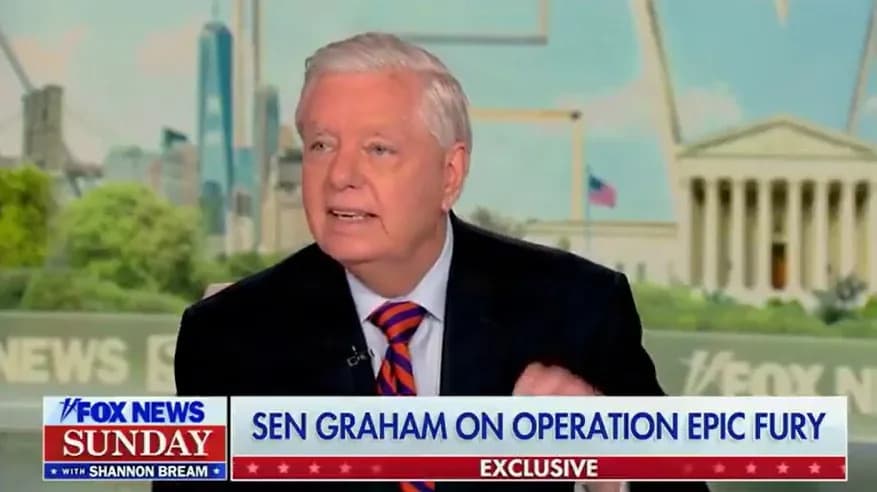
Senator Lindsey Graham (R-S.C.) drew sharp criticism from across the political spectrum after telling Fox News host Shannon Bream that the United States should seize Kharg Island, a strategic Iranian oil-export terminal. On Fox News Sunday, Graham framed the proposal in historical terms, saying, “We did Iwo Jima. We can do this,” and asserted that two Marine Expeditionary Units were en route to the region.
Graham’s Proposal
“So here’s what I tell President Trump: keep it up for a few more weeks, take Kharg Island where all of the resources they have to produce oil, control that island, let this regime die on a vine,” Graham said, describing seizure or blockade of the island as a way to weaken Tehran and open the door to broader regional diplomacy.
Bream pressed Graham on the risks and feasibility, citing an assessment published in The Atlantic that warned U.S. forces could face ballistic missile strikes, drone attacks, petrochemical smoke and serious logistical challenges if they attempted to occupy the island. The Atlantic’s analysis suggested that operations could devolve into a prolonged war of attrition because of distance from reliable resupply.
“U.S. troops may well take Kharg Island. We believe in their ability to do so, but only to endure ballistic missile strikes, drone attacks, petrochemical smoke, all without a reliable means of obtaining logistical support. The result could be a grinding war of attrition,” the Atlantic assessment said.
Graham’s Response and Strategic Rationale
Graham pushed back on the cautionary analysis, reaffirming his confidence in the Marines and the Department of Defense: “I’m sort of tired of all this armchair quarterbacking... I trust the Marines, not that guy. I trust the DOD. We got two Marine Expeditionary Units sailing to this island. We did Iwo Jima. We can do this.” He argued that seizing or blockading Kharg would deprive Iran of oil export capability and, in his view, hasten the regime’s weakening.
He also linked the proposal to a wider foreign-policy objective: Graham said that once Iran was “defanged” militarily, the U.S. could press for normalization between Saudi Arabia and Israel, which he described as stalled by Iran-backed attacks on October 7, 2023.
Criticism and Historical Pushback
The comparison to Iwo Jima provoked rapid and pointed criticism. Representative Tim Burchett (R-Tenn.) reposted Graham’s comments and noted the severe toll of that World War II battle, saying, “We lost 7,000 Marines and 20,000 were wounded.” Representative Jason Crow (D-Colo.) responded more sharply to Graham’s historical framing: “No, Lindsey, ‘we’ didn’t do Iwo Jima. Almost 7,000 Americans who died and 19,000 who were wounded did Iwo Jima. And they did it to fight for our freedom—with the support of Congress and the American people.”
Why It Matters
The exchange highlights a broader debate over U.S. strategy toward Iran: whether direct military action to degrade Tehran’s capabilities is feasible or desirable, and the potential costs—military, diplomatic and humanitarian—of seizing a strategic oil terminal. Advocates argue such a move could quickly cripple Iran’s ability to finance proxies and project power; critics warn it could spark a wider regional conflict with significant U.S. casualties and logistical challenges.
The remarks and ensuing backlash underscore deep divisions in Washington over the risks of escalation, the responsibilities of military leadership and the political framing of military operations.
Help us improve.





















