
Face the Nation (March 22, 2026) covers a major escalation in the Israel–Iran conflict: long-range missile strikes, threats to Iran’s energy infrastructure, and allied plans to secure the Strait of Hormuz. Senior officials debated military options, the limits of strikes to eliminate nuclear know‑how, and congressional concerns about authorization and costs. IAEA Director General Rafael Grossi warned that inspections and diplomacy — not military force alone — are needed to ensure long-term nonproliferation.
Face the Nation — March 22, 2026: Escalation With Iran, Missile Strikes, Nuclear Risks, And Congressional Concerns
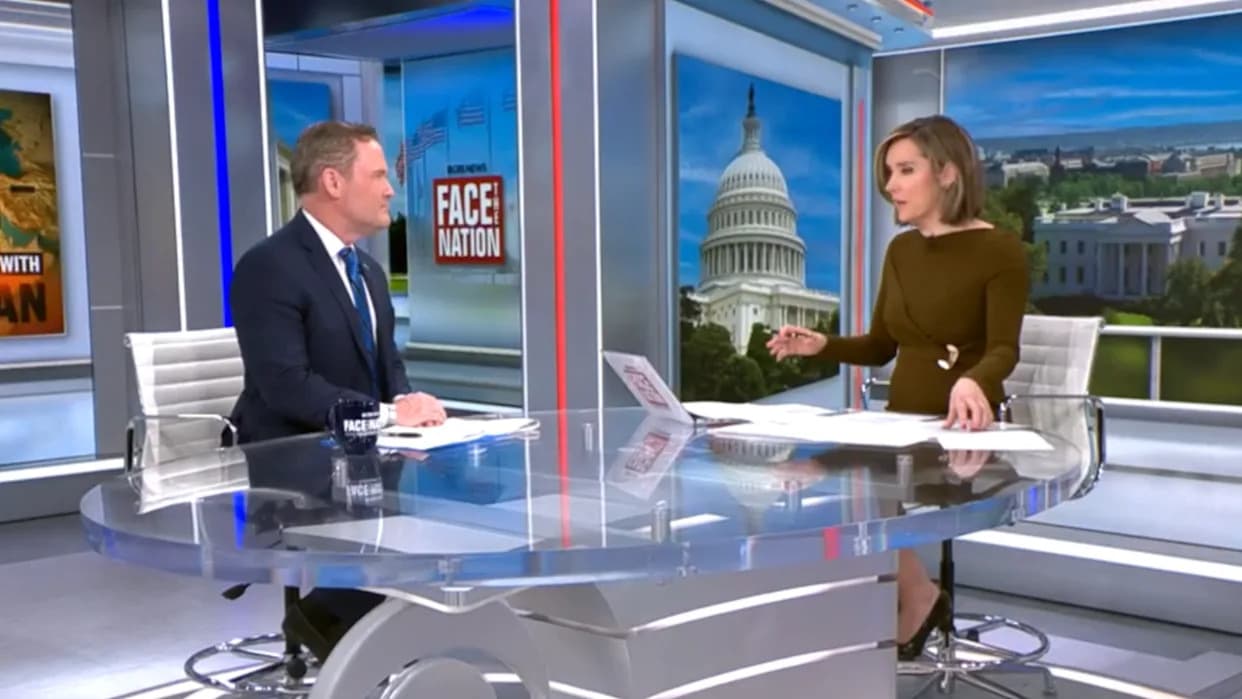
Face the Nation with Margaret Brennan examines a week of dramatic escalation in the Israel–Iran conflict, new long-range missile strikes, threats against Iran's energy infrastructure, allied coordination to secure the Strait of Hormuz, and mounting questions from Congress and the public about strategy, costs and oversight.
Field Report: Strikes In Israel And Missiles Toward Diego Garcia
Charlie D'Agata reports from Arad, Israel: overnight Iranian ballistic missiles struck population centers including Dimona, Arad and, into the morning, locations near Tel Aviv, wounding nearly 200 people. Israeli officials are investigating how missiles penetrated multilayered air defenses amid concerns Israel may be running low on interceptors.
The report also describes the launch of longer-range ballistic missiles toward the U.S.–U.K. base at Diego Garcia in the Indian Ocean. That development has raised questions about Iran's missile range and whether it can threaten more distant bases or European capitals.
U.S. U.N. Ambassador Mike Waltz: Options, Targets And Legal Questions
In studio, U.S. Ambassador to the United Nations Mike Waltz discussed President Trump’s statements about policing the Strait of Hormuz and the president’s 48-hour warning to Iran to reopen the strait or face strikes on power infrastructure. Ambassador Waltz said allied navies and other partners are being urged to help secure commercial shipping while the administration continues strikes to degrade Iran’s missile, naval and drone capabilities.
When pressed about targeting civilian energy infrastructure and nuclear power plants such as Bushehr, Ambassador Waltz declined to rule options out on national television and emphasized that decisions would weigh military objectives, legal constraints and efforts to minimize harm to civilians.
Waltz argued that some Iranian critical infrastructure is controlled or exploited by the IRGC, which he described as a state actor that blends civilian and military uses — a claim he said makes certain targets militarily relevant. He acknowledged differences in intelligence assessments and defended the administration’s decision to act rather than wait for a fully matured nuclear program.
NATO's Role: Mark Rutte On Allied Coordination
Joining from The Hague, NATO Secretary-General Mark Rutte (as identified in the broadcast) said the alliance and partners were still assessing reports about the Diego Garcia launch but described growing allied cooperation: 22 countries — mostly NATO members plus partners such as Japan, South Korea, Australia, New Zealand, Bahrain and the UAE — had begun coordinating to determine what is needed and when to secure free navigation through the Strait of Hormuz.
Rutte urged patience as European militaries prepared to support non-combat maritime security tasks while declining to discuss operational details on air. He also addressed allied concerns about U.S. moves on Russian oil and the broader balancing act between energy, Ukraine diplomacy and defense commitments.
Congressional Oversight: Rep. Jason Crow's Critique
Rep. Jason Crow (D-Colo.), a member of the House Intelligence Committee and the Armed Services Committee, criticized the administration for initiating the campaign without congressional authorization and for insufficient briefing to lawmakers. Crow highlighted costs — roughly $20 billion in the first two weeks, according to the exchange — and warned against approving large supplemental defense funding without a clear authorization, strategy, or independent oversight of Pentagon finances.
On domestic politics, Crow said the current funding stalemate over the Department of Homeland Security is a Republican-controlled shutdown; he and other Democrats favor funding measures that exclude certain immigration enforcement components but would restore TSA, Coast Guard and other critical services.
IAEA Director General Rafael Grossi: Damage, Limits Of Military Action, And Inspections
IAEA Director General Rafael Grossi said the agency has not detected elevated radiation near struck nuclear sites and that, while military action has damaged some facilities (including at Natanz and Isfahan), such strikes cannot erase technical knowledge or fully eliminate Iran’s nuclear capabilities.
Grossi emphasized that Iran retains an inventory of uranium enriched to about 60 percent — close to weapons‑usable levels when further processed — and that centrifuge expertise and infrastructure can be rebuilt. He described the handling and possible removal of uranium hexafluoride cylinders as technically difficult and risky, cautioning that any recovery operation would be complex and dangerous.
Grossi urged the creation of a post‑conflict framework to restore IAEA verification and transparency through inspections and cooperative arrangements to prevent reconstitution of a weapons program.
Public Opinion And Costs: CBS Polling With Anthony Salvanto
CBS polling shows growing public skepticism: many Americans view the conflict as a "war of choice," and majorities disapprove of U.S. military action. Concerns about rising gasoline prices and broader economic impact weigh heavily on public sentiment. The longer the expected duration of the campaign, the lower public approval becomes.
Wrongfully Detained Americans: Voices From Former Detainees
The program featured former detainees Siamak Namazi and Emad Shargi and advocate Neda Sharghi, who urged that the U.S. prioritize the release of Americans wrongfully detained in Iran and warned that detainee cases often become bargaining chips in larger geopolitical negotiations.
Takeaway
The broadcast captured competing priorities: military pressure to degrade Iran’s capabilities, allied coordination to protect global energy and shipping, legal and humanitarian concerns about targeting civilian infrastructure, congressional demands for oversight and authorization, and public unease about costs and duration. IAEA officials and experts stressed that military action cannot alone eliminate nuclear know‑how and that verification and diplomacy will be essential to any long-term solution.
DONALD TRUMP (President of the United States): "Oh, I think we have won, but we have knocked out the navy, their air force. We have knocked out their anti-aircraft. We have knocked out everything. No, I'm not putting troops anywhere. If I were, I certainly wouldn't tell you."
For extended interviews and full transcripts, the program directed viewers to the Face the Nation website and YouTube channel.
Help us improve.





















