
On day 23 of the US–Israel campaign, Israel struck Tehran while Iran launched missile and drone attacks across the region. President Trump threatened to "obliterate" Iranian power plants unless the Strait of Hormuz is fully reopened within 48 hours. International monitors reported no unusual radiation after an attack on Natanz, and Gulf states said they intercepted large numbers of incoming drones and missiles. Casualty figures are disputed and independent verification remains limited.
Day 23: Escalation Across the Region — Israel Strikes Tehran as Trump Threatens Iran’s Power Plants
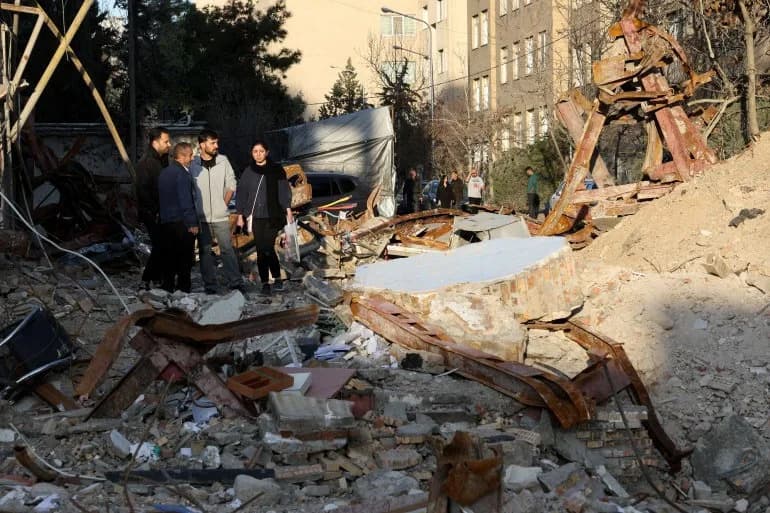
People look at a destroyed building in Tehran following an attack on March 21, 2026 [Alaa al-Marjani/Reuters]
Day 23 of the US–Israel campaign against Iran saw renewed strikes on Tehran, widespread Iranian missile and drone retaliations across the region, and a sharp rise in diplomatic and military tensions. Key international bodies reported no unusual radiation after an attack on Iran's Natanz nuclear site, while governments in the Gulf said they intercepted large numbers of missiles and drones.
Major Developments
Israel and Iran: Israeli forces carried out fresh strikes on Tehran on Sunday, with explosions reported in the eastern districts of the city after earlier Iranian missile strikes on southern Israel. Iran’s Islamic Revolutionary Guard Corps (IRGC) said its defences had downed an Israeli fighter jet in Iranian airspace; Israel has not confirmed that claim.
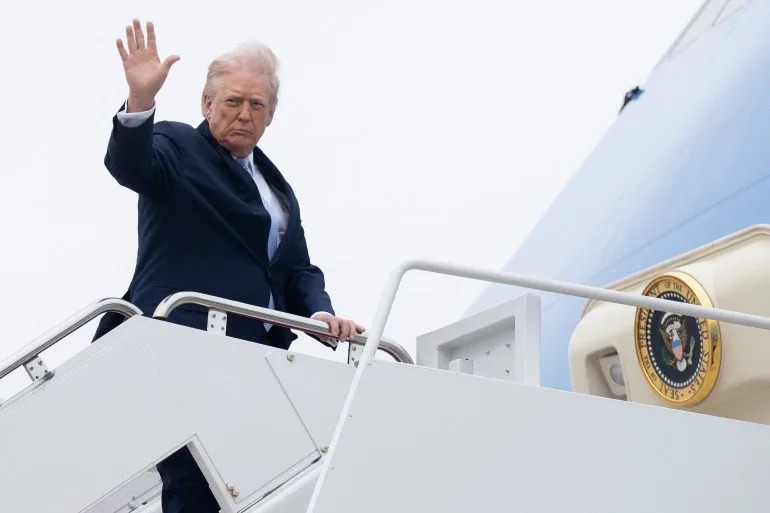
US President Donald Trump waves while boarding Air Force One at Joint Base Andrews in Maryland on March 20, 2026 [AFP]
Drone and Aircraft Incidents: State-affiliated Tasnim reported that Iran intercepted a US–Israeli armed drone over Tehran before it could conduct combat operations. Separately, US Central Command said its forces struck an underground coastal facility used by Iran to store anti-ship cruise missiles and launchers, using multiple 5,000-pound bombs, according to CENTCOM commander Admiral Brad Cooper.
Nuclear Site and Energy Threats
Iran’s Atomic Energy Organisation accused the US and Israel of "criminal attacks" on the Natanz nuclear site and notified the International Atomic Energy Agency (IAEA). The IAEA said it detected no abnormal radiation releases following the incident.
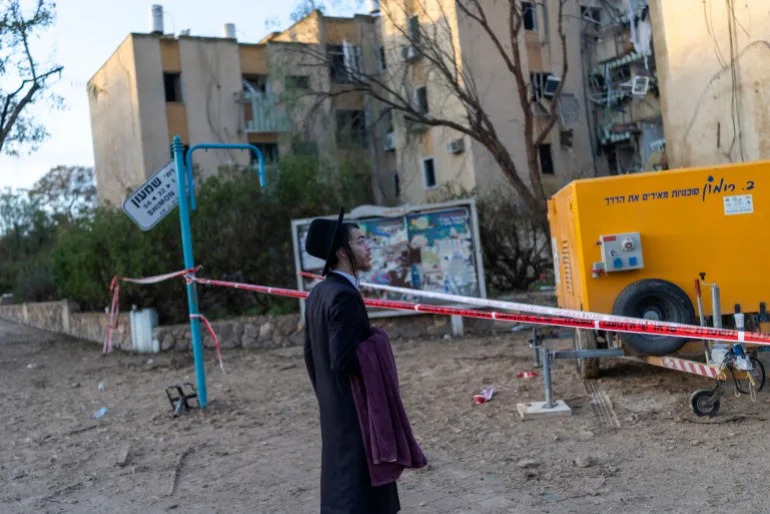
An Israeli Orthodox Jew inspects the site of an Iranian missile attack in Arad on March 22, 2026 [AFP]
President Donald Trump posted on Truth Social a direct threat to Iran’s energy infrastructure: "If Iran doesn’t FULLY OPEN, WITHOUT THREAT, the Strait of Hormuz, within 48 HOURS from this exact point in time, the United States of America will hit and obliterate their various POWER PLANTS, STARTING WITH THE BIGGEST ONE FIRST!" Iran responded by warning it would strike energy infrastructure linked to the US and Israel if its power plants were targeted.
Casualties, Damage and Civilian Impact
Iranian state media, citing the Ministry of Health, reported more than 1,500 dead and at least 20,984 injured across Iran as a result of the attacks; those figures have not been independently verified. Iran also reported hospital evacuations and damage to ambulances.
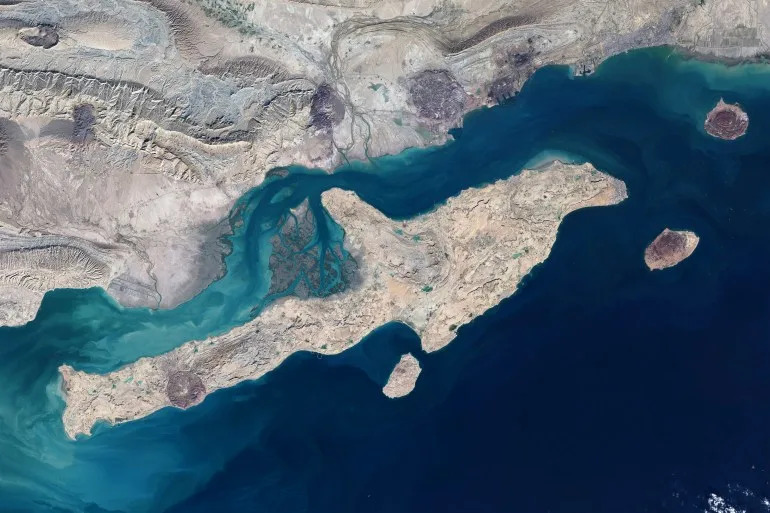
A satellite view of Qeshm Island in Hormozgan province, Iran, within the Strait of Hormuz region on January 17, 2026 [Gallo Images/Orbital Horizon/Copernicus Sentinel Data 2026]
In Israel, missile strikes broke through defences in the south and struck cities including Dimona and Arad; about 100 people were reported wounded in those impacts. Tehran claimed higher fatalities from the barrage, while Israeli authorities reported no deaths and said around 4,292 injured people have been admitted to hospitals since the start of the conflict.
Regional Military and Diplomatic Fallout
Gulf States: Saudi Arabia said it intercepted nearly 60 drones, most aimed at its oil-rich Eastern Province, and reported shooting down or disrupting incoming missiles. Bahrain’s military claimed it shot down 143 missiles and 242 drones fired by Iran during the course of the conflict. Qatar conducted a search after a helicopter crashed due to a reported technical malfunction.
Several Gulf states expelled Iranian diplomatic staff, including Saudi Arabia and Qatar, and tensions have increased at bases hosting US and British forces across the region. Bahrain, the UAE, the UK, France and Germany issued a joint statement condemning what they described as Iranian attacks on commercial shipping and civilian infrastructure in the Gulf and called for an immediate halt to hostilities.
Militia Activity and Wider Attacks
Hezbollah reported rocket fire at Israeli forces in southern Lebanon, and pro-Iranian militias in Iraq said they carried out multiple attacks on US bases in the region. The UK accused Iran of launching ballistic missiles at the Diego Garcia base in the Indian Ocean; Iranian officials denied responsibility for that particular strike.
What Comes Next
The situation remains volatile: major power centres are on high alert, regional air defences continue to be tested, and international diplomatic pressure is mounting. Independent verification of casualty and damage claims is limited amid active fighting and restricted access to some areas.
Summary quote: "This remains a fast-moving, high-risk confrontation with implications for regional security and global energy flows," said local and international analysts.
Help us improve.





















