The recent escalation of conflict in the Middle East has forced the cancellation or postponement of dozens of major sporting events in the Gulf, including a high-profile Messi vs Yamal match and multiple F1 races. Analysts warn of significant reputational and sponsorship damage to Gulf hosts, even as experts stress the region’s deep resources and long-term commitment to sport. Once security improves, federations are likely to return, though much depends on how the conflict ends.
Middle East War Forces Pause on Gulf’s Billion-Dollar Sports Strategy
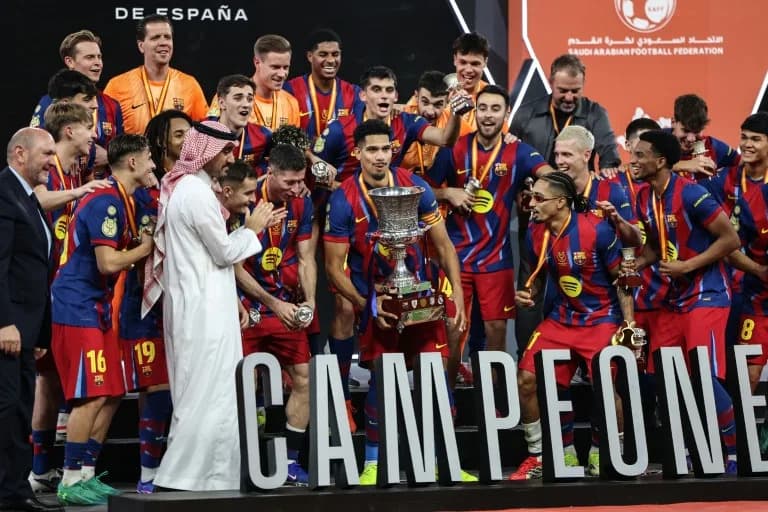
The Spanish Supercopa, hosted by Saudi Arabia in January, is just one of dozens of major sporting events now held in the Gulf (Fadel SENNA)(Fadel SENNA/AFP/AFP)
Around 80,000 fans had been preparing to watch Lionel Messi face 16-year-old Lamine Yamal in Doha, and thousands more were set to attend Formula One grands prix in Bahrain and Saudi Arabia — but a new surge of regional violence has disrupted those plans.
Events Shelved Amid Rising Cross-Border Attacks
Since the outbreak of full-scale fighting in February, weeks of drone and missile strikes attributed to Iran — described as retaliation for US and Israeli bombing — have forced the cancellation or postponement of dozens of international sporting events across the Gulf.
High-profile competitions affected include football’s “Finalissima” (Spain vs Argentina in Doha), two Formula One grands prix, the Qatar round of the World Endurance Championship, Asian Champions League fixtures and the Qatar MotoGP.
"I was looking forward to seeing the match of a lifetime between Messi and Yamal, a clash between the old and new generations, but sadly this opportunity was not to be," said Rabih, a 45-year-old Barcelona fan in Doha.
Why Sport Became a Core Gulf Strategy
Gulf states have spent billions to win hosting rights, build ultramodern stadiums and upgrade transport and tourism infrastructure as part of broader efforts to diversify economies still heavily reliant on hydrocarbons and to polish international reputations.
Qatar’s 2022 World Cup was the centerpiece of that push, and Saudi Arabia is targeting similar prestige by hosting in 2034. Sport sits alongside major investments in data centres, megaprojects and cultural tourism aimed at attracting visitors and affluent expatriates.
Reputational Impact and the Road Ahead
Analysts warn the Gulf has suffered "significant reputational damage" that will need repair. James Dorsey of Singapore’s S. Rajaratnam School of International Studies said the blows affect sports and other sectors that rely on international confidence.
Jaber Al-Harmi, editor of Qatar's Al-Sharq, noted many competitions were in their final preparation stages when they were canceled: "All of that has been lost," he said, adding that restoring sponsor confidence will be a major challenge but that sport remains a priority.
Danyel Reiche, a specialist in the politics of sport at UAE University, argued the region’s sporting approach rests on three pillars — sponsorship, club and federation investment, and hosting events — and only hosting is directly affected by the current conflict. He expects international federations to return once security improves, and suggests Gulf states may expand sponsorship to rebuild trust.
Several major events remain on the calendar: Saudi Arabia will host the 2027 Asian Cup, Qatar will stage the 2027 Basketball World Cup and has expressed interest in bidding for the 2036 Olympic Games. Ultimately, Dorsey said, much depends on how the conflict unfolds: political change in Iran could ease tensions, while prolonged chaos or a harder-line Tehran would make hosting global events extremely difficult.
What This Means: For now, the Gulf’s hard-won role as a global sports destination is on hold. The region retains deep financial resources and modern infrastructure, but rebuilding reputation and sponsor confidence will be crucial before events can fully return.
Reporting credits: jac/rd/dcp/pb/ea
Help us improve.