
Summary: Over three weeks of strikes, US and Israeli targeting has progressed through phases: an opening "shock and awe" aimed at leadership and military assets; macro strikes on Iran’s internal security infrastructure; and attacks on energy systems intended to disrupt basic services. ACLED records 1,434 US‑ and Israeli‑attributed strike events versus 835 Iranian retaliatory events, while US officials report thousands of targets struck. Experts warn that airpower has degraded conventional forces but is unlikely by itself to eliminate Iran’s nuclear capability, and that diverging US and Israeli goals raise the risk of prolonged escalation.
What Three Weeks Of US‑Israeli Strikes Reveal About War Aims Against Iran
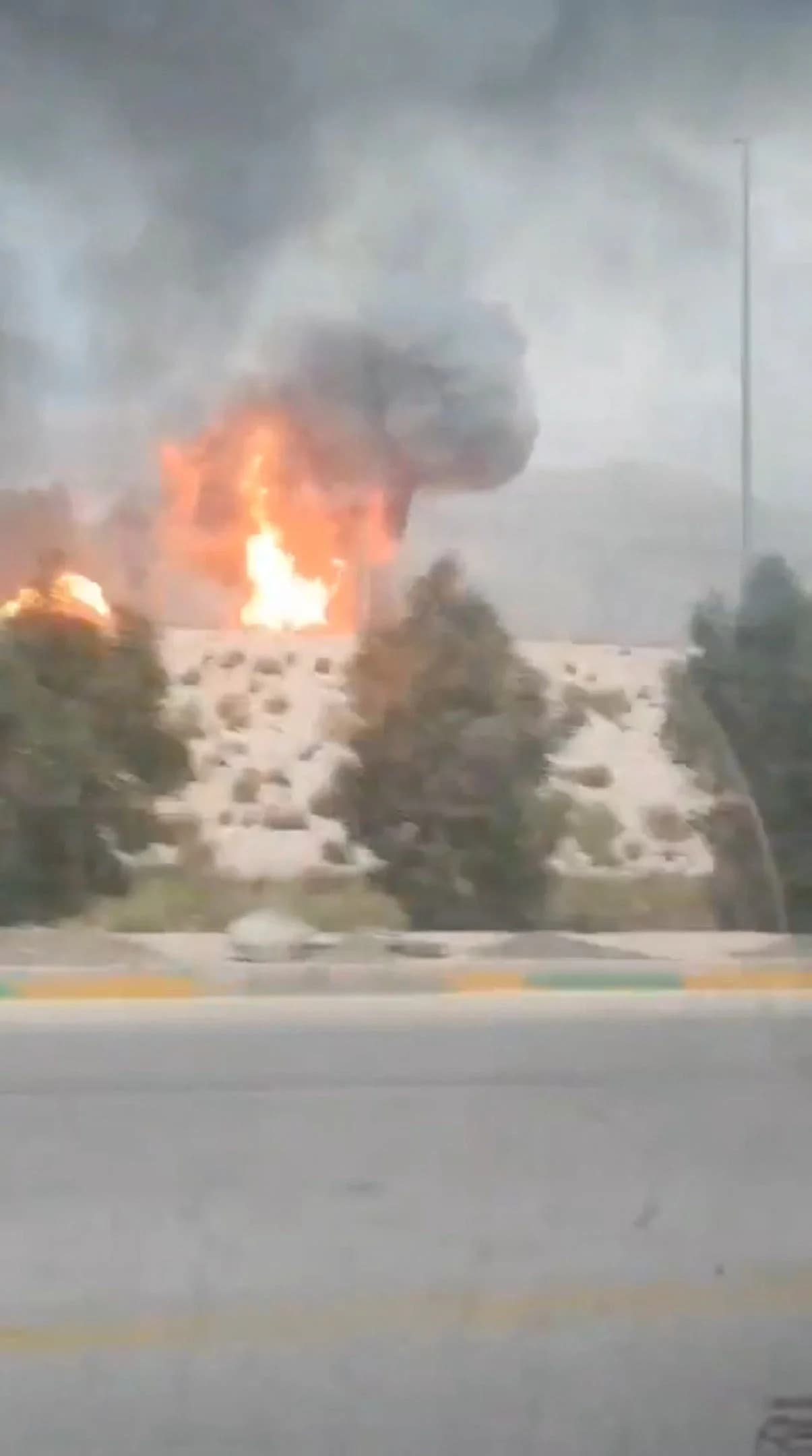
Smoke and flames rise from the South Pars gasfield following [Social Media/via Reuters]
Washington, D.C. — Over the first three weeks of the US‑Israeli campaign against Iran, the pattern of strikes has helped reveal which of the coalition’s stated objectives are being prioritised — and where Washington and Jerusalem may be diverging.
Officials have offered a range of goals: degrading Iran’s regional military capabilities, decapitating its leadership, fomenting internal dissent and eliminating its nuclear programme. Beyond rhetoric, the choice of targets and the sequencing of attacks show how those aims are being pursued and where the campaign’s limits and risks lie.
Phases Of The Campaign
Phase 1 — Leadership And Military Shock: Analysts describe the opening days as a "shock and awe" phase that targeted conventional military assets alongside senior political and military figures. According to reports, strikes launched on February 28 included attacks that Iran said killed Supreme Leader Ali Khamenei and several senior IRGC officials. Commentators say this approach sought to "paralyse decision‑making in the system" and create conditions for political change.
Phase 2 — Internal Security And Command Infrastructure: The next phase emphasised macro‑level strikes against institutions that underpin internal order: IRGC headquarters, Basij paramilitary centres and domestic police command posts. Observers say roughly 30 percent of strikes have focused on hyperlocal security infrastructure used to control populations, a pattern consistent with an effort to erode Tehran’s internal security capacity.
Phase 3 — Pressure On Civilian Services: More recently, strikes on energy infrastructure, including an attack on the South Pars gasfield, signalled a shift to degrading Iran’s ability to provide basic services such as electricity and gas. That attack prompted immediate Iranian retaliation against facilities in Qatar and Saudi Arabia and drew an unusually public US rebuke of Israel for acting without US approval.
What The Data Shows
Data compiled by the Armed Conflict Location & Event Data Project (ACLED) recorded 1,434 US‑ and Israeli‑attributed "strike events" in Iran, versus 835 retaliatory events attributed to Iran. The US administration has said it struck more than 7,800 targets and flew over 8,000 combat missions since February 28, and that about 120 Iranian naval vessels were damaged or destroyed.
"President Trump has outlined a wide array of goals," Jon Alterman of CSIS told Al Jazeera. "This will give him the option of stopping the assault whenever he wants, but what he won’t be able to do is control what the Iranians do in response."
Limits, Escalation Risks And Diverging Aims
Experts agree that air strikes have significantly degraded Iran’s ballistic missile, naval and drone capacities and hit key IRGC infrastructure. Yet many warn that airpower alone is unlikely to eliminate Iran’s nuclear programme or guarantee a rapid end to the conflict. Iran’s decentralised "mosaic" defence doctrine, dispersed capabilities and capacity for leadership replacement have enabled it to sustain a war of attrition.
US and Israeli priorities overlap on degrading missile forces, air defences and command systems, but analysts note growing divergence: Israel appears more focused on deeper regime disruption and targeted killings of senior figures, while US statements continue to emphasise degrading missile and naval capabilities. US officials have also discussed potential operations affecting Kharg Island and the Strait of Hormuz — a strategic focus that raises the prospect of far harder choices, including a ground presence, to secure maritime passage.
At a Senate hearing, US Director of National Intelligence Tulsi Gabbard said the Iranian regime "appears to be intact but largely degraded," warning that Iran and its proxies remain capable of striking US and allied interests.
Many analysts caution that the campaign has removed several potential off‑ramps and risks prolonged escalation. If the objective becomes total elimination of Iran’s nuclear potential, some experts say that would likely require operations beyond air strikes — with major political and military consequences.
Conclusion: The first three weeks of targeting offer a clearer picture of how the US and Israel are balancing multiple objectives: degrading Iran’s conventional capabilities, weakening internal security organs, and applying pressure on civilian infrastructure. The pattern also exposes limits to what airpower can achieve and highlights important strategic disagreements between Washington and Jerusalem that will shape the conflict’s next phase.
Help us improve.





















