BEIRUT — Hours after Israel announced the killing of the Basij’s top commander, Gen. Gholam Reza Soleimani, its forces struck again — this time targeting rank-and-file elements of the volunteer force by hitting temporary roadblocks and checkpoints around Tehran.
Israel and the United States say their bombardment campaign, now approaching three weeks, aims to degrade Iran's domestic control apparatus. Monitors estimate that as many as one-third of strikes since the war began have targeted senior leaders and major bases of the Islamic Revolutionary Guard Corps (IRGC) and its Basij volunteer units, which help enforce loyalty to the theocratic leadership.
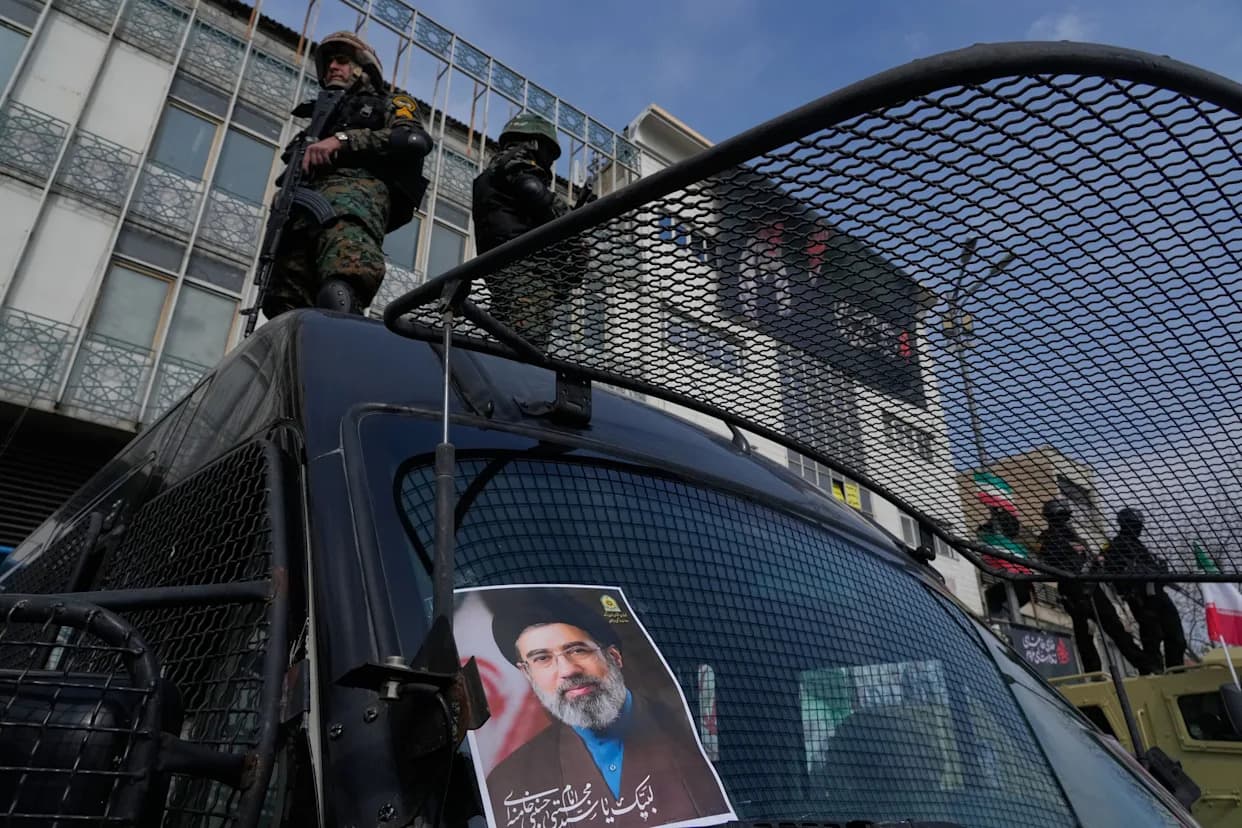
Last week, Israeli strikes broadened to include Basij checkpoints, bringing lower-ranking members into the crosshairs. Despite those attacks, the Basij, Iran’s police and the IRGC have largely maintained control on the ground. Many civilians have sheltered or fled amid strikes and mounting uncertainty rather than heeding calls from the U.S. and Israel to rise up.
Residents describe a visible, intimidating security presence in Tehran. Observers say an intensified internal security campaign that began with the crackdown on January’s nationwide protests continues, often targeting people who record strikes or try to work around a weeks-long internet blackout to contact the outside world.
Part of Israel’s objective appears to be undermining Basij morale and prompting defections or refusals to serve. In early March, the Israeli military issued a Farsi-language message urging mothers of Basij members to "save their children" by persuading them to lay down arms. But experts say the Basij’s highly ideological and decentralized structure makes it resilient to decapitation strikes.
"The Basij are the most decentralized force within an already highly decentralized system," said Hamidreza Azizi, a scholar of Iran’s security and foreign policy. He noted that the Basij chief is chosen more for ideological loyalty to the supreme leader than for operational expertise, and that many Basij units operate autonomously or semiautonomously.
Basij checkpoints have proliferated across Tehran, often little more than traffic cones and a few vehicles. They search cars for weapons, check IDs and sometimes demand to inspect phones. On March 11, the U.S.-based Armed Conflict Location and Event Data project (ACLED) documented at least 15 checkpoint strike incidents that day.
Israeli Prime Minister Benjamin Netanyahu said the strikes were delivering "crushing blows" to the Revolutionary Guards and the Basij, aiming to create conditions for Iranians to oust their government. The Israeli military reported striking more than 10 Basij positions across Tehran on one recent day; video verified by The Associated Press showed burning vehicles near traffic cones on a central boulevard, matching aerial footage released by Israel.
Iranians have circulated videos and posts identifying checkpoint locations, sometimes tagging the Israeli military's Farsi account and urging strikes, and sometimes simply warning commuters. Several clips show checkpoints sited beneath bridges, apparently to make them harder to target from the air.
"Basij," Farsi for "mobilization," comprises tens of thousands of volunteers under IRGC command. Many volunteers focus on ideological and political activities — running religious programs, monitoring social behavior and staffing branches in schools, universities and government bodies to bolster loyalty to the Islamic Republic. District-level paramilitary Basij units are deployed during unrest and have been reported using batons, electroshock devices and, at times, live ammunition.
Since January’s protests and into the current campaign of strikes, the Basij’s role has largely been to provide manpower. By staffing checkpoints, they allow security agencies to concentrate on intelligence-gathering and arrests, Azizi said.
Iran has continued a crackdown at home: authorities have sent mass text warnings against protests, detained people tied to the January demonstrations, and carried out executions connected to those events. In the past week semiofficial outlets reported more than 100 arrests nationwide, with some accused of conspiring with foreign states or sharing media with overseas entities. At least 14 people were accused of possessing Starlink satellite dishes or planning to sell them or distribute VPN cards. Starlink has been one of the few ways to reach the global internet since an unprecedented blackout began on Jan. 8.
Human rights groups report arrests for photographing checkpoints, bases and military installations, and there are reports of security forces firing at checkpoints. In one reported case, two teenage brothers were shot and killed after honking in celebration of false reports that Supreme Leader Ayatollah Ali Khamenei had been killed at the start of the war.
The situation remains fluid. Observers say the Basij’s decentralized structure and ideological commitment make it difficult to break through strikes alone, while Iran’s domestic security campaign continues to constrain public protest and information flow.
Associated Press writers Amir-Hussein Radjy and Lee Keath in Cairo contributed to this report.