
The National Weather Service says a loud boom heard across northeastern Ohio around 9 a.m. EDT on March 17 was likely caused by a meteor breaking up in the atmosphere. Videos from as far as Pittsburgh and a NOAA satellite flash tracked the event moving toward Lake Erie, even though no thunderstorms were present. NOAA’s Geostationary Lightning Mapper, which captures about 500 images per second, helped scientists measure the meteor’s speed, brightness and trajectory.
Meteor Breaks Up Over Ohio, Startling Residents — NOAA Satellite Tracked Flash Toward Lake Erie
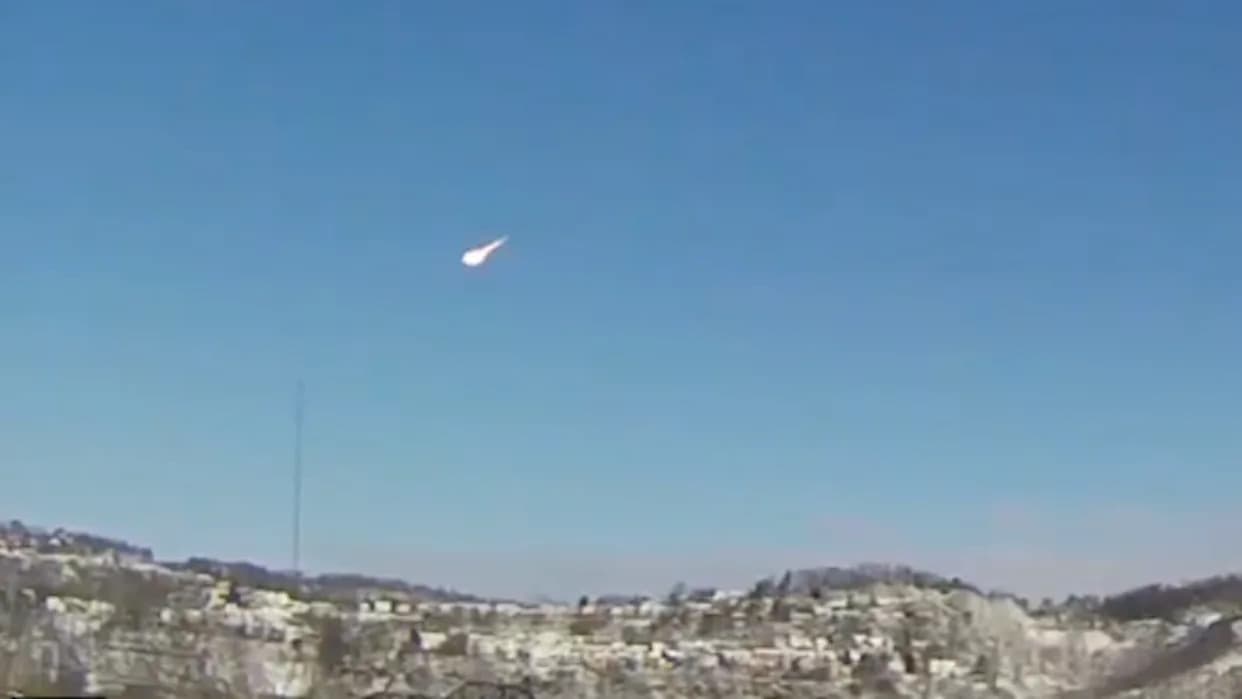
Although loud, little of the meteor is expected to have survived the atmospheric entry.
Residents across northeastern Ohio were startled awake around 9 a.m. EDT on March 17 by a loud boom that echoed through neighborhoods. The National Weather Service (NWS) says the sound most likely came from a meteor breaking apart as it streaked through Earth’s atmosphere.
Multiple videos — some recorded as far away as Pittsburgh, Pennsylvania — captured a bright streak of light crossing the sky. A NOAA satellite image initially flagged the visible flash as possible lightning, but NWS meteorologist Brian Mitchell told Cleveland.com that the absence of thunderstorms at the time made a cosmic object the more likely explanation.
How NOAA Tracked the Event
NOAA’s Geostationary Lightning Mapper (GLM), despite its name, is used for more than lightning detection. The instrument captures roughly 500 images per second and helps researchers and emergency responders monitor hurricanes, wildfires, climate events — and fast, bright phenomena such as meteors. That high-speed imaging lets scientists measure a space rock’s trajectory, brightness and speed with millisecond precision.
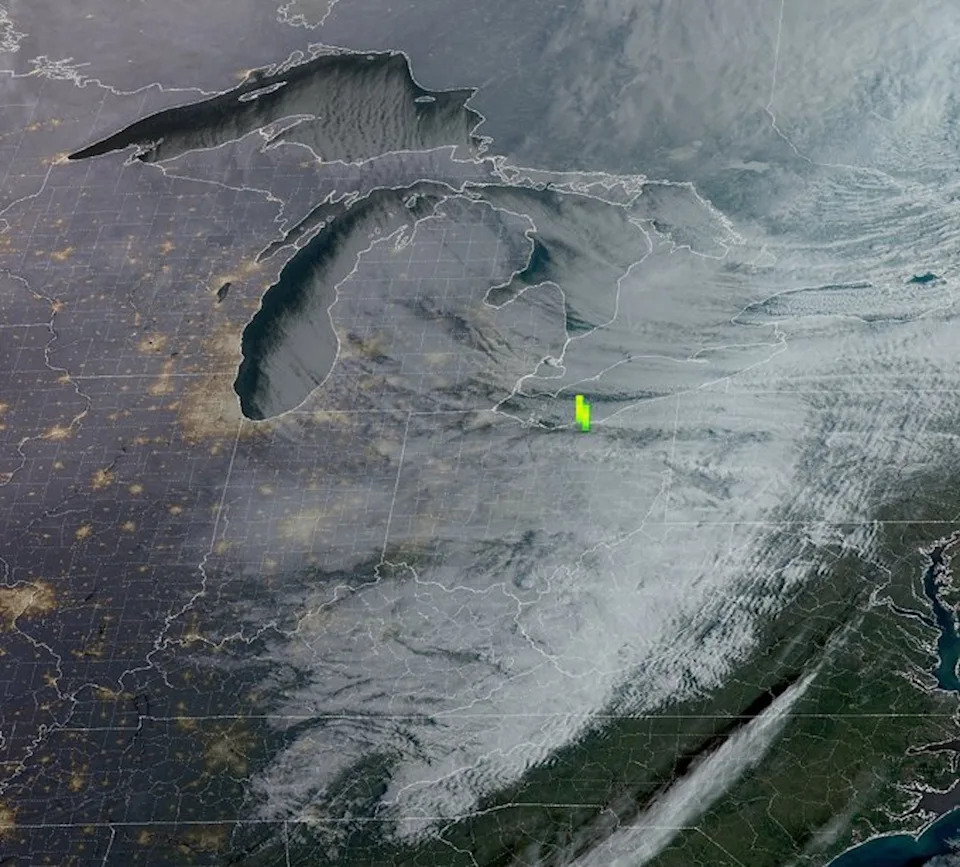
NOAA’s GLM image tracked a bright flash of light that initially appeared to be lightning. Credit: NOAA
Context: Meteors And Past Incidents
Meteors enter Earth’s atmosphere every day and most burn up before reaching the ground. There are occasional exceptions: earlier this month a fragment likely struck a house in Germany, though no injuries were reported. A notable recent example is the 2013 Chelyabinsk airburst in Russia, when a meteor roughly the size of a small building (about 20 meters across, or roughly six stories tall) exploded in the atmosphere, producing a shockwave that damaged windows and injured around 1,600 people.
The March 17 event appears to have been far less severe. The NWS said it does not expect any fragments to have survived the meteor’s final descent, and any remnants most likely fell into Lake Erie.
What To Do If You Find A Suspected Meteorite
If you believe you’ve found a meteorite, avoid handling it unnecessarily, note the exact location, and contact local authorities or a nearby university geology department for identification and safe handling advice.
Help us improve.





















