
The article reports that exiled Iranian Kurdish groups based in Iraqi Kurdistan say they are prepared to cross into Iran if the United States provides air cover. Kurdish commanders described readiness during visits to bases near Erbil, but warned they need guaranteed aerial protection before any incursion. Washington’s messaging has been mixed: officials say ground operations are not planned while President Trump has offered contradictory remarks. Kurdish leaders have formed a coalition and sought U.S. support, including drones, but have received no clear commitment.
Exiled Kurdish Fighters Say They’re Ready To Enter Iran If U.S. Provides Air Cover
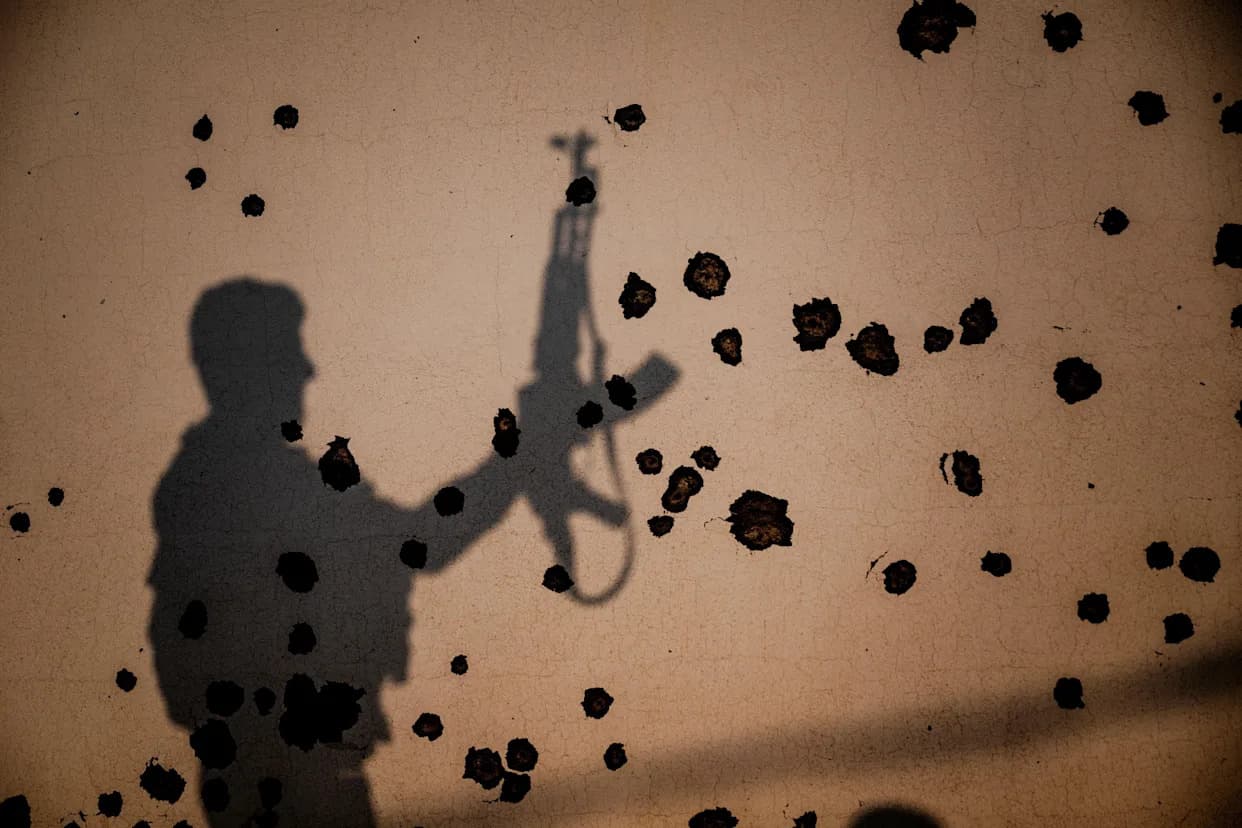
On a Kurdish outpost near the Iran border, commanders and Peshmerga fighters say they stand ready to cross into the Islamic Republic — but only if the United States secures the skies.
Readiness On The Border
At a base north of Erbil in Iraq’s Kurdistan Region, the terrain falls away into fertile valleys and deep gorges that lead toward Iran. It is from this landscape, Kurdish commanders say, that exiled Iranian Kurdish groups could mount operations into Iranian territory. The fighters — male and female, from late teens to veterans in their 50s and 60s — describe plans they say are prepared to activate once they receive reliable U.S. air cover.
"When we cross the border, the United States should secure the skies for us and protect us from above," said Rebaz Sharifi, a commander with the Kurdistan Freedom Party (PAK), in an interview on March 11.
U.S. Position And Mixed Messages
Washington has offered inconsistent signals. The White House has publicly stated that ground operations are "not part of the plan right now," even as President Donald Trump has given contradictory comments: at one point praising Kurdish willingness to act, then cautioning that involving the Kurds would complicate the conflict. U.S. officials have described the broader campaign — coordinated with Israel, according to some reports — as aimed at targeting senior Iranian figures and degrading Tehran’s long-range missile and nuclear capabilities.
Escalation Risks And Regional Tensions
Since the outbreak of hostilities, Iran and Iran-aligned militias in Iraq have launched drones and missiles at Kurdish bases, the U.S. Consulate in Erbil, and coalition facilities at Erbil International Airport. Many projectiles were intercepted, but some have penetrated defenses. During a March 12 visit to a Komala Party-linked base, a reporter was ordered to take cover amid the threat of a drone strike.
In response to rising tensions, the U.S. said on March 13 it would send about 2,500 additional Marines to the region. Iranian officials have warned they are prepared to confront any U.S. ground forces, a prospect that Tehran says would be disastrous for the attackers.
Coalition Building And Diplomatic Outreach
Several exiled Iranian Kurdish groups — including PAK and the Democratic Party of Iranian Kurdistan — have formed a coalition to exploit what they perceive as new openings amid Tehran’s vulnerability. Delegations have traveled to Washington seeking meetings with administration officials and requesting defensive equipment such as military drones.
Khalid Azizi, a spokesperson for the Democratic Party of Iranian Kurdistan, said the coalition maintains "some level of contacts" with U.S. officials but has received no clear commitments. Reports that U.S. intelligence agencies might arm Kurdish groups have not been confirmed.
Historical Context
The Kurds are a major ethnic group in the Middle East — independent estimates place their global population between 36 million and 45 million. They have no sovereign state and live across Iran, Iraq, Syria, Turkey and parts of the Caucasus. In Iran, estimates range from about 7 million to 15 million Kurds, roughly 8% to 17% of Iran’s population, according to Chatham House.
For more than a century Kurds have faced cycles of repression and shifting alliances; a widely known Kurdish proverb captures that legacy: "We have no friends but the mountains."
What’s At Stake
Any U.S. decision to provide air cover or arms to Kurdish groups would carry major geopolitical and military risks: it could expand the conflict geographically, provoke direct confrontation with Iran, and inflame tensions with regional powers that view some Kurdish groups as hostile or terrorist organizations. Kurdish leaders argue that limited air-protection and defensive systems would enable them to defend bases and perhaps open safe corridors for operations they believe could pressure Tehran.
The situation remains fluid. Kurdish commanders insist they are prepared to act quickly if provided the necessary air protection and equipment; U.S. officials say they are weighing options while publicly downplaying ground intervention for now.
Note: Some identifying details of Kurdish facilities were withheld at commanders' requests.
Help us improve.





















