
Donald Trump’s handling of the campaign against Iran combines rapid-fire, contradictory messaging with limited public explanation of objectives. White House and Pentagon statements often clash, leaving allies, veterans and many Americans unsettled. Although US strikes have degraded some Iranian capabilities, the death of dozens of civilians — including children — and disruption of the Strait of Hormuz have raised urgent questions about accountability, strategy and political cost.
Trump’s ‘Commander-in-Chaos’ Moment: Conflicting Messages and Rising Costs of the Iran Campaign
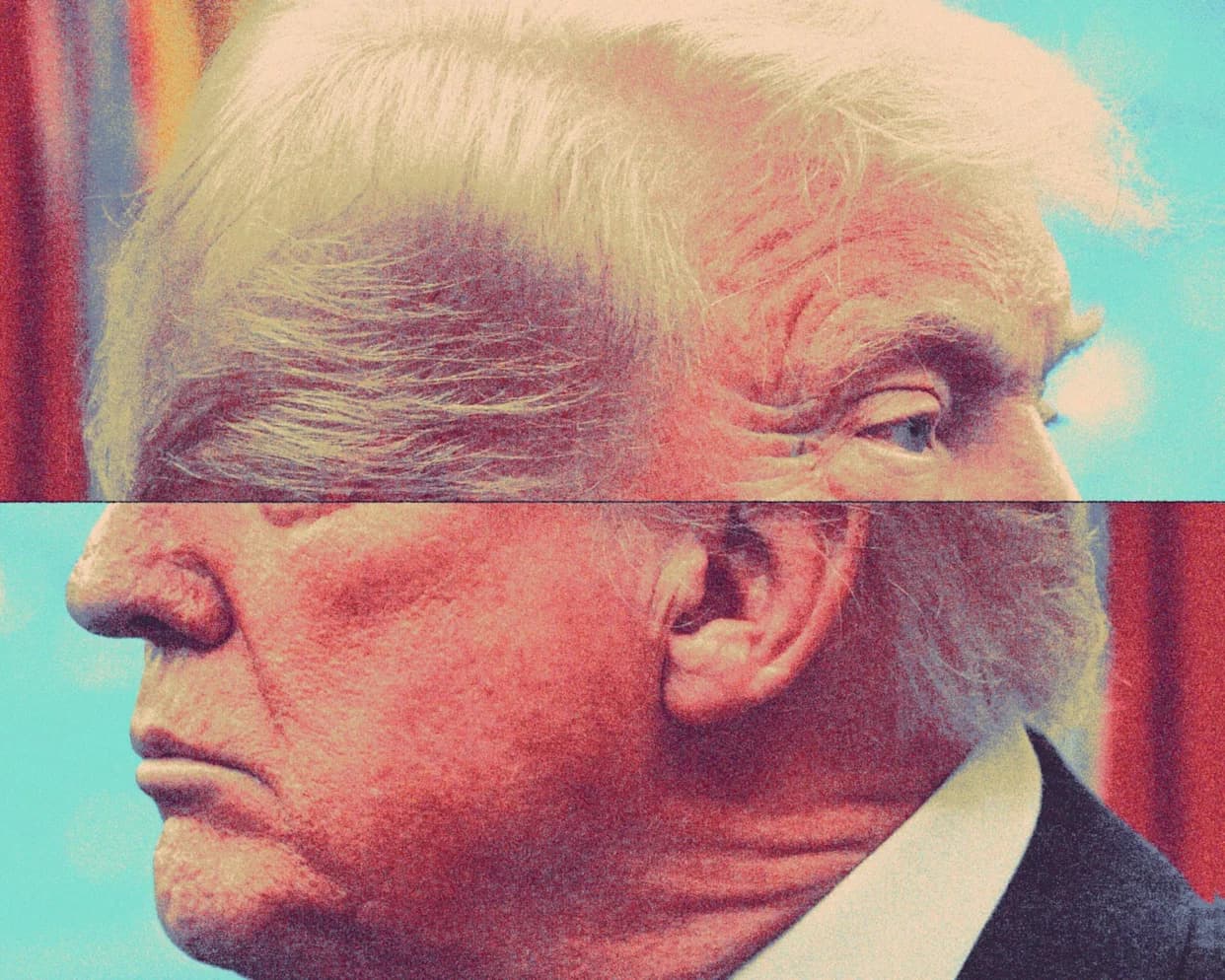
Since ordering the Iran bombardment, Donald Trump has struggled to make his case to a sceptical US public about why preemptive action was necessary.Illustration: Guardian Design / Getty Images(Illustration: Guardian Design / Getty Images)
At a Doral, Florida, press conference this week a reporter asked President Donald Trump to reconcile two conflicting lines: “You’ve said the war is ‘very complete’ but your defence secretary says, ‘This is just the beginning’. So which is it?” After a pause, Mr. Trump replied, “Well, I think you could say both.”
That muddled answer — coming as the military campaign against Iran enters its third week — crystallises an unusual and frequently contradictory approach to wartime leadership. The chaotic instincts Mr. Trump has long shown on the campaign trail and in domestic policy are now playing out in a theater of war that touches much of the Middle East and has sent ripples through global markets.
Mixed Messaging From White House and Pentagon
Rather than delivering a solemn Oval Office address, visiting West Point or making a televised carrier appearance, the president has relied on social media pronouncements, off-the-cuff remarks and campaign-style rallies. The result: a swirl of inconsistent signals. On the same day Mr. Trump told supporters the operation was “very complete,” the Pentagon’s official account posted that “this is just the beginning — we will not be deterred until the mission is over.”
“He’s a chaos agent and that’s what he specialises in,” said presidential historian Jonathan Alter. “He doesn’t think any further ahead than the next news cycle.”
Goals, Timelines and Political Risk
Defense officials and the White House have offered competing descriptions of goals and timelines. At times the president has characterised the campaign as a short, limited excursion; at others he has said more must be done. Critics warn that the lack of a clear mission undermines credibility, complicates alliances and could become a political liability if Congress is asked to approve supplemental funding to replenish depleted munitions.
Former officials and veterans argue that ambiguity is a double-edged sword: while it gives the president freedom to declare victory on his own terms, it also leaves allies confused and adversaries uncertain in a way that can escalate rather than deter conflict.
Human Cost and Accountability
One of the most disturbing episodes early in the campaign was the bombing of a girls’ school in southern Iran, which reportedly killed at least 175 people, most of them children. Mr. Trump initially blamed Iran’s forces and suggested Tehran had access to US-made Tomahawk missiles — a claim that is inaccurate. A preliminary US military inquiry has reportedly concluded US forces were responsible for the strike; the president responded, “I don’t know about it,” when asked about the report.
Veterans’ groups have also criticised the tone of the administration’s messaging. Janessa Goldbeck of the Vet Voice Foundation said the president’s treatment of casualties — at times abrupt or flippant — was “absolutely unconscionable.”
Allies, Energy Chokepoints and Global Impact
Allied leaders have expressed unease. Mr. Trump publicly scolded the British prime minister and the Spanish prime minister for what he called insufficient support and even threatened trade retaliation against Spain. The campaign has disrupted key energy routes: the Strait of Hormuz, through which roughly 20% of the world’s oil typically transits, has been severely affected, complicating shipping and energy markets.
Why It Matters
The administration’s inconsistent narrative has consequences beyond headlines. Polling shows many Americans worry the strikes make the nation less safe. Diplomatically, allies are unsettled and the US risks long-term credibility loss if objectives and accountability remain unclear. Military success in degrading Iranian capabilities may be real, but without a clear public strategy and congressional backing, the campaign risks becoming an open-ended, politically costly quagmire.
Bottom line: The campaign against Iran has exposed a leadership style that prizes unpredictability over disciplined strategy — a posture that confers short-term flexibility but threatens long-term credibility, allied cohesion and clear political authority at home.
Help us improve.





















