Thailand's King opened the new parliament on March 14 as the Office of the Ombudsman asked the Constitutional Court to review barcodes and QR codes printed on Feb. 8 ballots after 21 complaints that they could breach ballot secrecy. The Election Commission says the codes were added for security and that identifying individual votes would require access to the upper halves of ballots, which are securely stored. Bhumjaithai, with at least 191 seats, plans a coalition with Pheu Thai and smaller parties to form a government with more than 290 seats; lawmakers will soon elect a speaker and are expected to hold a prime ministerial vote later this week.
Thai Parliament Opens as Ballot Barcode Dispute Heads to Constitutional Court
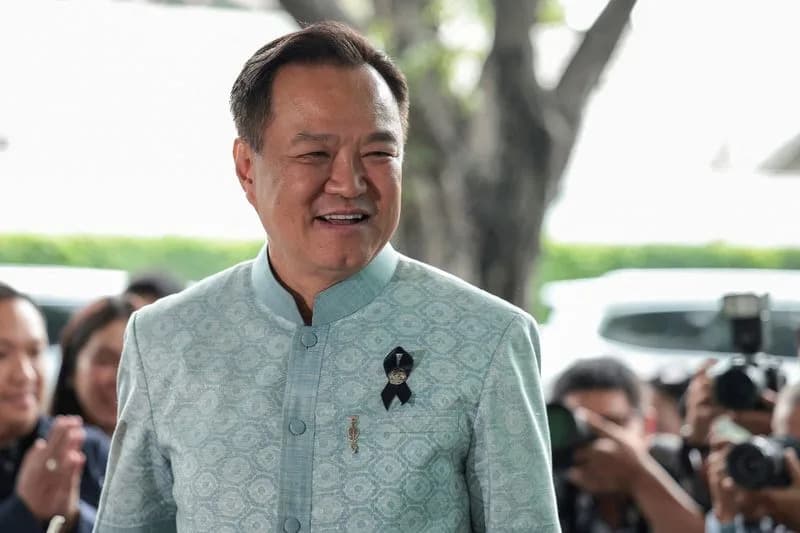
FILE PHOTO: Anutin Charnvirakul, Thailand's caretaker Prime Minister, Bhumjaithai Party leader and prime ministerial candidate, reacts upon arrival ahead of a meeting with party members at Bhumjaithai Party headquarters, after the party won the general election, in Bangkok, Thailand, February 12, 2026. REUTERS/Chalinee Thirasupa/File Photo
BANGKOK, March 14 — King Maha Vajiralongkorn formally opened Thailand's new parliament on Saturday amid a legal challenge over barcodes printed on ballots in last month's general election.
The Office of the Ombudsman has petitioned the Constitutional Court after receiving 21 public complaints alleging that barcodes and QR codes on the February 8 ballots could compromise the secrecy of voters' choices. In a precedent cited by officials, the Constitutional Court annulled the 2006 election on similar grounds that the voting process had not been conducted in secret.
The Election Commission has defended the use of barcodes as a security measure, saying the codes are intended to help verify ballots and that identifying a voter's choice would also require access to the upper half of the ballot papers, which are being stored under secure conditions.
Coalition Talks and Parliamentary Business
Prime Minister Anutin Charnvirakul's Bhumjaithai Party secured a decisive result in the election and won at least 191 seats in the 500-member House. Bhumjaithai has announced plans to form a ruling coalition with the third-placed Pheu Thai Party and several smaller parties, a bloc that would command more than 290 seats and could provide a more stable government after years of political instability.
Lawmakers are due to reconvene on Sunday to endorse a new house speaker and two deputies. Deputy Prime Minister Sophon Zaram, a veteran Bhumjaithai politician, has been nominated for the speaker's post. The new speaker is expected to schedule the parliamentary session to vote for prime minister, a contest in which the incumbent Anutin is widely expected to prevail; Bhumjaithai deputy leader Siripong Angkasakulkiat said the vote could take place on Thursday.
King Vajiralongkorn urged lawmakers in brief remarks to "uphold what is right and have the well-being of the people as their highest goal."
The outcome of the court review will be closely watched at home and abroad: a ruling that the barcodes breached ballot secrecy could trigger legal or political complications for the election results, while a dismissal would allow the new parliament and prospective coalition to proceed with their legislative agenda.
Help us improve.