
NOAA warns of active space weather on March 14–15 that could make the northern lights visible in northern Canada and in up to 10 U.S. states near the Canadian border. A coronal-hole high-speed stream and an upgraded G2 alert raise the odds, while March's equinox geometry further increases aurora chances. Monitor NOAA's 30-minute aurora forecast, SpaceWeatherLive and aurora apps for live updates, and look for a sustained southward Bz (~-5 nT) as a sign of imminent activity.
Northern Lights Alert: NOAA Says Aurora May Be Visible Across 10 US States March 14–15
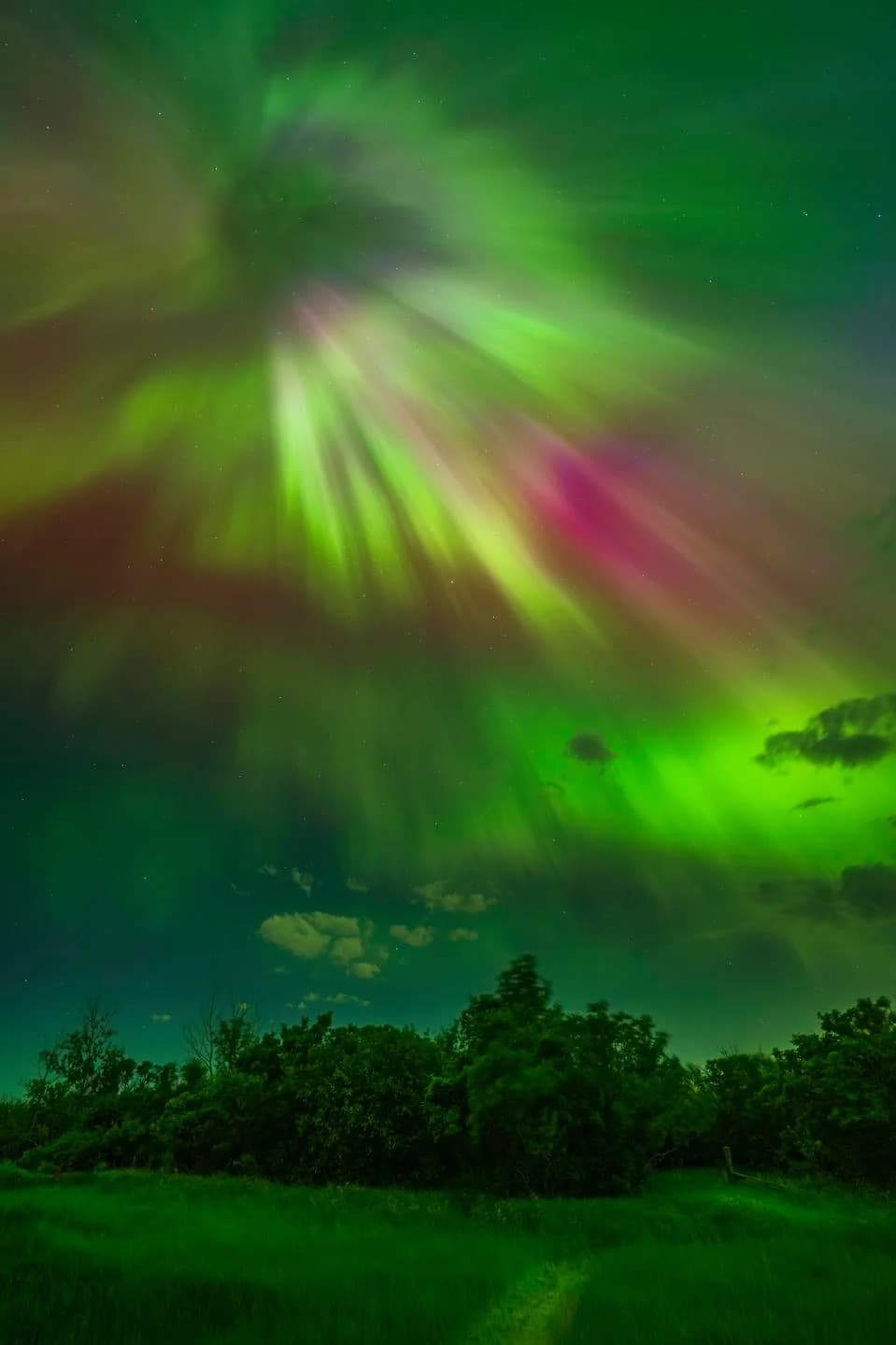
NOAA is forecasting active space weather on Saturday, March 14, through Sunday, March 15, with aurora borealis possible from northern U.S. states and Canada. . (Photo by: Alan Dyer/VWPics/Universal Images Group via Getty Images)VW Pics/Universal Images Group via Getty Images
NOAA Forecast: Active Space Weather March 14–15 — The National Oceanic and Atmospheric Administration (NOAA) is forecasting unsettled geomagnetic conditions from Saturday, March 14 through Sunday, March 15. A coronal-hole high-speed stream and an upgraded G2 alert increase the chance that the aurora borealis will be visible across northern Canada and in parts of the northern United States.
Where You Might See the Lights
NOAA's auroral viewline shows the northern lights most likely low on the northern horizon in up to 10 U.S. states near the Canadian border. The states most likely to see the display include:
- Alaska
- Northern Washington
- Northern Idaho
- Montana
- North Dakota
- South Dakota
- Minnesota
- Wisconsin
- Michigan
- Maine
Why Now?
NOAA reports that a coronal-hole high-speed stream, a fast flow of solar wind from gaps in the Sun's outer atmosphere, may disturb Earth's magnetic field. Forecasts were recently upgraded toward a G2-level event, meaning auroras could push farther south than usual. Although the main storm was expected March 13–14, residual effects may persist into March 14–15.
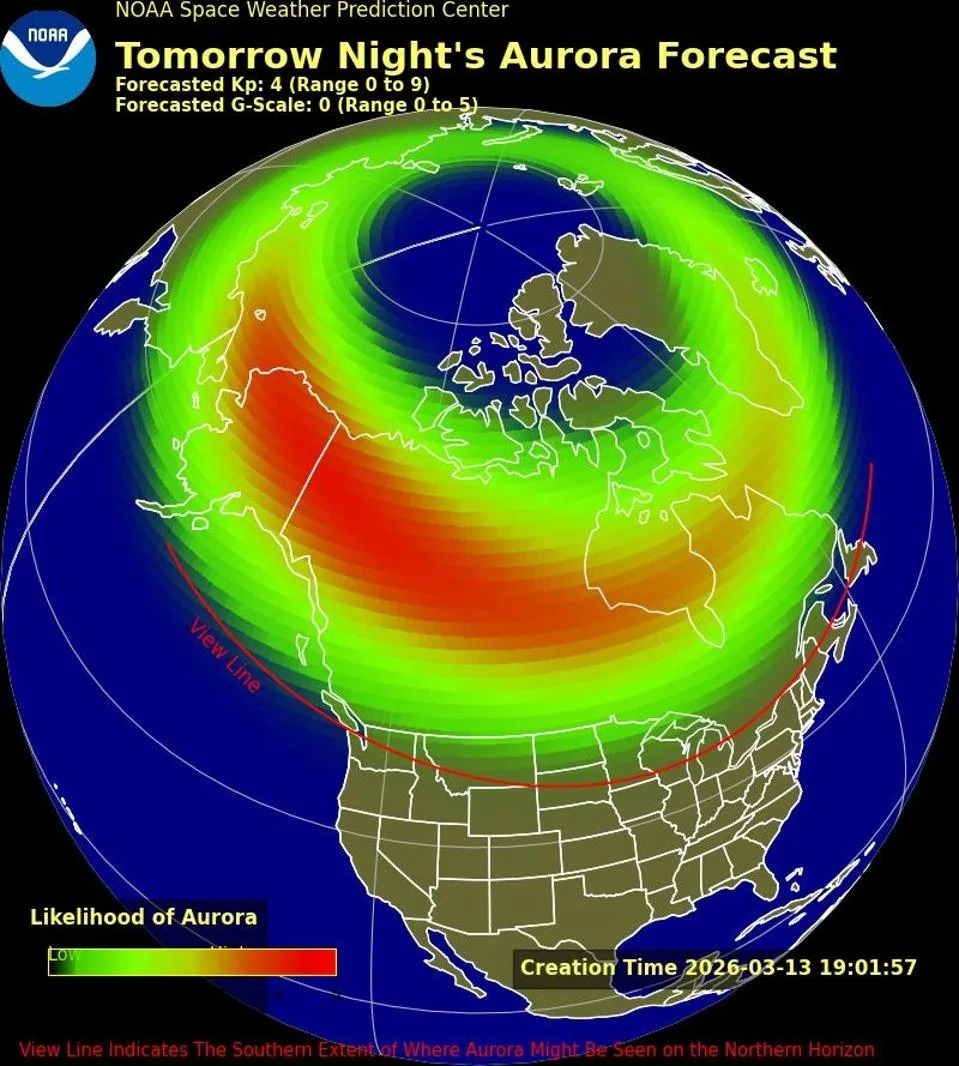
NOAA's aurora viewline for Saturday, March 14, through Sunday, March 15. A view of the northern lights are possible from northern U.S. states and Canada.NOAA
March also benefits from the seasonal "equinox effect". Around the March equinox (this year March 20), Earth's magnetic geometry more readily allows solar wind energy to enter the magnetosphere, a phenomenon described in the Russell-McPherron effect. That increases the odds of auroras, though strong solar drivers are still required for spectacular displays at low latitudes.
Timing, Moonlight And Viewing Tips
A waning gibbous moon will rise in the early hours of Sunday, March 15 across much of North America; for the darkest skies, wait until the moon sets. Use a light pollution map and a Dark Sky finder to choose a location with a clear northern horizon. Even moderate geomagnetic storms can produce vivid color if the sky is dark and cloud-free.
Predicting exact arrival times is difficult because the timing depends on solar wind speed. Monitor live resources such as NOAA's 30-minute aurora forecast and SpaceWeatherLive.com, and consider smartphone apps like Aurora Now, My Aurora Forecast, SpaceWeatherLive or Glendale Aurora for real-time solar wind data.
Watch the Bz component: the interplanetary magnetic field's Bz determines how easily solar energy enters Earth's magnetosphere. When Bz swings south, solar and terrestrial fields can connect and let plasma in. A sustained southward Bz around -5 nT or stronger commonly signals an imminent auroral display.
Smartphone Photography Tips
- Use your phone's main lens (not the ultra-wide) for sharper results.
- Stabilize the device on a tripod or a steady surface like a car roof.
- Shoot in RAW or Pro mode if available to simplify post-processing.
- Use long exposures of roughly 5–10 seconds; faint glows that look gray to the eye often appear vividly green, purple or red in photos.
Clear skies and wide eyes to everyone heading out this weekend.
Help us improve.





















