
Pope Leo, the first American pope, delivered an indirect yet forceful rebuke aimed at leaders he suggested were pushing for war, urging those responsible for armed conflict to examine their conscience and seek confession. He has publicly opposed recent U.S. and Israeli strikes on Iran and prayed for an end to the bombing and for space for dialogue. Iranian officials report heavy civilian casualties, including more than 175 children killed in a school strike, while U.S. officials report 13 American service members have died in the same period. Cardinal Robert McElroy echoed the pope’s concerns, saying recent strikes fail key just-war criteria such as just cause, right intention and clear goals.
Pope Leo Issues Stark, Veiled Rebuke to Leaders Over Iran Strikes
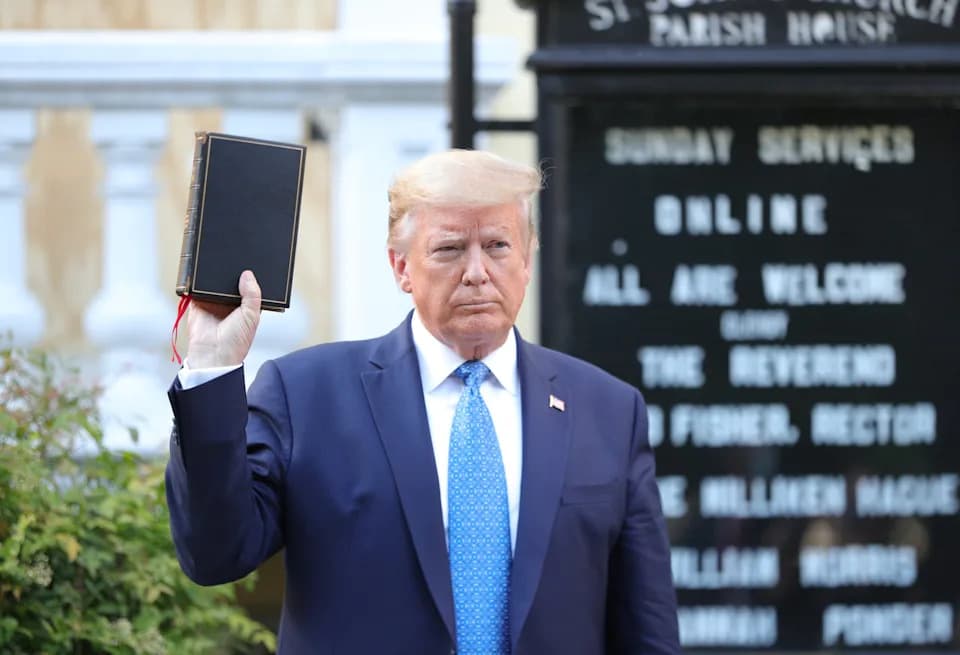
President Donald Trump rarely speaks about his faith. He was sharply criticized in his first term for holding up a bible in a clear photo op outside a Washington church. / Tom Brenner / REUTERS
Pope Leo, the first American to lead the Vatican, delivered a pointed but indirect rebuke of world leaders he suggested were eager for war during a meeting with senior clergy.
An Appeal To Conscience
Speaking to top priests on Friday, the 70-year-old pontiff asked a searching question of those with responsibility for armed conflicts:
“Do those Christians who bear grave responsibility in armed conflicts have the humility and courage to make a serious examination of conscience and to go to confession?”
Although he did not name any leader, many observers interpreted the remarks as a critique of recent U.S. policy and strikes on Iran. Reuters reported that Pope Leo has publicly opposed recent U.S. and Israeli strikes and, in prayer, appealed that “the roar of bombs may cease, that weapons may fall silent, and that space may be opened for dialogue in which the voices of peoples can be heard.”
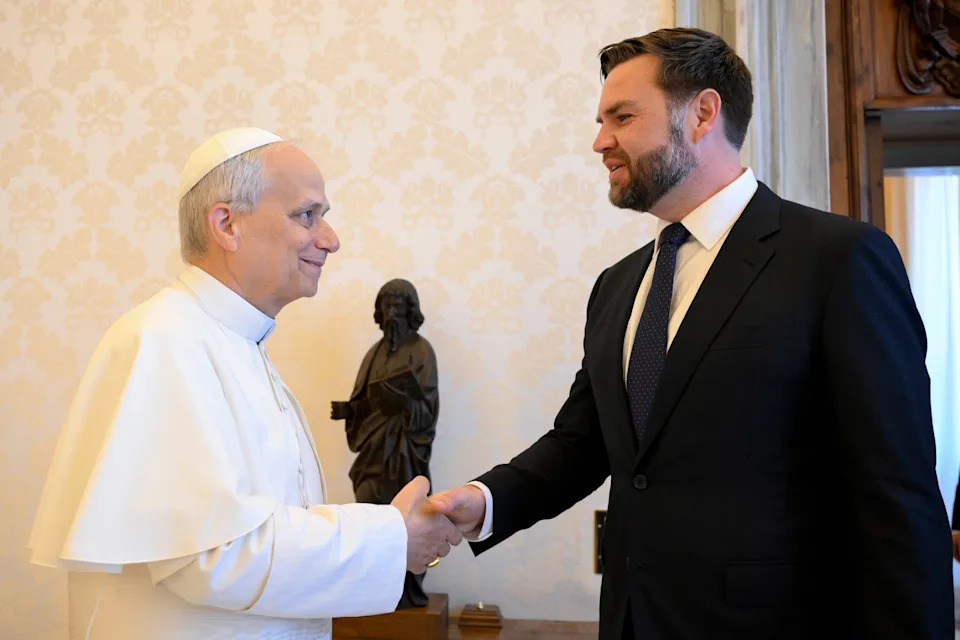
Pope Leo has also sharply criticized the Trump administration's deportation agenda. / Vatican Pool / Getty Images
Political Context
The coverage noted prominent U.S. political figures who are Catholic — including Marco Rubio and J.D. Vance — in the wider debate over policy toward Iran; representatives for both did not immediately respond to requests for comment. The article does not attribute specific actions or positions to them beyond their mention in reporting.
Just War Tradition
The Catholic Church generally emphasizes nonviolence but recognizes rare exceptions under the doctrine of a “just war,” developed by Christian thinkers such as St. Augustine and St. Thomas Aquinas. That tradition sets narrow conditions — including just cause, right intention and a reasonable prospect that the good achieved will outweigh harm — that any military action must meet to be morally defensible.
Civilian Casualties and Military Losses
Iranian officials say that more than 175 people, most of them young children, were killed when an elementary school was struck on Feb. 28. They place the civilian death toll from the strikes at roughly 1,300 since the campaign began. U.S. officials say 13 American service members have died in the Middle East during the same period. These figures are attributed to the respective official sources and have not been independently verified here.
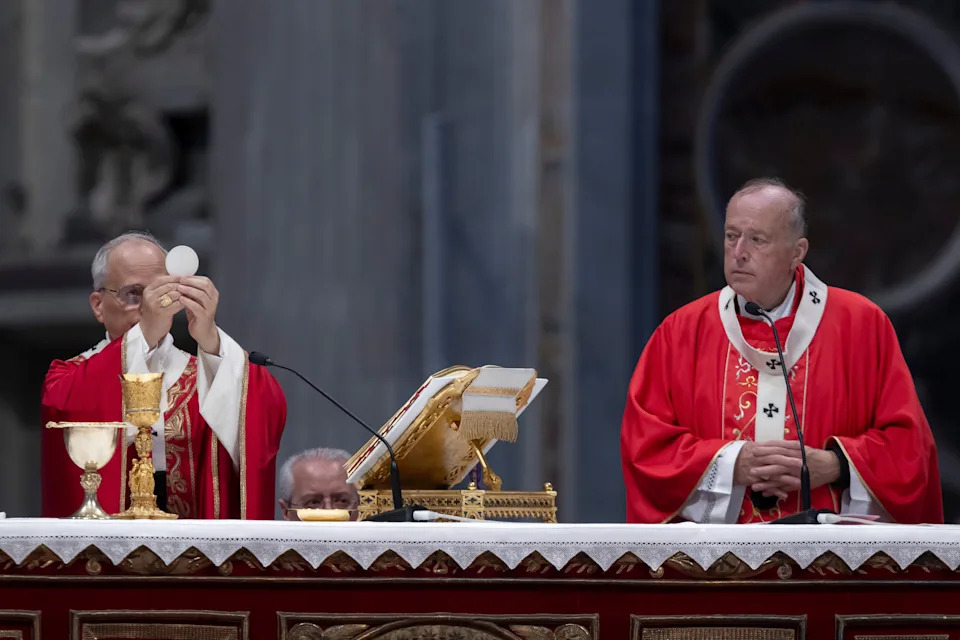
Cardinal Robert McElroy (right) has also spoken against war in Iran, declaring it not just. / Maria Grazia Picciarella/SOPA Images/LightRocket/Gett
United States Church Leaders Respond
Cardinal Robert McElroy of Washington, D.C., has also voiced opposition to continued strikes on Iran. Calling the recent actions “not morally legitimate,” McElroy argued they fail core just-war requirements:
“The criterion of just cause is not met because our country was not responding to an existing or imminent and objectively verifiable attack by Iran... The criterion of right intention is not met in our country’s decision to attack Iran.”
He added that a clear strategy is missing, making it impossible to satisfy the just-war tradition’s demand for right intention. “One of the most worrying elements of these first days of the war in Iran is that our goals and intentions are absolutely unclear,” he said, noting competing and inconsistent aims ranging from degrading Iran’s military capability to regime change.
McElroy also questioned whether the benefits of the campaign will outweigh the harm: “Our current war effort does not meet Catholic just war teaching because it is far from clear that the benefits of this war will outweigh the harm which will be done.”
Closing
Pope Leo’s remarks and Cardinal McElroy’s criticisms underscore a broader concern within parts of the Catholic hierarchy about the moral and humanitarian costs of the recent escalation. The pontiff’s appeal for conscience, prayer and dialogue frames the conflict as not only a strategic question but a moral one that calls for humility and restraint.
Help us improve.





















