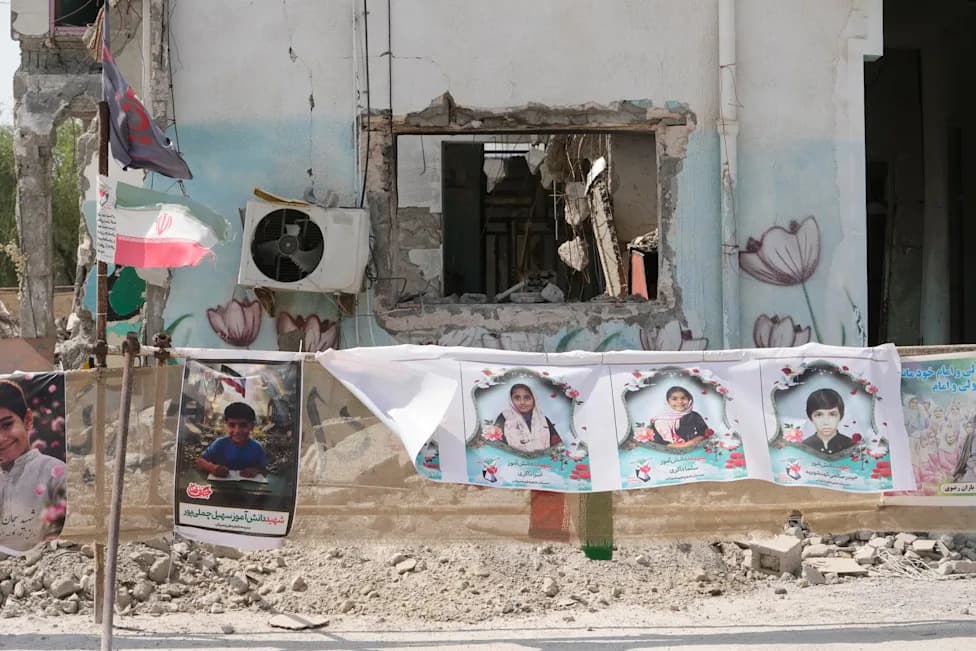
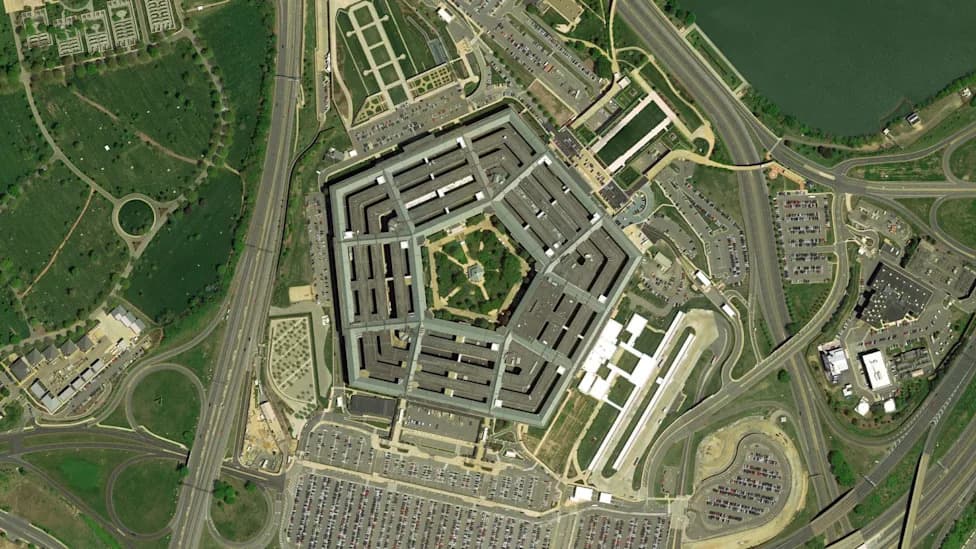
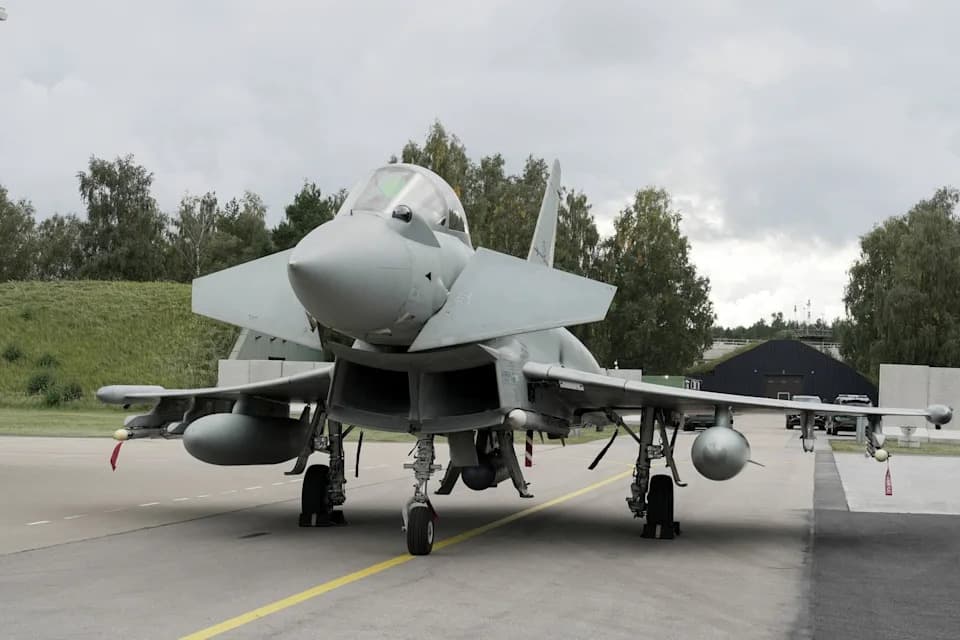
On Feb. 28, a missile struck the Shajarah Tayyebeh girls’ elementary school in Minab, killing at least 175 people, mostly children. A preliminary U.S. military inquiry indicates the blast was likely caused by a Tomahawk cruise missile and attributes the strike to a targeting error involving outdated intelligence passed to CENTCOM. The school sat adjacent to an IRGC naval base; video and fragments point to a Tomahawk, though provenance remains under review. International bodies and U.S. lawmakers have demanded a swift, transparent investigation.
U.S. Probe Says Tomahawk Likely Hit Iranian Girls’ School — What We Know About the Deadly Feb. 28 Strike
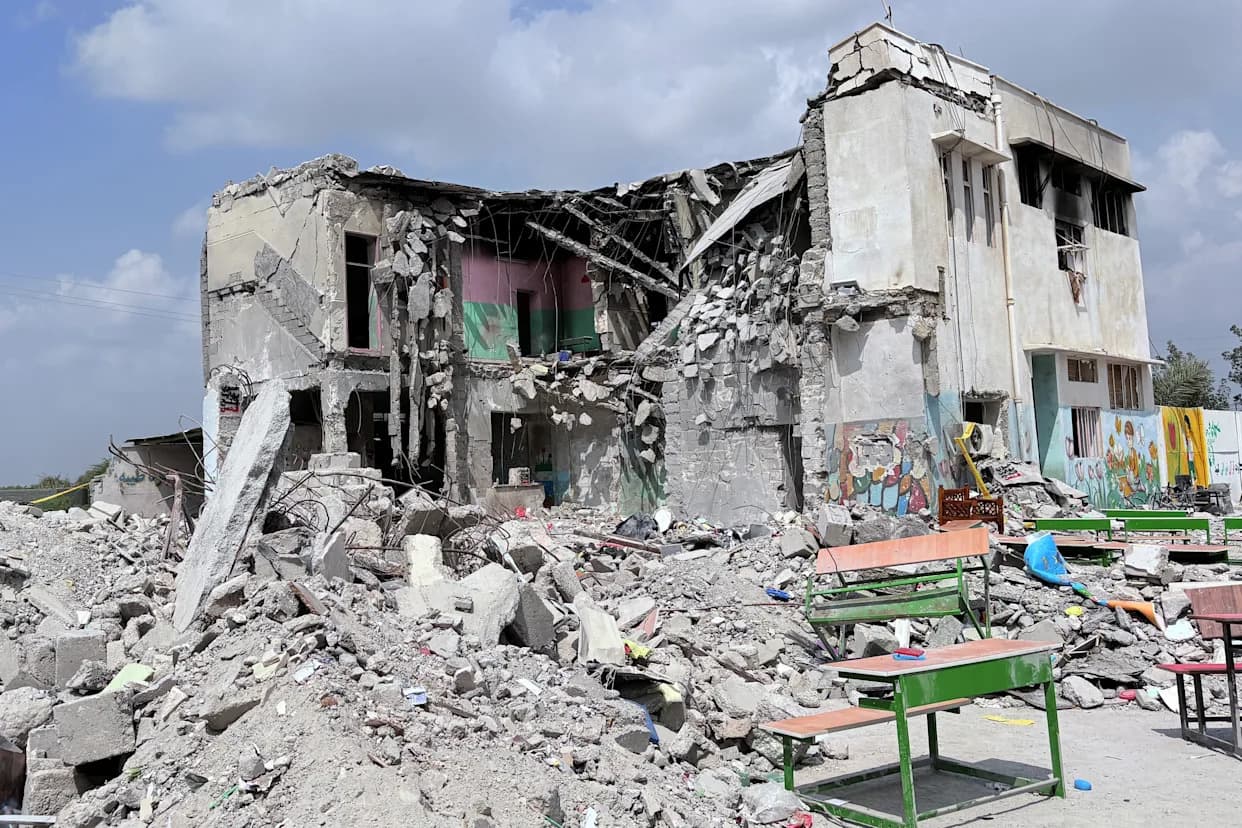
The debris of a school, where many students and teachers lost their lives on the first day of the wave of attacks launched by the United States and Israel against Iran, on March 5.(Anadolu via Getty Images)
On Feb. 28, during the first major wave of U.S.-led strikes on Iran, a missile struck the Shajarah Tayyebeh elementary school for girls in Minab, near the Strait of Hormuz. Iranian officials say at least 175 people were killed and nearly 100 were wounded. Most victims were children.
Overview
A preliminary U.S. military investigation has concluded that the building was likely destroyed by an American Tomahawk cruise missile as the result of a targeting error. Investigators say the strike occurred while U.S. forces were engaging naval targets in the same area, including an adjacent Islamic Revolutionary Guard Corps (IRGC) naval base.
The Attack
The missile struck mid-morning on Saturday, Feb. 28 — a workday in Iran — as students were arriving. Local teachers reported the school planned to close for the day but parents could not reach their children in time. By about 10:45 a.m., the two-story school had been hit; at least half the structure was destroyed. Verified photos and video showed smoke pouring from windows, collapsed classrooms, and rubble scattered with schoolbooks and backpacks.
“The Minab school incident has no comparison with any other incident,” said the head of Iran’s Red Crescent, calling the mass deaths of students “a unique and bitter incident.”
Evidence Pointing to a Tomahawk Strike
Reporting and open-source evidence linked the blast to U.S. strikes rather than to Israeli forces. The school sits adjacent to an IRGC naval base and had formerly been part of that military compound before being converted into a public school. Satellite imagery shows the building was separated and repainted for civilian use years earlier.
Video published by Iranian state media and later verified by international outlets showed a Tomahawk cruise missile strike on the IRGC naval base next to the school. Tomahawks are used by U.S. forces; investigators reported that fragments recovered and shared by Iranian media bore markings consistent with a U.S.-made Tomahawk manufactured in 2014 or later, though provenance of the fragments was not fully established.
Preliminary Investigation Findings
Officials briefed on early findings told reporters that the strike appears to have been caused by a targeting mistake. The account says officers at U.S. Central Command (CENTCOM) created target coordinates using outdated or incorrect data provided by the Defense Intelligence Agency (DIA). Had the DIA or other geospatial sources (such as NGA imagery) updated the record to show the structure was a functioning school, investigators say, it likely would not have been labeled a military target.
U.S. authorities have examined whether advanced tools or automated processes played a role; early indications attributed the error primarily to failures in human oversight and verification during a fast-moving operational period. The U.S. military investigation is ongoing, and the U.S. government has not issued a final, formal acceptance of responsibility as of the latest reports.
Reactions and Legal Issues
UNESCO condemned the killing of pupils in a place of learning as a grave violation of the protections afforded to schools under international humanitarian law. Human-rights organizations called for accountability. Forty-six Democratic senators sent a letter to Defense Secretary Pete Hegseth demanding a swift, transparent investigation and reiterating that U.S. military operations must comply with U.S. and international law.
Intentionally targeting schools, hospitals, or other civilian infrastructure can constitute a war crime; indiscriminate attacks that fail to distinguish civilian from military objects also violate the law. Determining legal responsibility for a mistake is complex and depends on investigation results, intent, and whether proper safeguards and verification procedures were followed.
What Happens Next
Investigators continue to review geospatial data, target development records, the chain of command that approved the strike, and the origin of the targeting information. Families of victims, human-rights groups, and international bodies are pressing for transparency and accountability as the probe proceeds.
Note: This article summarizes reporting available as of the latest preliminary U.S. investigation. Officials caution that findings are provisional and subject to change as the investigation continues.
Help us improve.