
A Tehran resident in her 30s spoke anonymously to AFP about life amid air strikes, checkpoints and worsening economic strain. She says many fled early, jobs have been suspended and fuel rations were cut from 30 to 20 litres, with some stations limiting sales to five litres. Checkpoints and phone searches are common, while neighbourhoods such as Gisha and Niloufar Square suffered heavy damage. Residents report fear, nightly pro-regime convoys and growing concerns about civil unrest or wider conflict.
Checkpoints, Air Strikes and Hope: A Tehran Resident’s Account of Life Under War
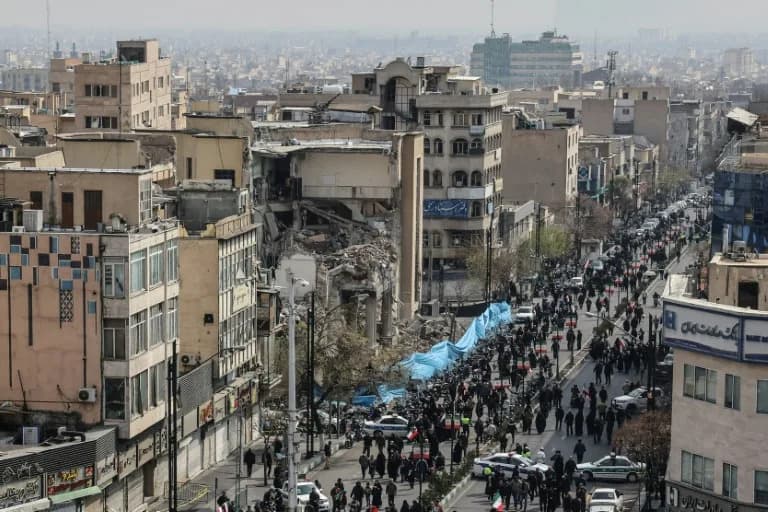
Iranians walk past a damaged building in Tehran (Atta KENARE)(Atta KENARE/AFP/AFP)
Torn between hope and fear, a woman in her 30s living in Tehran agreed to speak anonymously to AFP about daily life amid ongoing air strikes and security measures. Below is an edited and polished transcript of her account.
Daily Life in Tehran
People have left the city in waves, especially those living closest to likely targets. The economic situation is bleak: my job is on hold and I am drawing down my savings. Leaving Tehran is costly, which may explain why fewer people are departing now, a trend one resident attributed in part to public statements from former US President Donald Trump that civilians would be spared.
Daily errands remain possible. Fuel rations were reduced from a 30-litre cap to 20 litres; I have not refilled because I have enough, but friends report some stations limiting sales to as little as five litres. We have not needed hospital care yet, and I have been told that hospitals are still functioning.
Security And Checkpoints
Small local police stations have closed, leaving many officers without regular posts. Military and security installations have also been hit, and the authorities appear to be relying on checkpoints to demonstrate a presence and control.
"I didn’t have to stop at checkpoints I passed, but others report phones being checked and insults typed into devices — words like 'Leader,' 'Khamenei' or even the derogatory nickname 'moosh Ali' ("Mouse Ali")."
Pro-regime supporters still stage nightly car convoys — roughly 50 vehicles — driving loops around the neighbourhoods while chanting "Allahu akbar" ("God is the greatest") at about 10:00–10:30pm.
Direct Impact Of Air Strikes
Several neighbourhoods have sustained heavy damage. In Gisha, a friend’s mother lives opposite the Public Security Police station; parts of the building had windows blown out. Residents described being too frightened to open their eyes after strikes for fear of finding themselves dead or homeless.
The Niloufar Square police station suffered severe destruction — the strikes were so powerful that, according to residents, the square appeared to widen by a whole street. Local shop owners reported extensive losses; one proprietor salvaged only a few boxes from a ruined store.
Attitudes Toward The War
The night authorities announced Khamenei had died, neighbours celebrated on rooftops until security forces arrived and fired into the air. Residents report indiscriminate shooting at windows and a climate of intimidation.
Many interviewed feel deeply frustrated and divided about how to respond. Some say they no longer believe street protest alone will remove the leadership and express support for outside intervention; others fear that continued rule by the current authorities could trigger internecine violence or a civil war. Slogans reported among some residents include "No to a ceasefire!" and "War, war, until victory!"
Sleep And Psychological Strain
Noise and blasts disrupt sleep across the city in varying degrees. One resident described a nearby strike that sounded like the entrance door being torn off. A friend in Tehran-Pars relies on sleeping pills because of constant noise, while others sheltered in bathrooms during strikes near Mehrabad airport, fearing roof collapse. Experiences differ significantly by neighbourhood.
Reported by AFP. The source asked to remain anonymous for safety reasons.
Help us improve.





















