
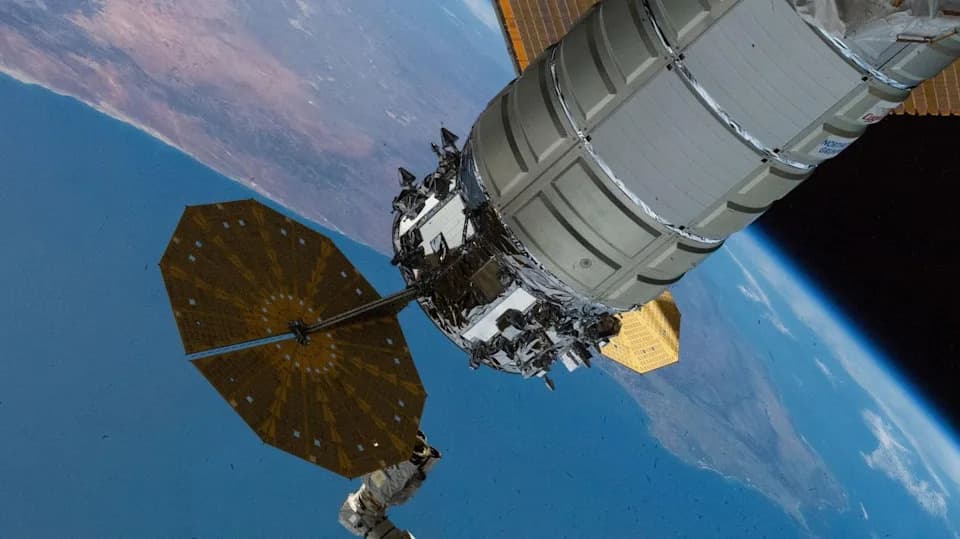
Northrop Grumman’s first Cygnus XL freighter, the S.S. William "Willie" McCool, will depart the International Space Station on March 12 after nearly six months attached. The vehicle launched Sept. 14 on a SpaceX Falcon 9 with about 11,000 lb (4,990 kg) of cargo and overcame an engine anomaly to reach the station on Sept. 18. Canadarm2 will unberth and release Cygnus XL at 7:05 a.m. EDT; NASA says it will reenter and burn up over the South Pacific two days later.
Watch: Northrop Grumman’s First Cygnus XL Freighter to Depart the ISS on March 12
Credit: NASA
Northrop Grumman’s inaugural Cygnus XL cargo ship is set to depart the International Space Station (ISS) on Thursday morning, March 12, concluding nearly six months attached to the orbital complex.
The spacecraft — named S.S. William "Willie" McCool in honor of the late astronaut — is scheduled for unberthing and release at 7:05 a.m. EDT (1105 GMT). NASA will provide live coverage (hosted at Space.com) beginning at 6:45 a.m. EDT (1045 GMT).
Mission Highlights
Launched on Sept. 14 atop a SpaceX Falcon 9, Cygnus XL carried roughly 11,000 pounds (4,990 kilograms) of experiments, equipment and supplies to the station — notably more than earlier Cygnus variants, which carried about 8,500 pounds (3,856 kg).
On its initial flight the vehicle experienced an engine anomaly en route to the station but recovered and arrived on Sept. 18, one day later than planned. Canadarm2 grappled the freighter and berthed it to the station's Unity module for its stay.
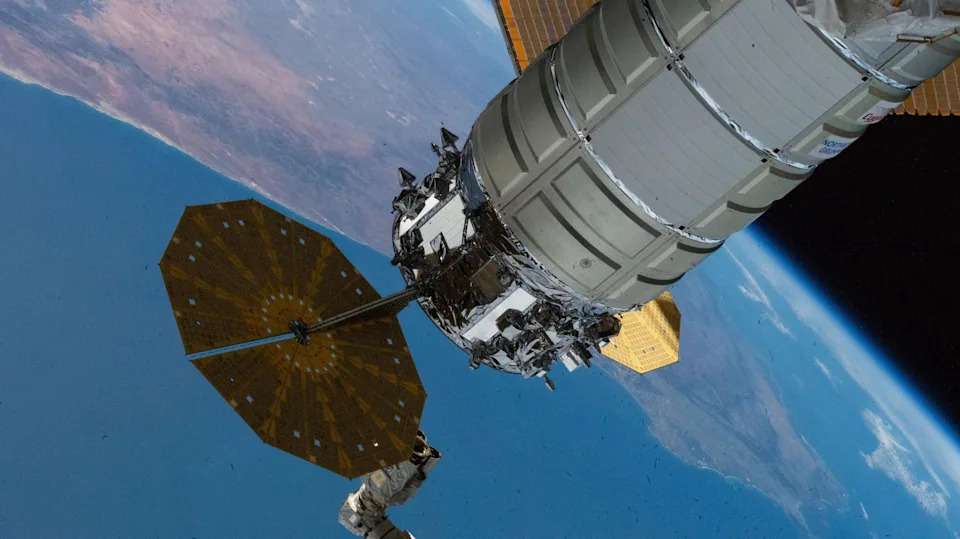
Northrop Grumman’s first Cygnus XL cargo craft is pictured installed to the Unity module’s Earth-facing port as the International Space Station orbited 262 miles (422 kilometers) above the Atlantic Ocean off the coast of South Africa. | Credit: NASA
On release day, the station's Canadian-built robotic arm will again remove S.S. William "Willie" McCool from Unity and release it back into orbit. NASA says the freighter will perform a controlled reentry two days after release and will burn up safely over the South Pacific Ocean.
Context: The ISS Cargo Fleet
Cygnus is one of four automated cargo vehicles that regularly service the ISS: SpaceX's reusable Dragon, Russia's Progress, Japan's new HTV-X, and Northrop Grumman's Cygnus. Unlike Dragon, Cygnus, Progress and HTV-X are designed to be disposed of via destructive reentry at the end of their missions.
Japan's HTV-X recently completed its first station visit and departed on March 6 after roughly four months berthed. Instead of immediately deorbiting, that HTV-X will remain in orbit as a free-flying platform for about three months to host JAXA science experiments.
This March 12 departure marks the conclusion of Cygnus XL's debut resupply mission and clears the way for other planned cargo operations to the ISS later this year.
Help us improve.





















