
Iranian officials report widespread damage and civilian suffering. Nearly 20,000 civilian buildings — about 16,000 homes — and dozens of healthcare and emergency sites have been affected after more than 11 days of fighting with the US and Israel. Deputy Health Minister Ali Jafarian said over 12,000 people have been wounded and most of the roughly 1,250 confirmed dead are civilians. Authorities report hospitals temporarily out of service, major surgery operations ongoing, and have urged international organisations to intervene to protect civilians and essential services.
Iran: Hospitals Taken Offline and Thousands of Civilians Affected as War With US and Israel Escalates
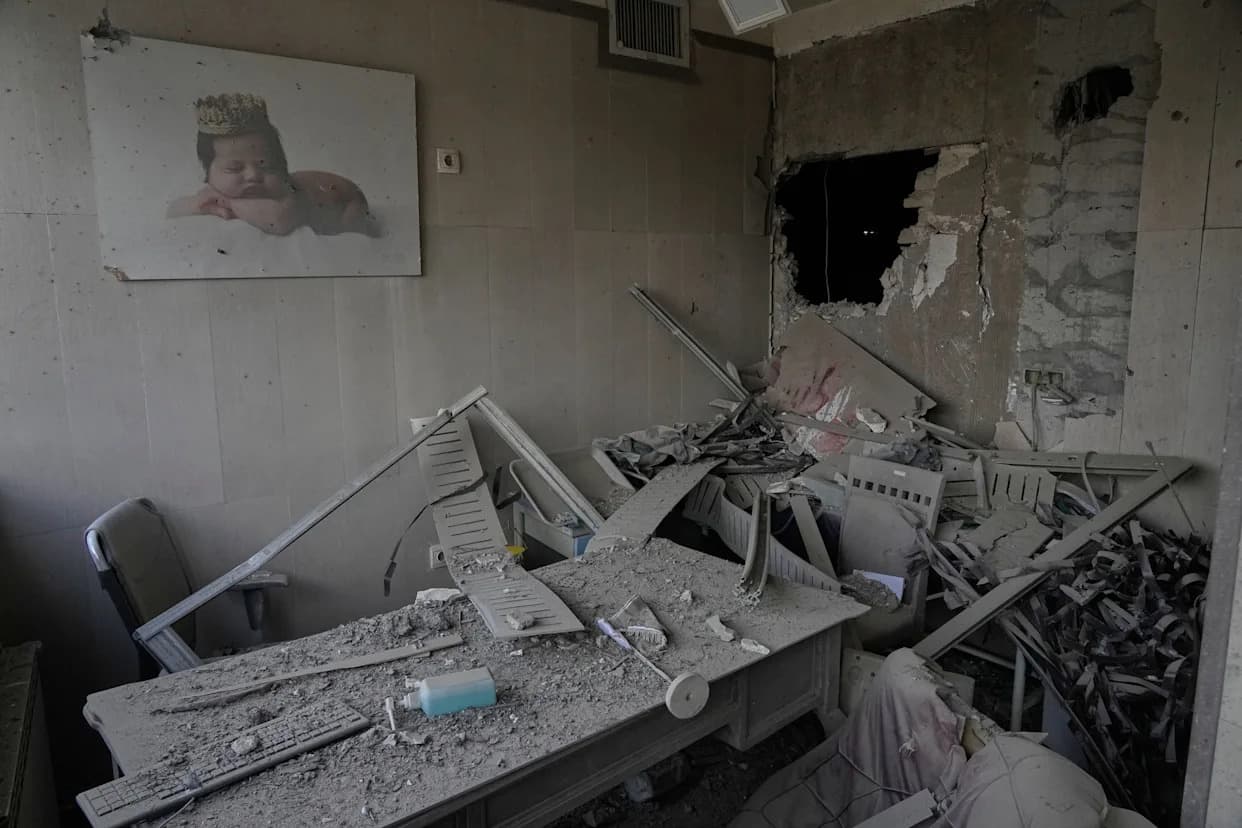
Debris is seen in a room of the Gandhi Hospital in Tehran, which was damaged when a strike hit a state TV communications tower and nearby buildings across the street, during the ongoing joint US-Israeli war on Iran, March 2, 2026 [Vahid Salemi/AP]
Iranian authorities say the ongoing conflict with the United States and Israel has damaged nearly 20,000 civilian buildings — including about 16,000 homes — and disrupted dozens of health and emergency services across the country.
Mojtaba Khaledi, a spokesman for the Iranian Red Crescent Society, told state television that 77 healthcare facilities have been affected and 16 Red Crescent centres were forced to relocate staff to continue rescue operations. He did not specify how many of the damaged health sites were hospitals or whether they were directly struck.
"Some of them are out of order, so we can’t admit patients in them," Khaledi said, adding that in some cases patients were in operating theatres or undergoing procedures when strikes occurred. He spoke outside an administrative building linked to a bank that the Red Crescent said was hit in the capital; nearby residential blocks sustained broken windows and other damage.
Health officials say the human cost is high. Deputy Health Minister Ali Jafarian told Al Jazeera that more than 12,000 people have been wounded and that most of the roughly 1,250 confirmed dead are civilians, including about 200 children and 200 women. Jafarian reported 11 healthcare workers killed and 55 wounded, with 29 clinical facilities damaged; 10 are inactive and patients are to be evacuated from seven others.
The deadliest single reported incident occurred at the Minab elementary school in southern Iran, where authorities say 167 people — mostly students — were killed on the first day of the conflict.
Regional military developments have broadened the stakes: Iran’s armed forces, including the Islamic Revolutionary Guard Corps (IRGC), announced they now view banks and economic interests linked to the US and Israel, and some technology firms providing military applications, as legitimate targets.
The Israeli military has said it killed more than 1,900 military personnel and commanders and wounded thousands in air operations, but it has not publicly addressed reported Iranian civilian casualties.
On the ground, officials reported multiple specific impacts: the Persian Gulf Martyrs Hospital in Bushehr was taken temporarily out of service after shockwaves from US strikes damaged parts of the facility and patients were moved elsewhere; at least 18 ambulances and 21 medical emergency centres have been damaged nationwide; and medical teams have performed at least 670 surgeries to treat the wounded.
Iran’s government says it has stockpiles of food and medicine and contingency plans to import essentials if needed. Iranian authorities have appealed to international organisations — including the International Committee of the Red Cross — to step in to protect civilians and basic services as the conflict continues.
Context and Response
Both sides have signalled readiness for a prolonged conflict, with Tehran expanding its targets and Israeli forces continuing air campaigns. International monitoring groups and humanitarian organisations have been urged to assess needs and help protect non-combatants and medical infrastructure.
Help us improve.





















