
What Happened: Israeli officials say Iran has launched cluster-munition warheads during the 10-day conflict, scattering dozens of small explosive bomblets over wide areas. Why It Matters: The submunitions are hard to intercept, can look like orange fireballs at night, and many fail to detonate, creating long-term risks to civilians. Key Details: Officials report 20–24 bomblets per warhead (weights reported up to about 5 kg each) and at least three reported fatalities; authorities urge people not to touch unexploded devices.
Israel Says Iran Is Using Cluster Munitions — Deadly, Hard-to-Intercept Bomblets Explained
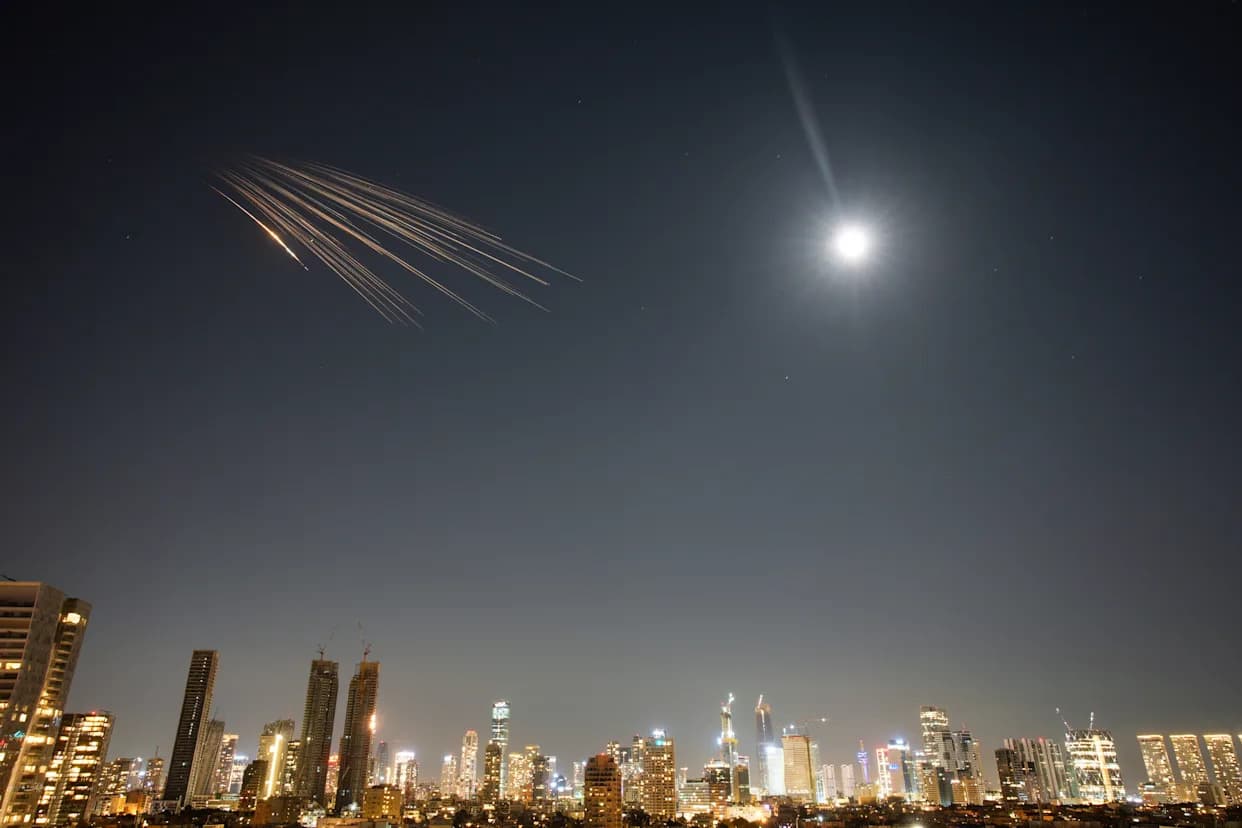
Missiles launched from Iran are seen in the sky over central Israel, Thursday, March 5, 2026. (AP Photo/Ohad Zwigenberg)(ASSOCIATED PRESS)
TEL AVIV — Israeli officials say Iran has been launching cluster munition warheads during the 10-day conflict, adding a particularly deadly and complex threat to Israel’s already-strained air defenses. The warheads open at high altitude and scatter dozens of smaller bomblets over wide areas, creating risks both during strikes and afterward from unexploded ordnance.
How Cluster Munitions Work
A parent munition — typically a ballistic missile or rocket — releases dozens of smaller submunitions at high altitude (reported at roughly 7–10 kilometers / about 4–6 miles). The bomblets disperse across an area that can range from several hundred meters to multiple kilometers, trading precision for broad coverage.
Why They Are Particularly Dangerous
Submunitions can look like orange fireballs at night as they re-enter the atmosphere. They are often lighter than conventional warhead fragments; open-source and Israeli military reports cite bomblets commonly under 3 kg, while some Iranian warheads observed by Israeli forces were reported to contain 20–24 bomblets with charges described as weighing up to about 5 kg each. Many submunitions fail to detonate on impact and become long-term hazards, functioning like scattered land mines that can explode later and indiscriminately injure civilians.
“Cluster bombs don’t create real damage to buildings, only people,” said Yehoshua Kalisky, a senior researcher at Israel’s Institute for National Security Studies.
Impact On Air Defenses
Israel’s Arrow system has had success intercepting incoming ballistic missiles. However, if a warhead disperses submunitions before interception, there are few reliable countermeasures. The Iron Dome is optimized for short-range rockets and intercepting fewer, larger targets; it is not designed to engage dozens of small, widely scattered bomblets once they have separated from a carrier warhead.
Civilian Harm And Safety Measures
Israeli authorities have warned residents not to approach or touch unexploded bomblets and to call emergency services instead. At least three people have been reported killed by such submunitions, including two workers at a construction site in central Israel. The Home Front Command and police have distributed flyers and public-service announcements with clearance instructions and danger warnings.
International Law And Historical Context
More than 120 countries have signed the Convention on Cluster Munitions, which bans their use, production and transfer. Key states — including Israel, the United States and Iran — have not joined the treaty. The use of cluster munitions in populated areas is widely condemned as indiscriminate and can violate international humanitarian law. Amnesty International and other groups have said Iran’s use of such weapons constitutes a severe violation of those laws.
Cluster weapons date back to World War II (notably Nazi Germany’s "butterfly bombs"). The U.S. has used them in past conflicts; Russia, Ukraine and other parties have faced accusations of use in recent years. During the 2006 Israel–Hezbollah war, U.N. teams reported a 30–40% dud rate for some Israeli-dispersed bomblets, leaving hundreds of thousands of hazardous devices in southern Lebanon.
What Officials Say Now
Israeli military spokespeople say Iran has been using cluster munitions on a near-daily basis during the current flare-up and previously deployed similar projectiles during a 12-day escalation in June. Open-source imagery groups have authenticated photos and videos of unexploded submunitions found in Israel this week.
Safety Reminder: Do not touch any suspicious ordnance. Mark the location if safe to do so and call local authorities or bomb-disposal teams immediately.
— Metz reported from Ramallah, West Bank. Sam Mednick contributed reporting from Tel Aviv.
Help us improve.





















