
Iranian authorities have warned they will use force against people they accuse of aiding foreign "enemies" as the war with the US and Israel enters its second week. The Intelligence Ministry accused "American‑Zionist mercenaries" of filming missile impacts to send footage abroad and said such acts will be met with harsher sentences under laws revised after the June 2025 12‑day conflict. With the internet largely cut and satellite channels jammed, state media dominate domestic coverage while police, Basij and IRGC‑linked forces patrol cities and set up checkpoints. Senior commanders have publicly suggested security forces may be authorised to use live fire against perceived collaborators.
Iran Warns Of 'Fifth Column' And Threatens Live Fire As War With US, Israel Enters Second Week
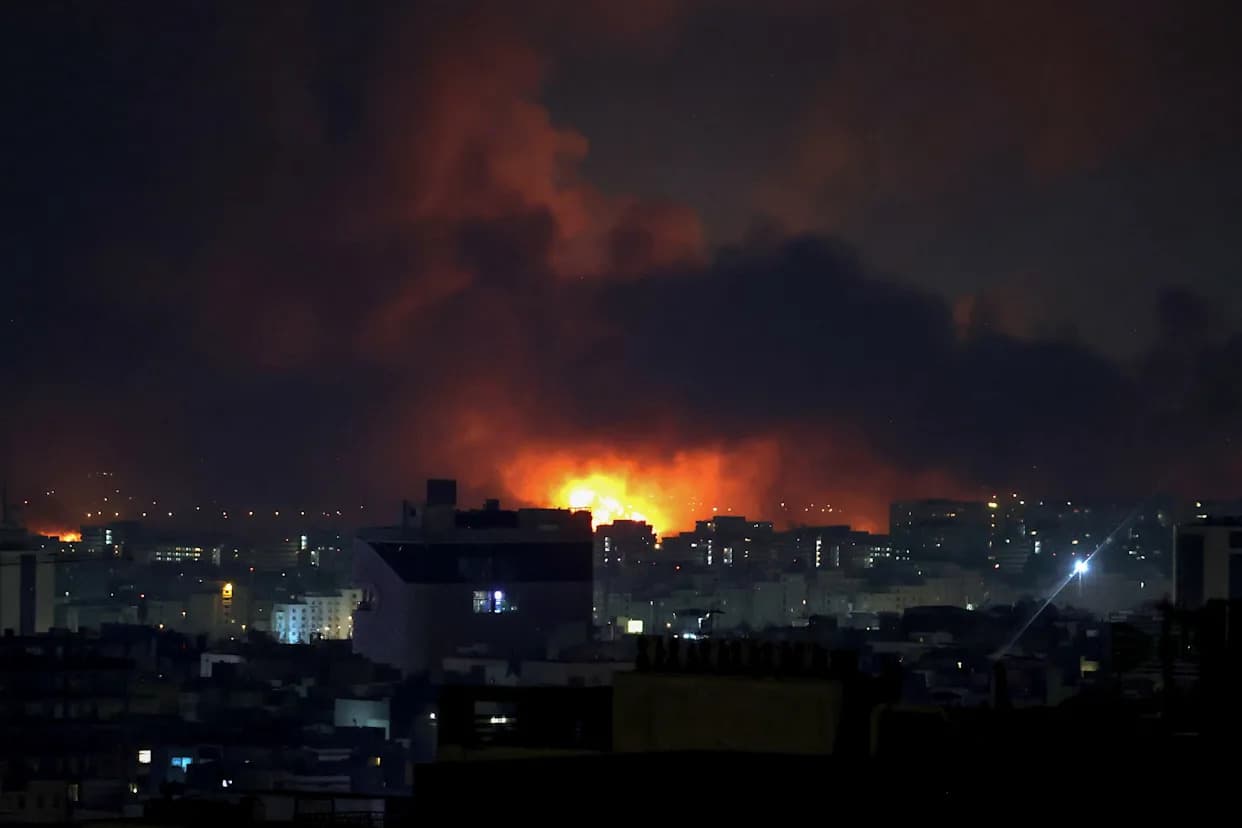
Smoke and fire rise from the site of air strikes at Mehrabad International Airport in Tehran on March 7, 2026 [AFP]
Tehran — Iranian authorities have issued a series of stern warnings promising force against anyone accused of aiding foreign "enemies" as the conflict with the United States and Israel moves into its second week. Officials say they will target people who photograph or transmit footage of military strikes and other sensitive sites.
Ministry Claims And Accusations
In a statement carried by state media on Saturday, the Ministry of Intelligence accused what it called "American‑Zionist mercenaries" of photographing missile impact sites and sending the footage to foreign satellite networks and overseas online pages. The ministry described those individuals as acting as a "fifth column" — serving as the regime’s eyes inside Iran — and warned they would face severe penalties under a law amended after the 12‑day war with US‑Israel in June 2025.
Calls To Report And An Information Blackout
Authorities renewed appeals for citizens to report suspicious behaviour via phone and local messaging services. The national internet has remained largely disconnected for more than a week since the opening strikes of the war; state outlets say those strikes killed senior commanders, a claim reported by state media.
The blackout has limited many Iranians to state broadcasters, which have not covered some developments — including reported forced evacuations — while emphasising successful Iranian strikes. As a result, many people rely on a small number of foreign‑based Persian‑language channels received via satellite; authorities say they have been jamming such channels since shortly before the fighting began, calling some "terrorist" broadcasters financed by opponents seeking regime change.
Security Measures And Threats Of Force
Senior security officials have signalled that wartime rules allow for strict measures. In mass text alerts addressed to the "resistant people of Islamic Iran," police warned that footage of strikes being sent abroad "must be stopped." Two senior commanders suggested security forces have been authorised to use live ammunition against anyone judged to threaten state security under wartime conditions.
Police chief Ahmad‑Reza Radan told state television that officers had been ordered to shoot any "thieves" who might pose a danger as many residents of Tehran and other major cities evacuate to seek safety. On state television, Salar Velayatmadar — a senior Islamic Revolutionary Guard Corps (IRGC) commander who now serves in parliament — delivered a particularly explicit warning.
"Parents, if your son and daughter don’t listen to us, it’s not our fault. Anybody inside Iranian soil who lets a sound out of their throat that aligns with the enemy, their feet are in Tel Aviv and their head is with Netanyahu, so the order to shoot them has been issued."
"We do not want your children to be killed because your child is ignorant and foolish."
Competing Messages And Civilian Impact
The warnings follow messages from US and Israeli leaders urging Iranians to remain vigilant in their homes and suggesting they would be told when to mobilise in opposition to the theocratic leadership. Tehran, for its part, has urged regime supporters to remain visible in the streets and gather in mosques to mourn and demonstrate support for the system. State broadcasts sometimes air these gatherings live, showing pro‑regime crowds, slogans and processions.
Paramilitary Basij units linked to the IRGC continue to patrol cities and have established heavily armed checkpoints, particularly near bases that have been hit.
Wider Context
Earlier this year, reports said thousands of Iranians were killed during nationwide protests concentrated on the nights of January 8 and 9. The government blamed "terrorists" and foreign‑backed rioters; the United Nations and human rights groups have concluded the state carried out a deadly crackdown on peaceful demonstrators.
Outlook
Messages from the parties to the conflict suggest attacks and reprisals could continue for the foreseeable future. Iran’s armed forces say they would stop cross‑border strikes only if neighbouring territories are no longer used to launch attacks, while US and Israeli statements have demanded the dismantling of certain Iranian military capacities and signalled further targeting of leaders.
Help us improve.





















