Cuba closed its embassy in Quito after Ecuador ordered all Cuban diplomatic staff to leave within 48 hours, a move Havana called "unilateral and unfriendly." The embassy halted operations at 10:00 a.m. local time. President Miguel Díaz‑Canel condemned the expulsion and vowed to defend Latin American unity, while Ecuador’s action reflects closer ties between President Daniel Noboa and the United States. The episode comes amid intensified US pressure on Cuba, including sanctions and limits on oil supplies that have been criticised for their humanitarian impact.
Cuba Closes Quito Embassy After Ecuador Orders Cuban Diplomats to Leave
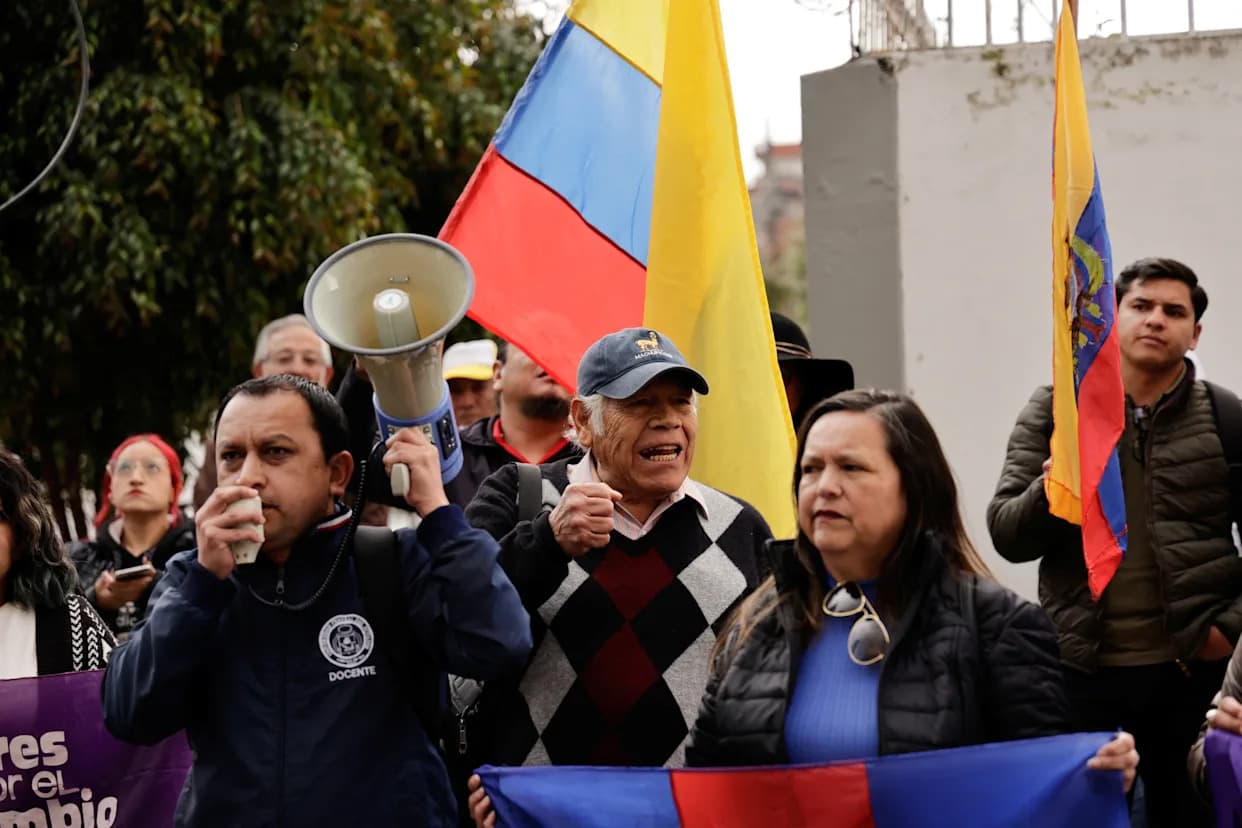
Left-wing groups gather on March 5 outside Cuba’s embassy in Quito, Ecuador, to protest the expulsion of its diplomats [Karen Toro/Reuters]
Cuba has closed its embassy in Quito after Ecuador’s government ordered all Cuban diplomatic and consular personnel to depart within 48 hours.
In a communique issued on Friday, Cuba’s Ministry of Foreign Affairs (Minrex) described the 48-hour deadline as "unjust" and condemned the expulsion as a "unilateral and unfriendly" action that undermines long-standing bilateral cooperation. The statement confirmed the Quito embassy ceased operations at 10:00 a.m. local time (15:00 GMT).
On Wednesday, Ecuador’s government sent a letter to the Cuban mission declaring Ambassador Basilio Antonio Gutiérrez García and other staff persona non grata and granting them 48 hours to leave. The public letter did not provide a specific explanation for the sudden demand.
"The Cuban government deeply regrets the unilateral and unfriendly action of the Ecuadorian government, which undermines the spirit of respect and cooperation that has historically characterised bilateral relations between the two countries," Minrex said.
Cuba protested the decision and criticised President Daniel Noboa’s government on social media, where President Miguel Díaz‑Canel rejected the measure as "unjustified, hostile, and unfriendly" and reaffirmed Cuba’s support for Latin American unity.
Regional Context
The closure represents an abrupt diplomatic rupture as Ecuador’s right‑wing President Daniel Noboa has moved closer to the United States and taken a tougher stance toward left‑wing governments in the region. This week Ecuador announced a joint operation with the US to combat drug cartels, and Noboa is scheduled to visit South Florida to meet with former US President Donald Trump and other regional leaders at a gathering described as the "Shield of the Americas" summit.
The article also places the expulsion amid increased US pressure on Cuba: following recent actions against Venezuela, Washington issued an executive order on January 29 threatening sanctions against countries that provide Cuba with oil, a move critics say amounts to an attempt to further isolate the island in addition to the long‑standing US trade embargo dating to the 1960s. United Nations officials have warned that restrictions on fuel and other imports have strained Cuba’s infrastructure and could exacerbate humanitarian needs.
Contested Claims and Reporting Notes
The original reporting referenced a series of allegations about expanded US military actions in the region and an operation targeting Venezuela’s leadership. Some of those claims remain contested or lack independent public verification; where possible this article flags them as reported in the source material rather than independently confirmed facts.
President Noboa posted a short social media video showing embassy documents being burned on a rooftop, captioned "parrillada de papeles" (a "barbecue of papers").
Diplomatic tensions between Ecuador and Cuba are likely to complicate regional relations and raise questions about broader geopolitical alignments in Latin America as the countries navigate security, migration, and economic pressures.
Help us improve.