
Israeli airstrikes struck Tehran and parts of Lebanon early Friday as U.S. forces said they hit an Iranian drone carrier at sea, widening attacks on Iran's military capabilities. Iran responded with missile and drone strikes across Gulf states that host U.S. forces; several incoming threats were reported intercepted. Officials reported heavy casualties across the region, and U.S. leaders signaled a forthcoming surge of forces and capabilities. Many claims remain unverified amid rapidly evolving events.
Intense Israeli Airstrikes Rock Tehran and Lebanon as U.S. Strikes Iranian Drone Carrier at Sea
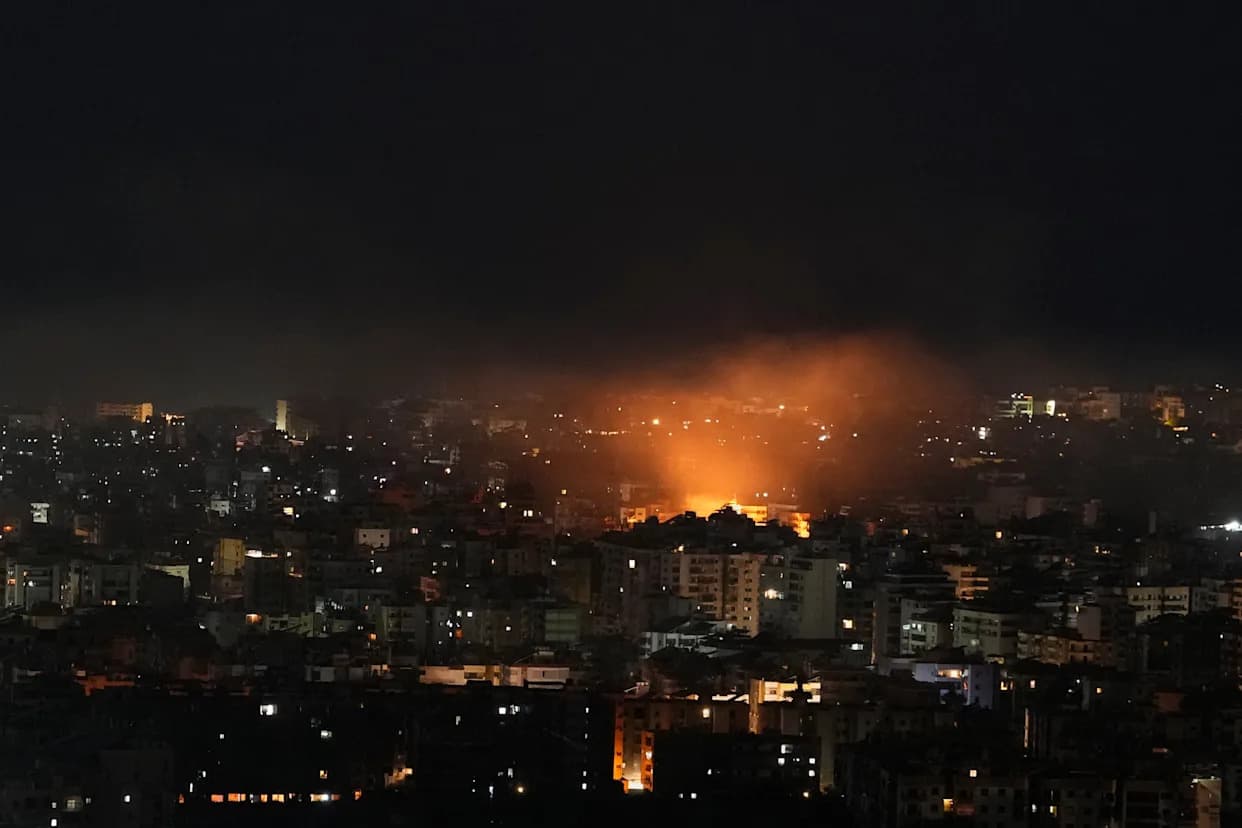
DUBAI, United Arab Emirates — Israeli warplanes conducted heavy airstrikes on Tehran and multiple sites in Lebanon early Friday, while U.S. forces said they struck an Iranian drone carrier at sea, widening a campaign aimed at the Islamic Republic's military and naval capabilities.
The Israeli military announced a "broad-scale wave of strikes" on Tehran early Friday. Witnesses in the capital described powerful explosions that rattled homes, and separate reports said blasts were heard around Kermanshah, a region reported to host multiple missile bases. Israeli officials said the strikes have significantly degraded Iran's air defenses and missile launchers; these assessments were made public by Israel's military.
U.S. Strike on Reported Drone Carrier
U.S. Central Command released footage showing a large container-style vessel identified as the IRIS Shahid Bagheri burning at sea. U.S. officials described the ship as a converted container vessel with a runway for drones and quoted Adm. Brad Cooper calling it "roughly the size of a World War II aircraft carrier." Iranian authorities had not immediately confirmed the strike at the time of reporting.
Regional Retaliation and Air Defenses
Iran launched missile and drone attacks across the Gulf early Friday, with strikes reported toward Kuwait, Qatar, Saudi Arabia and Bahrain — all countries that host U.S. forces. Qatar and Saudi Arabia reported intercepting incoming threats; Bahrain activated air-raid protocols and reported targeted strikes on buildings but initially no casualties. Kuwait said its air defenses engaged missiles and drones that breached its airspace.
Escalation in Lebanon
In southern Beirut and other districts of Lebanon, Israel launched a series of airstrikes amid rising clashes with Iran-aligned Hezbollah fighters. Residents sought shelter and motorists clogged roads attempting to flee targeted areas. The Lebanese health ministry provided updated casualty figures as the clashes continued.
Casualties and Broader Impact
Officials in the region reported heavy casualties: more than 1,230 dead in Iran, over 120 in Lebanon (later reported as 123), and roughly a dozen in Israel; six U.S. troops have also been reported killed. Iran's strikes have disrupted oil shipments and international air travel, and the violence has reverberated across the Middle East.
"It's more fighter squadrons, it's more capabilities, it's more defensive capabilities," U.S. Defense Secretary Pete Hegseth said alongside Adm. Cooper, adding that a surge of U.S. forces and bomber operations is expected.
At the White House, U.S. President Donald Trump urged Iranians to "help take back your country," promising unspecified "immunity" for those who aided such efforts. Iranian officials publicly denied seeking negotiations with Washington and cited deep mistrust after failed diplomacy and the outbreak of hostilities.
Iran also accused the U.S. Navy of sinking the Iranian frigate IRIS Dena in the Indian Ocean, an incident Tehran said killed dozens of crew; Sri Lankan authorities reported rescuing more than 30 sailors. These claims and casualty counts from naval incidents were contested and had not been fully verified at the time of reporting.
Peacekeepers and U.N. officials in southern Lebanon reported seeing and hearing ground clashes as additional Israeli forces moved across the border. The situation remains fluid, and many claims — including specific damage assessments and casualty totals — were based on statements from the parties involved and have not been independently verified.
Help us improve.





















