
NASA repaired a displaced seal in a quick-disconnect that interrupted helium flow to the Artemis II SLS upper stage. The fix was performed inside the Vehicle Assembly Building at Kennedy Space Center and validated with reduced helium flow. The work rules out a March launch but preserves April launch opportunities for the four-astronaut, ~10-day lunar flyby—the first crewed mission to the moon region since 1972.
NASA Fixes Artemis II Helium Seal, Keeps April Moon-Flight Window Intact
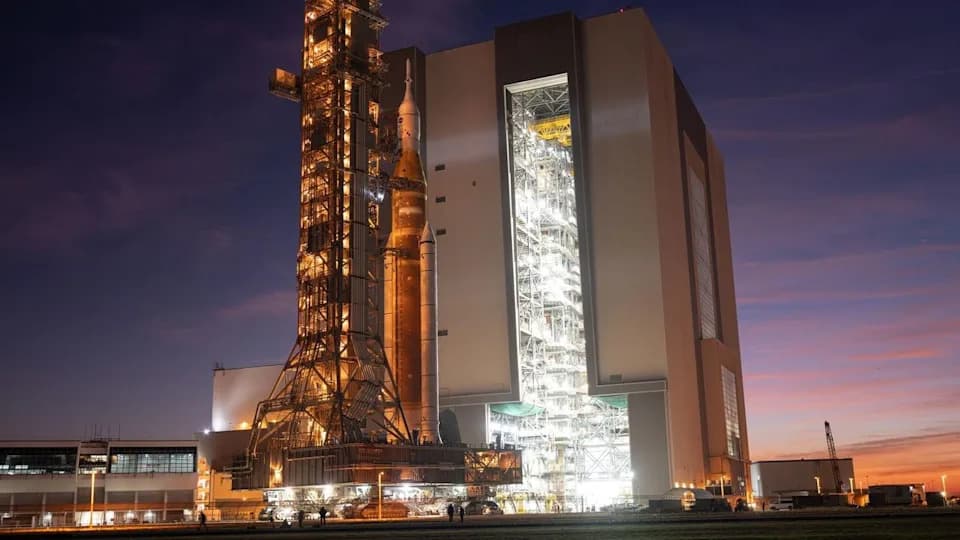
NASA's Artemis 2 moon rocket rolls back to the Vehicle Assembly Building for repairs on Feb. 25, 2026. | Credit: NASA/John Kraus
NASA engineers have repaired a disrupted helium feed to the upper stage of the Artemis II Space Launch System (SLS) rocket, preserving the program's chance to attempt the first crewed lunar mission in more than 50 years as soon as April.
The work was carried out inside the Vehicle Assembly Building (VAB) at Kennedy Space Center (KSC) in Florida after the Artemis II stack rolled back from Launch Pad 39B on Feb. 25 following a wet dress rehearsal. During that two-day rehearsal — a full run-through of prelaunch procedures — technicians detected an interruption in helium flow to the rocket's upper stage. Because helium is used to pressurize propellant tanks, the affected quick-disconnect interface required hands-on access that was only possible in the VAB.
What Was Repaired
Technicians found a displaced seal inside the quick-disconnect where ground-supplied helium couples to the SLS upper stage. "The team removed the quick disconnect, reassembled the system, and began validating the repairs to the upper stage by running a reduced flow rate of helium through the mechanism to ensure the issue was resolved," NASA said in a March 3 update. Engineers are investigating how the seal became dislodged to prevent recurrence.
Schedule Impact And Next Steps
The rollback and repair eliminated the possibility of a March launch but kept multiple April launch opportunities available, including April 1, April 3–6 and April 30. Artemis II is scheduled to carry four astronauts on an approximately 10-day mission around the moon — the first crewed trip to the lunar vicinity since Apollo 17 in 1972.
While in the VAB, teams are completing additional preparations: replacing flight batteries on the core stage, upper stage and solid rocket boosters; charging Orion's emergency-abort batteries; and installing and activating a new set of flight-termination system batteries ahead of end-to-end retesting.
Program-Level Changes
This update follows a broader restructuring of NASA's Artemis program. Under the revised plan, Artemis 4 is now slated to be the first mission to land astronauts on the lunar surface (targeted for 2028), while Artemis 3 will remain in Earth orbit and is expected to include a rendezvous between Orion and one or more commercial lunar landers.
Bottom line: A displaced seal in a helium quick-disconnect was removed and the repair validated, keeping April launch options viable while teams complete additional prelaunch checks and investigate the root cause.
Help us improve.





















