
President Trump called the U.S.-Israeli strikes on Iran the "last best chance" to halt Tehran's missile and nuclear advances, saying the campaign is expected to run four to five weeks but can be extended. He outlined four objectives: degrade missile production, destroy Iran's navy, prevent a nuclear weapon, and stop support for proxy forces. The Pentagon reported four U.S. service members killed so far, and U.S. and Israeli strikes have prompted Iranian missile and drone retaliation. Officials say timelines and options—including the possible use of ground forces—remain flexible.
Trump Calls Strikes the "Last Best Chance" to Remove Iran Threat; U.S. Says Campaign May Last Weeks
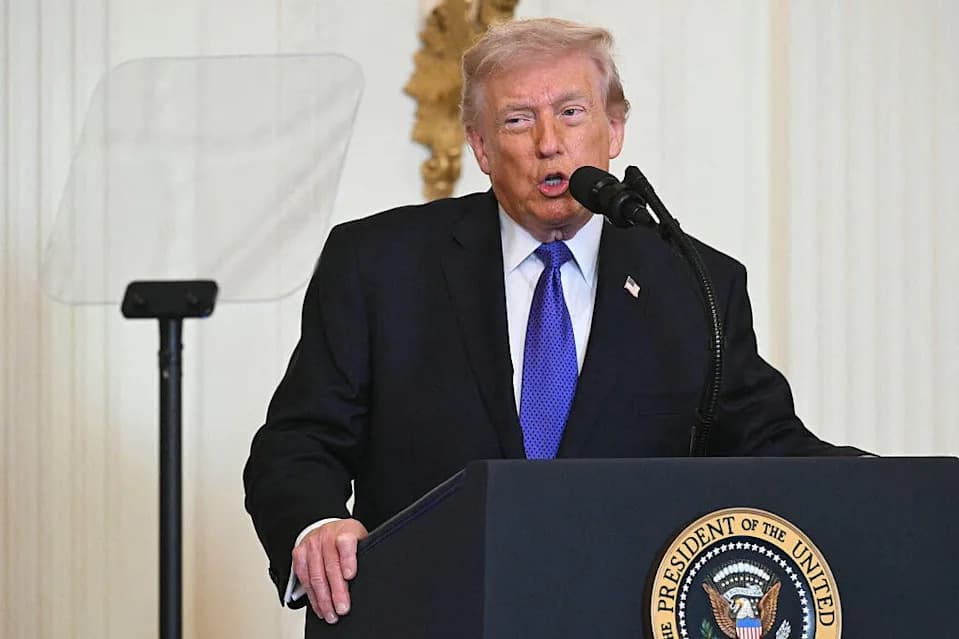
President Trump speaks during a Medal of Honor ceremony in the East Room of the White House on March 2, 2026. / Credit: SAUL LOEB /AFP via Getty Images(Anadolu via Getty Images)
President Donald Trump described the U.S.-Israeli military campaign against Iran as the "last best chance" to confront what he called Tehran's growing ballistic missile and nuclear programs, while outlining clear objectives for the operation and signaling the U.S. can sustain the campaign beyond initial timelines if necessary.
What the President Said
Speaking at a White House Medal of Honor ceremony, Mr. Trump said the administration expects the campaign to last roughly four to five weeks but emphasized that U.S. forces "have the capability to go far longer than that." He criticized Iran for ignoring U.S. warnings about its nuclear ambitions and described the regime's conventional missile buildup as a "very clear, colossal threat" to American forces and allies abroad.
"This was our last best chance to strike...and eliminate the intolerable threats posed by this sick and sinister regime," the president said, repeating his characterization of Iran as "sick and sinister."
Objectives and Military Progress
The president listed four principal objectives: to degrade Iran's missile capabilities and production capacity; to destroy its naval forces; to prevent the regime from obtaining a nuclear weapon; and to stop Iran from arming, funding, and directing proxy forces outside its borders. He said the campaign is already striking missile sites and naval targets and claimed that several Iranian ships have been destroyed.
Ground Troops, Timelines and Command
In a separate interview with The New York Post, Mr. Trump declined to rule out the use of ground troops, saying he would deploy them "if they were necessary." Defense Secretary Pete Hegseth also declined to categorically rule out ground operations and said there are currently no U.S. service members operating on the ground inside Iran.
Casualties and Regional Fallout
The Pentagon said four U.S. service members have been killed so far in what it calls Operation Epic Fury; officials said the deaths resulted from a munition striking a tactical operations center in Kuwait. Mr. Trump paid tribute to the fallen at the ceremony and warned there may be additional casualties as the campaign continues.
The initial phase of the campaign included heavy Israeli strikes. U.S. military officials said more than 1,000 targets were hit in the first 24 hours. The U.S. military also reported that Iran has launched missile and drone counterattacks against Israel, Gulf states and U.S. facilities in the region.
Context and Next Steps
Mr. Trump returned to the White House from his Mar-a-Lago estate after monitoring the operation and told audiences the U.S. military will "easily prevail." Officials say the timeline is flexible: while four to five weeks was an early projection, commanders can extend operations as needed to meet the stated objectives.
Note: This article synthesizes statements by U.S. officials and reporting from the opening phase of the campaign. Some details—such as battlefield assessments and casualty reports—may be revised as officials release additional information.
Help us improve.





















