
The administration has delivered a series of conflicting explanations for recent strikes on Iran, shifting between claims of imminent nuclear and missile threats and warnings about a conventional "shield" enabling future nuclear ambitions. Messaging also wavered over whether regime change was a goal, who was targeted in lethal strikes, and how long the campaign might last. These rapid reversals have raised questions about intelligence, legal justification and credibility.
Trump Team’s Iran Messaging Falls Apart: Shifting Justifications, Conflicting Timelines
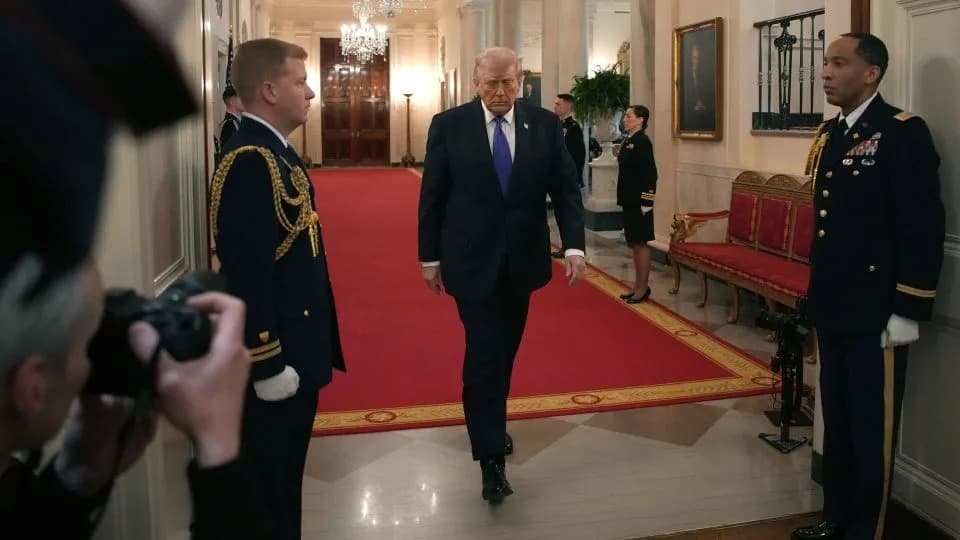
President Donald Trump arrives for an event in the East Room of the White House on Monday. - Andrew Harnik/Getty Images
Defense and presidential aides have presented an inconsistent and rapidly changing account of the rationale for recent US strikes on Iran, leaving allies, lawmakers and the public with conflicting explanations about the threat, the targets and the objectives.
Mixed Messaging From The Start
Officials declined to offer a single, coherent set of goals before Saturday’s strikes and then spent the following days changing and contradicting one another. President Trump later listed four objectives for the campaign — destroying Iran’s missile capabilities, degrading its naval forces, preventing it from obtaining a nuclear weapon, and stopping it from arming terrorists — but how the administration arrived at that formulation shifted repeatedly in public remarks.
Nuclear Claims Evolved Rapidly
Statements about Iran’s nuclear program moved from alarm to ambiguity and back again. In recent days, some administration figures emphasized an imminent nuclear danger: claims that Tehran was enriching uranium at levels suitable for weapons and that it was close to producing “industrial-grade” material. Other officials and unclassified US intelligence assessments painted a very different picture, saying an intercontinental ballistic-missile (ICBM) threat to the United States remained years away and that there was no clear intelligence of an immediate weapons breakthrough.
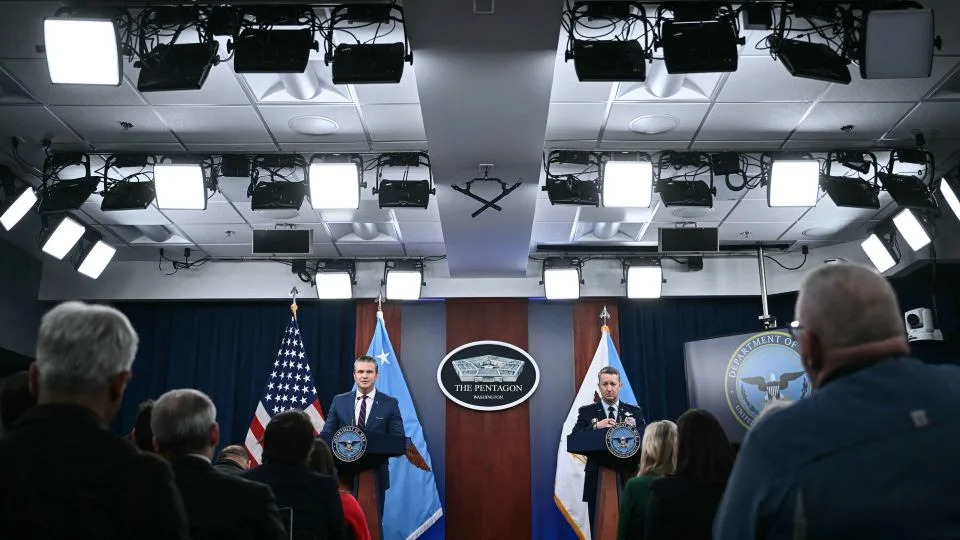
Defense Secretary Pete Hegseth and the Chairman of the Joint Chiefs of Staff Gen. Dan Caine speak during a press conference at the Pentagon on Monday. - Brendan Smialowski/AFP/Getty Images
“Iran was building powerful missiles and drones to create a conventional shield for their nuclear blackmail ambitions,” one senior defense official said, framing the concern as an enabling posture rather than an immediate weapons capability.
From Imminent ICBM Threat To A “Conventional Shield”
Rather than repeating earlier, sharper claims about uranium enrichment or imminent ICBMs, some spokespeople have since described a buildup of conventional weapons — missiles and drones — that could create an umbrella enabling future nuclear efforts. That reframing represents a substantial softening of the most urgent-sounding lines of argument publicized immediately before and after the strikes.
Preemption, Imminence And Intelligence
The administration argued the strikes were necessary in part because Iran might soon strike US forces in the region. A senior official warned of a potentially preemptive conventional attack. But contemporaneous intelligence sources and congressional briefings reportedly found no clear evidence Iran planned to strike US forces first unless provoked — a critical distinction for public legitimacy and international legal justification.
Regime Change And The Khamenei Question
Early messages from the president suggested regime change could be an objective, and he directly addressed the Iranian opposition. In the days after, however, administration officials attempted to downplay US intentions to topple Iran’s leadership. That mixed messaging extended to whether Supreme Leader Ayatollah Ali Khamenei was a target: public remarks varied, and officials emphasized distancing the US from certain lethal actions while acknowledging intelligence sharing with Israeli partners.
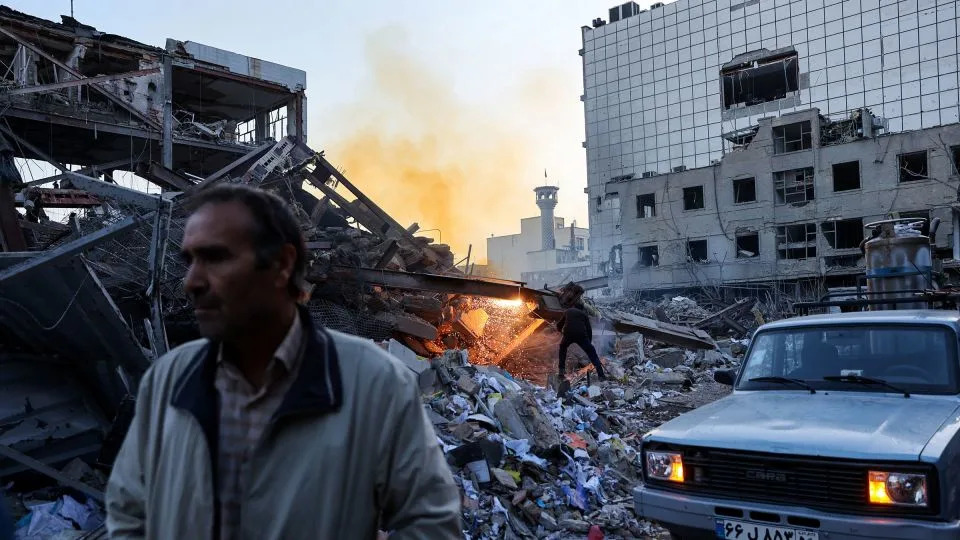
The aftermath of a strike in Tehran, Iran, on Monday. - Majid Asgaripour/Wana News Agency/Reuters
Conflicting Timelines And Uncertain Scope
Answers about how long the campaign might last were similarly inconsistent. The president gave multiple timelines — ranging from days to several weeks — and later said the US military had the capability to sustain operations for much longer. Such variability has contributed to confusion over objectives, exit conditions and the broader strategy.
Why This Matters
Clear, consistent public explanations matter for legal justification, allied coordination, congressional oversight and public support. Rapid reversals and contradictory claims about threats, targets and goals undermine credibility and complicate both domestic debate and international response.
Bottom line: Over a matter of days, the public case for the strikes shifted from imminent nuclear or ICBM danger to concerns about a conventional weapons buildup and future nuclear ambitions — while messages on regime change, leadership targeting and timelines also diverged. The result is a muddled narrative that raises questions about the administration’s planning and transparency.
Help us improve.





















