
The United States and Israel have stepped up strikes against Iran, including an attack the Pentagon says destroyed the IRGC headquarters, after the reported killing of Iran's supreme leader. Iran responded with missiles and drones across the region, causing casualties in Israel, the UAE and Iran itself. Three US service members were killed and several wounded; Iran's Red Crescent reported about 201 dead inside Iran. The conflict has spread to Lebanon and the Gulf, raising global concern and mixed international reactions.
War Spreads Across Middle East: US and Israel Strike Iran as Retaliation Fuels Regional Fighting
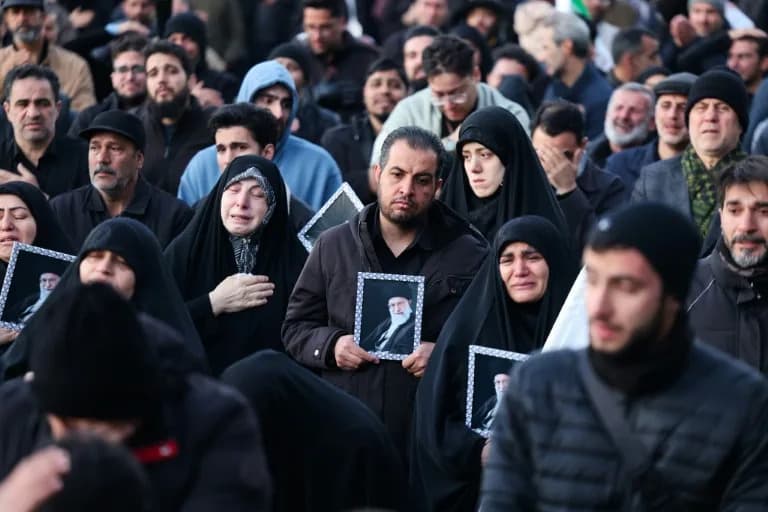
People mourn the death of Iran’s supreme leader Ayatollah Ali Khamenei, who was killed in joint US and Israeli strikes, at a square in Tehran (ATTA KENARE)(ATTA KENARE/AFP/AFP)
The United States said it struck hundreds of targets across Iran and destroyed the headquarters of the Islamic Revolutionary Guard Corps (IRGC), while Israel expanded its bombing to Lebanon as the conflict intensified across the region. Both sides have reported casualties and vowed further action after what parties say began with the reported killing of Iran's supreme leader, Ayatollah Ali Khamenei.
US and Israeli Operations
The US military said it widened strikes inside Iran and targeted IRGC command facilities, with US Central Command reporting that 'the IRGC no longer has a headquarters.' The operation, called "Epic Fury" by the Pentagon, has been costly: the US confirmed three service members killed and five seriously wounded.
Israel said it conducted large-scale strikes in central Tehran and also carried out bombardments in Lebanon against Hezbollah positions. An AFP journalist in Beirut reported hearing explosions as tensions rose along the Israel-Lebanon front.
Iranian Retaliation Across The Region
Iranian forces launched missiles and drones across the Middle East in what officials described as retaliation. Strikes have caused fatalities and injuries in Israel and the United Arab Emirates, and Iran reported significant casualties at home.
Hezbollah said it fired rockets and drones at Israel 'in retaliation for the pure blood' of Khamenei. Iranian political and security figures issued strong warnings: President Masoud Pezeshkian called Khamenei's killing 'a declaration of war against Muslims,' while Ali Larijani, head of Iran's Supreme National Security Council, warned of a force 'they have never experienced before.'
Regional Impact and Maritime Incidents
Fighting spread to the Gulf and strategic waterways. Iran's initial strikes reportedly hit Gulf states (except Oman); three vessels were attacked in the Strait of Hormuz and Oman's port of Duqm was struck by drones, injuring a foreign worker. Iran's Revolutionary Guards claimed to have struck the aircraft carrier USS Abraham Lincoln, a claim the Pentagon said did not reflect the missiles' actual performance.
Global oil markets reacted to the disruption, and several countries issued statements about their roles or limitations. The UK said it would allow use of bases for 'defensive' strikes but would not join offensive action at this time.
Civilian Toll, Domestic Reaction And Leadership Changes
Inside Iran, the Red Crescent's last reported toll cited 201 dead and hundreds injured from strikes. Iran's judiciary confirmed that senior figures, including adviser Ali Shamkhani and General Mohammad Pakpour of the Revolutionary Guards, were among the dead. Iranian authorities named Ayatollah Alireza Arafi to join an interim leadership council with President Pezeshkian while a permanent successor is determined.
Public reactions were mixed: some in the Iranian diaspora celebrated early reports of Khamenei's death, while pro-government rallies inside Iran chanted 'Death to America!' Protests also erupted in neighboring Pakistan, where authorities said 17 people died and demonstrators attempted to storm a US consulate.
Political Responses And Outlook
President Trump and Israeli Prime Minister Benjamin Netanyahu have long advocated removing Iran's hardline leadership. Trump said the US and Israel could sustain the current tempo of operations for several weeks and urged Iranian security forces to surrender and accept immunity. Domestic critics, including House Democratic leader Hakeem Jeffries, called the campaign reckless and questioned the justification for preemptive strikes.
The situation remains fluid, with leaders on both sides issuing stark warnings and regional partners assessing responses. The risk of further escalation across multiple fronts — land, sea and air — is high as military operations continue and diplomatic responses evolve.
Help us improve.





















