
Eyewitnesses across Iran say the first phase of the conflict began Saturday morning with low‑flying aircraft and explosions. The Supreme National Security Council advised residents to leave major cities while Tasnim reported Basij patrols activated across Tehran. After dark, reports that Ayatollah Ali Khamenei had been killed sparked cheering and celebrations in multiple cities, though many Iranians expressed uncertainty about the regime’s long‑term fate and mixed feelings about foreign involvement.
“It Has Begun”: Iranians Recount the First Day of War After Reported Death of Ayatollah Khamenei
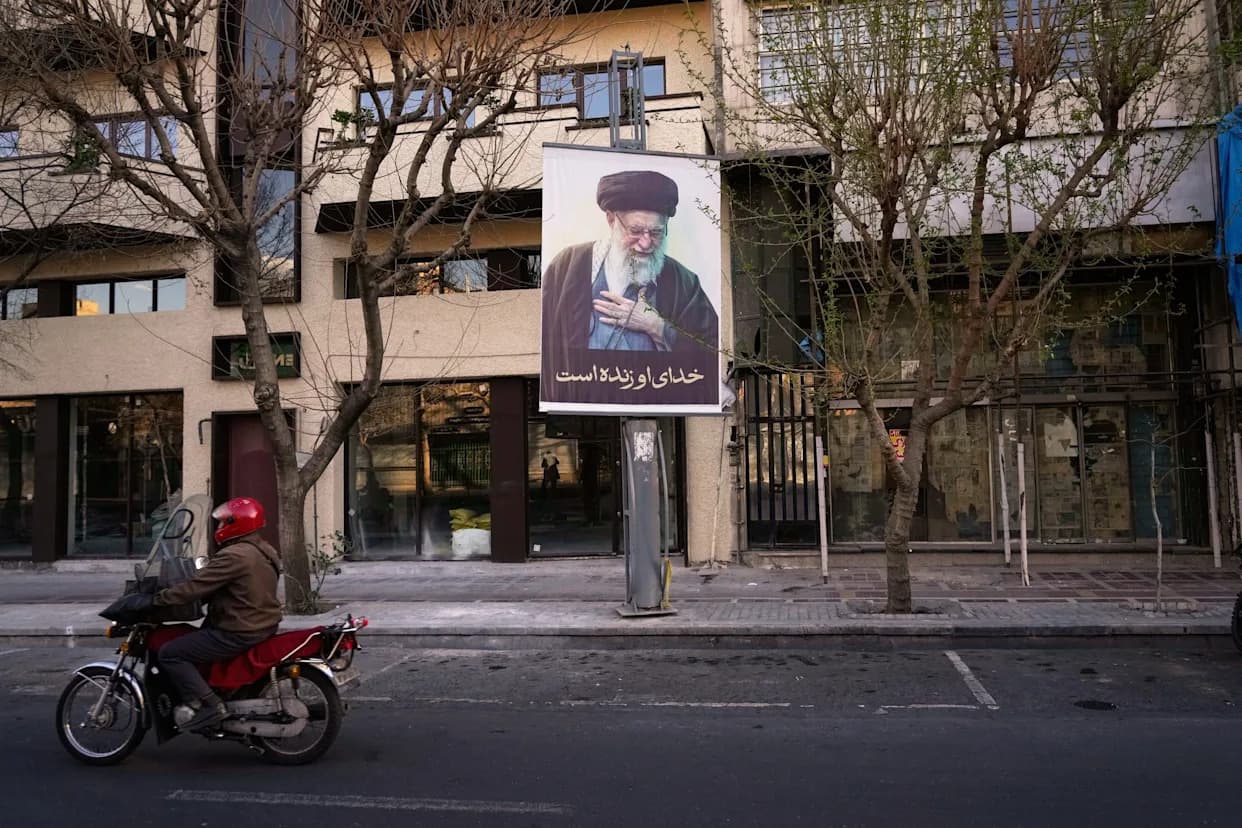
Eyewitnesses across Iran describe how the first phase of the conflict erupted on Saturday morning, with low‑flying aircraft and sudden explosions that stunned residents across Tehran and other cities. As reports spread that Supreme Leader Ayatollah Ali Khamenei had been killed in strikes attributed to U.S. and Israeli forces, Iranians reacted with a mixture of jubilation, shock and uncertainty.
Airstrikes and Early Moments
“I had just stepped out of the shower, getting ready to go out, when low‑flying aircraft startled me,” said Salman, a 45‑year‑old contractor in Tehran. “Seconds later, after two explosions, I realized it had begun.”
“I was in a car,” said Marziyeh, a 40‑year‑old graphic artist. “The music was loud, but drivers suddenly braked and looked up at the sky. I wondered, ‘Is there going to be war?’ Then an explosion sounded and I thought, Stupid! War has already started.”
From his window Salman reported seeing “two plumes of smoke rising from the vicinity of the Leader’s Beit,” the central Tehran compound where Khamenei lived, which witnesses and some accounts said was struck.
Government Notices and Security Mobilization
State TV and state news agencies moved quickly to reassure the public that basic services and supplies would continue. But a notice from the Supreme National Security Council urged residents of Tehran and other major cities to travel to other cities “to stay safe from the menace of these two evil regimes.” The same guidance reportedly arrived as SMS advisories to many Tehran residents.
Minutes later, the Tasnim News Agency — an outlet linked to the Islamic Revolutionary Guard Corps (IRGC) — reported that Basij neighborhood patrols had been activated across all 22 districts of Tehran. Tasnim also cited a directive from Prosecutor General Mohammad Movahedi‑Azad calling for “preventive dealing with any illegal gatherings, riots and behaviors that would cause instability in the society.” Footage circulated showing Basiji volunteers riding motorcycles and chanting in the streets.
Nightfall, Reports Of Khamenei’s Death, And Public Reaction
After dark, reports that Ayatollah Khamenei had been killed spread through social and state channels. “I suddenly heard the whole neighborhood cheering,” said a 63‑year‑old man in Tehran. “I only realized why when I checked the news and saw reports of Khamenei’s death.”
Accounts from multiple cities described people honking, cheering from rooftops and dancing in the streets. One resident in Tehran said, “My hands are shaking from joy.” In Shiraz, a factory owner noted an absence of the Basij and other security forces that had been visible during earlier unrest.
Context: Protests, Repression And Mixed Emotions
Interviewees told TIME they expected the next phase of the conflict to be a struggle for control of public space. Since 2009, mass protests have been one of the main outlets for dissent; the government has repeatedly used force in response. Senior health ministry officials told TIME that security forces killed some 30,000 people during a recent wave of January protests — a figure presented in reporting as the officials’ claim.
Some Iranians expressed elation at the news of Khamenei’s reported death but also caution. “I feel a trembling inside me — a feeling I’ve never experienced in my life,” said Mehdi, an engineer in Mashad. “I think this may be the most important moment of my life. Someone has died who killed all my dreams.”
Others voiced ambivalence about foreign involvement. Several interviewees referenced messages from Donald Trump on social media urging protesters to take to the streets; one said the message had influenced their decision to remain in the capital rather than evacuate.
Communications And What Comes Next
Authorities reportedly shut down the internet shortly after the strikes began, but access was later restored and videos of street celebrations and fireworks surfaced online. Many Iranians said they were resolved to try to reclaim public spaces they had repeatedly been driven from — even as they acknowledged the regime’s deep roots, its armed loyalists and the uncertain path ahead.
Sources: Interviews with residents in multiple Iranian cities and reporting from Tasnim and TIME.
Help us improve.





















