
Operation Epic Fury — the combined U.S.-Israeli strike campaign of Feb. 28, 2026 — targeted Iran’s missile infrastructure and leadership sites after months of U.S. military buildup and recent nuclear talks in Oman and Geneva. Tehran calls the campaign an existential threat and has vowed a "crushing" response. With missile inventories only partially degraded and extensive proxy networks, Iran can retaliate through conventional strikes, asymmetric attacks and proxies — raising the risk of broader regional escalation. The U.S. ordered the strikes without prior congressional authorization, activating War Powers constraints and complicating the political calculus at home and abroad.
“Operation Epic Fury”: Why Iran Sees U.S.-Israeli Strikes as an Existential Threat — And How Tehran May Respond
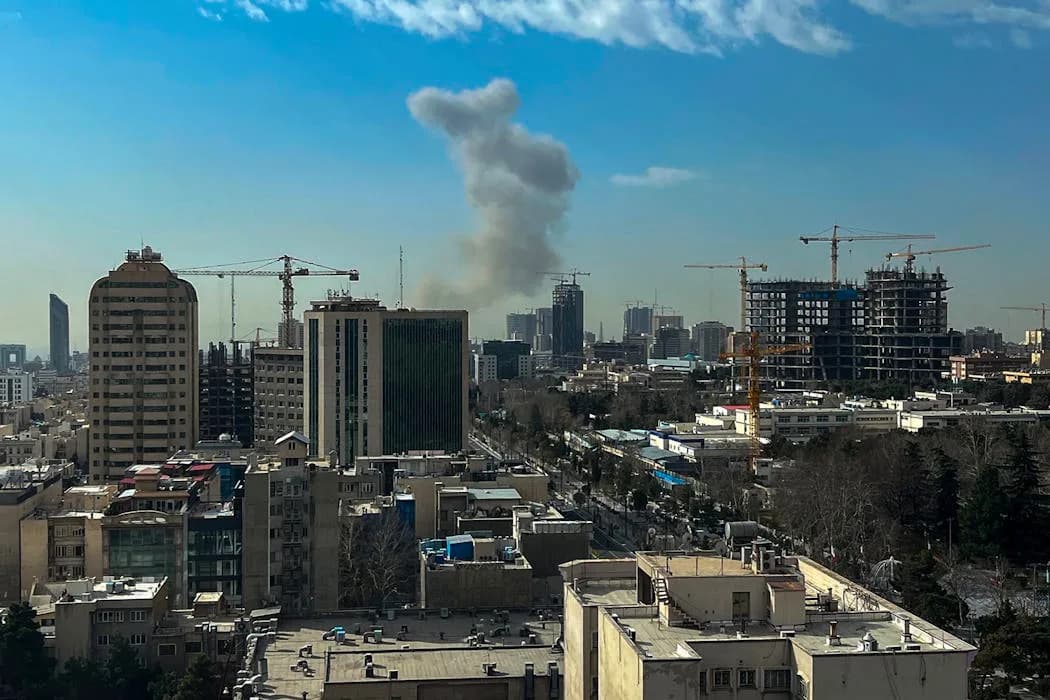
A plume of smoke rises above Tehran on Feb. 28, 2026.AFP via Getty Images
In the early hours of Feb. 28, 2026, hundreds of missiles struck multiple sites across Iran in a coordinated campaign the U.S. Department of Defense has called Operation Epic Fury. The strikes followed months of U.S. military buildup in the region and a series of diplomatic negotiations in Oman and Geneva that had aimed to avert armed confrontation.
Tehran has described the operation as an existential threat and vowed a "crushing" response. As a former senior official at the U.S. National Security Council and an analyst of Middle East affairs, I assess that the decision calculus in both Washington and Tehran has changed: the campaign’s scale, its apparent targeting of missile infrastructure and leadership sites, and President Donald Trump’s public messaging together reduce the prospects for a restrained, proportional reply.
What Was Targeted and Why
U.S. and Israeli strikes reportedly focused on ballistic- and cruise-missile launch and production facilities, storage sites, and several leadership compounds. Washington’s stated objective appears to include degrading Iran’s missile capabilities — the instruments by which Tehran most directly threatens neighbors and U.S. forces — and, increasingly, striking leadership targets that could influence regime continuity.
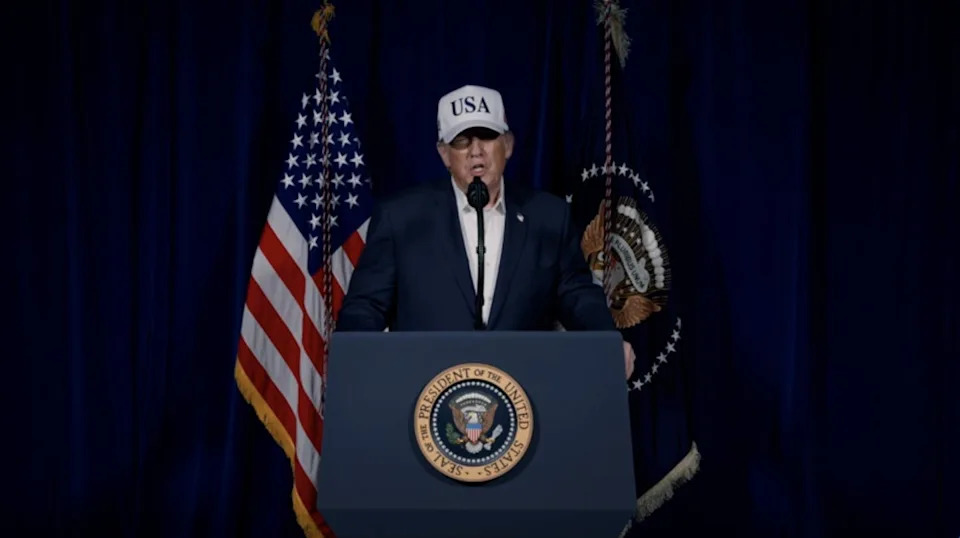
U.S. President Donald Trump addressed the nation on Iran strikes.US President Trump Via Truth Social/Anadolu via Getty Images
Where This Leaves Diplomacy
Diplomatic efforts that had been under way in Oman and Geneva appear to have been overtaken by military action. Any near-term negotiated settlement is now unlikely. Signalling an intent to remove Iran’s ruling elite, including public appeals by President Trump for regime change, further complicates the possibility of a diplomatic off-ramp.
How Iran Is Likely To Respond
Iran retains limited inventories of ballistic missiles, cruise missiles and armed drones, and it has a well-developed network of unconventional tools: the Islamic Revolutionary Guard Corps’ Quds Force, proxy partners such as Hezbollah, Houthi forces in Yemen, and Shia militias across Iraq. Even if conventional missile capabilities are degraded, Tehran can employ these asymmetric options to strike U.S. interests and regional partners.
“When we are finished, take over your government. It will be yours to take,” a message attributed to President Trump during the initial strikes, signals a regime-change objective that could prompt more violent and less constrained Iranian responses.
Risks And Constraints
Any Iranian retaliation aimed at inflicting U.S. casualties would increase domestic political pressure in the United States. Yet a large-scale U.S. ground invasion of Iran remains politically improbable without clear congressional authorization. Legally, the administration appears to have relied on Article II commander-in-chief powers rather than prior congressional authorization; the 1973 War Powers Resolution’s 60-day clock therefore now imposes constraints on extended operations.
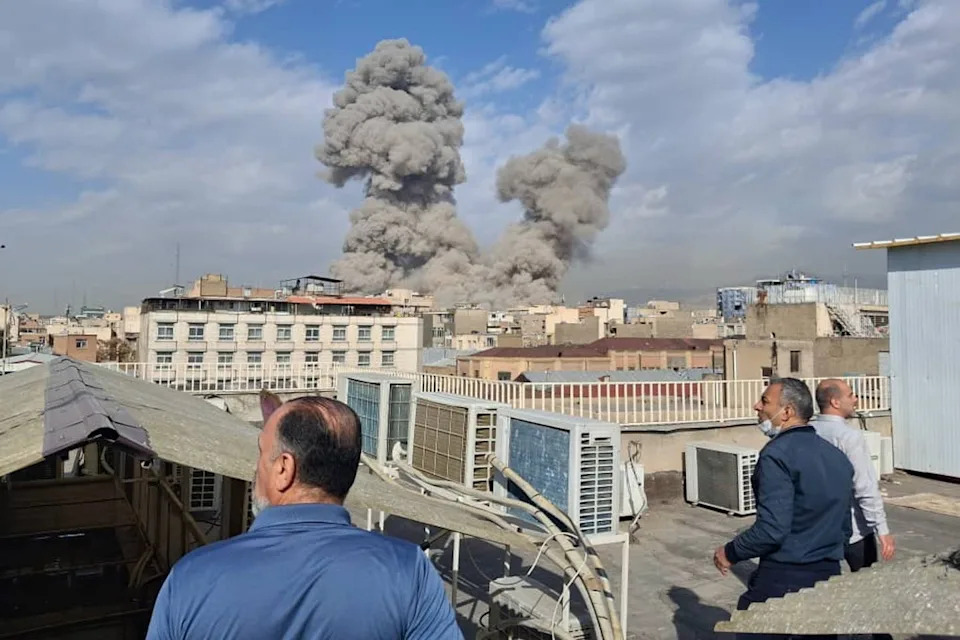
Iranians watch as explosions erupt across Tehran.AP Photo
Other risks include wider regional escalation as proxies and allied groups carry out attacks on shipping, bases, and installations across the Middle East. Such a trajectory could entangle multiple states and nonstate actors and produce sustained instability that would affect global energy markets and regional security.
What To Watch Next
- Statements from Iran’s leadership about retaliatory intent and targeting priorities.
- Missile and drone activity targeting U.S. bases and regional partners.
- Proxy strikes or terrorist attacks claimed by groups with known ties to Tehran.
- U.S. Congressional responses to the War Powers Resolution and any authorizations for force.
We are in the early stages of a potentially protracted crisis. The scale of the initial strikes, the targeting of leadership sites, and the public signaling of regime-change objectives combine to make restraint less likely. Governments, companies and civilians across the region and beyond should prepare for an intensified and unpredictable phase of violence.
Note: This piece is adapted from reporting and analysis originally published by The Conversation and authored by Javed Ali, University of Michigan.
Help us improve.





















