
The United States carried out strikes across Tehran and many Iranian provinces, triggering communications outages, heavy security deployments and the closure of schools and many shops. Local reports say targets were hit in roughly two thirds of provinces and a school strike in Hormozgan left at least 51 students dead. Iran's Revolutionary Guards announced missile and drone strikes against Israel and the US Fifth Fleet base in Bahrain, while the Supreme National Security Council activated contingency plans nationwide.
US Strikes Rock Iran: Schools Closed, Cities Quiet, Dozens Reported Dead
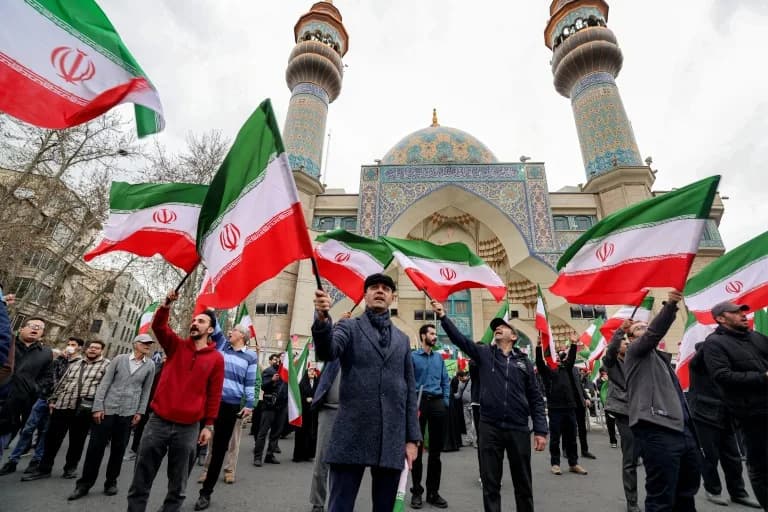
Some pro-goverbment protestors waved national flags during a demonstration in support of the government, but US and Israeli strikes and a striong security presence drove many Iranians to seek shelter (ATTA KENARE)(ATTA KENARE/AFP/AFP)
Tehran and multiple provinces across Iran were shaken by a series of early-morning strikes that shattered a fragile calm as talks with Washington were ongoing. Explosions rang out in the capital and in roughly two thirds of the country's provinces, prompting communications blackouts, a large security presence and widespread disruption to daily life.
Immediate Impact
Just before 9:45am local time, residents in central Tehran reported explosions and the sound of fighter jets. Within minutes, dark plumes of smoke were visible near the residence of Iran's supreme leader, Ayatollah Ali Khamenei, and authorities restricted communications and internet access.
"I am hearing explosions and fighter jets overhead," a resident of central Tehran said shortly before services were cut.
Traffic slowed to a crawl, long queues formed outside bakeries and petrol stations, and police and security forces mobilised across the city. Saturday, which normally marks the start of Iran's working week, saw many shops pull down their shutters and far fewer pedestrians than usual on the streets.
Casualties and Key Targets
Officials and witnesses outside Tehran reported strikes in about two thirds of Iran's provinces. Footage from Hormozgan province showed soot-covered debris at a school and anguished crowds at the scene; local reports put the death toll from that strike at at least 51 students.
Government Response and Regional Fallout
State media moved quickly to reassure the public that President Masoud Pezeshkian, Foreign Minister Abbas Araghchi and "all the commanders" of Iran's armed forces were safe. A small pro-government rally of roughly 300 people was also covered by state outlets in Tehran's Palestine Square.
The Islamic Revolutionary Guard Corps announced missile and drone strikes in retaliation, naming targets in Israel and the US Fifth Fleet base in Bahrain. Observers and local reports also described explosions across the wider region, including in the United Arab Emirates, Saudi Arabia, Qatar, Kuwait, Iraq and Jordan.
Domestic Measures
Iran's Supreme National Security Council said contingency plans had been activated. Authorities ordered schools closed until further notice, instructed banks to remain open, and set government offices to operate at half capacity. Officials told local media that food and fuel supplies were secured and that subway and bus services would continue to run where possible.
Context
The strikes came while Tehran and Washington were engaged in negotiations intended to avert a wider conflict, and evoked memories of a 12-day clash last June when Israel launched attacks days before planned talks. Iranian officials say they have feared renewed large-scale hostilities since that earlier conflict.
Public nerves had already been frayed by mass protests late last December over economic hardship, and in the days before the strikes social media users—particularly on Instagram—shared practical safety advice for what to do in the event of explosions or air attacks.
After the strikes, the military's Khatam al-Anbiya Central Headquarters declared operations "will continue without pause until the enemy's definitive defeat." Authorities continue to monitor the situation and issue updates as events unfold.
Help us improve.





















