
Vivek Ramaswamy said he will stop using his personal X and Instagram accounts, arguing social media amplifies negative voices and gives a distorted view of voters. He told The Wall Street Journal he saw racist attacks online but encountered no comparable bigotry during in-person campaigning across Ohio’s 88 counties. The article also highlights related digital controversies: violent MAGA rhetoric surrounding Minnesota’s governor, international backlash over sexual-content capabilities in Elon Musk’s Grok chatbot, proposed legislation to curb officials’ online betting, a reported $100 million ICE recruitment ad plan, and the spread of AI deepfakes tied to the Maduro arrest.
Vivek Ramaswamy Logs Off Personal Social Accounts, Says Platforms Create 'False Impression' of Voters

Ohio gubernatorial candidate and former Republican presidential hopeful Vivek Ramaswamy announced this week that he will step away from his personal social media profiles on X and Instagram. In an op-ed for The Wall Street Journal published Monday, Ramaswamy argued that modern social platforms tend to amplify the most negative and bombastic messages, creating a misleading impression of public sentiment.
Ramaswamy's Explanation
Ramaswamy wrote that, although he witnessed "a spate of shocking racial slurs and worse on social media" in 2025, his in-person campaigning across all 88 Ohio counties produced no comparable evidence of widespread voter bigotry. He said his remaining public accounts are now managed by staff rather than himself.
Context And Backlash
Ramaswamy rose to national prominence for outspoken conservative commentary and outspoken critiques of liberal policies. He has also faced criticism and hostile reactions within elements of the MAGA movement, which he says intensified after he criticized American workers and expressed support for H-1B visas in late 2024. In recent weeks he has publicly condemned anti-Indian racism he says originated from some party members online.
Other Digital And Political Developments
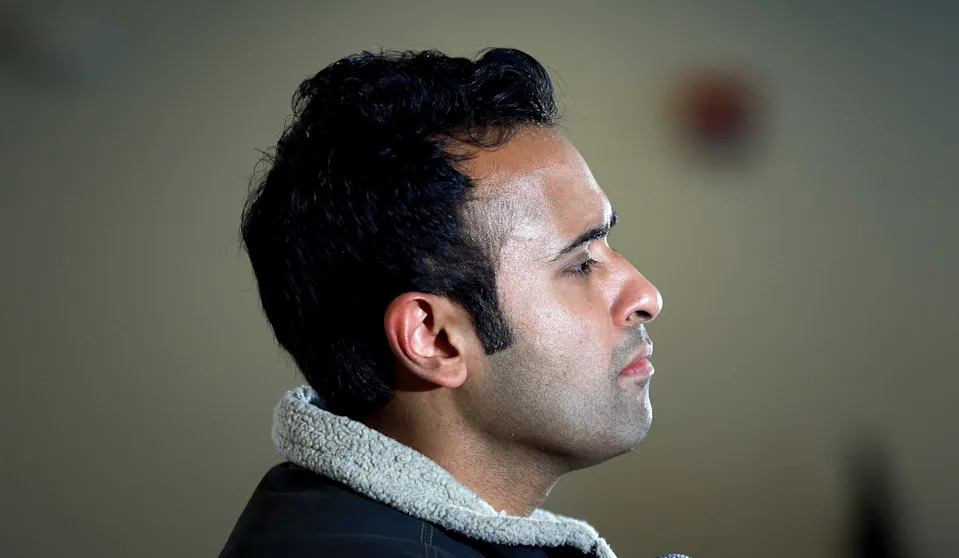
Vivek Ramaswamy on Jan. 08, 2024 in Sioux City, IA.(Joe Raedle / Getty Images)
Several related digital controversies unfolded this week: reports surfaced that Elon Musk and influencer Zack Hoyt helped amplify violent rhetoric targeting Minnesota Governor Tim Walz — rhetoric that preceded Walz’s announcement that he will not seek re-election. Separately, Musk faces global criticism after a feature in his AI chatbot Grok reportedly enabled the generation of sexualized images of children; officials in France, Malaysia and the European Union publicly condemned the capability, and Musk warned users that illegal content creation would carry the same consequences as illegal uploads.
In Congress, Representative Ritchie Torres introduced legislation to bar officials and politically connected actors from using privileged information to place online bets on international events, following reports of a roughly $400,000 payout tied to a Polymarket wager related to the arrest of Venezuelan leader Nicolás Maduro.
Internal documents reviewed by the Washington Post indicate that U.S. Immigration and Customs Enforcement is planning a roughly $100 million recruitment campaign aimed at gun show attendees and military enthusiasts using geotargeted ads and influencers; the Department of Homeland Security described the campaign as successful in response to the reporting.
At the same time, AI-generated deepfakes that purport to show Venezuelans celebrating Maduro’s arrest have spread online, amplified by several pro-Trump accounts. And the Trump administration recently lifted sanctions on executives tied to an Israeli-backed spyware company whose tools reportedly have been used by repressive regimes.
Why This Matters
Ramaswamy’s withdrawal from personal posting highlights growing concerns about how social platforms shape political perception and discourse. The week’s related stories — from AI safety and deepfakes to online extremism and government recruitment tactics — underscore the expanding intersection of technology and politics ahead of key elections.
Help us improve.


