
The Wall Street Journal interview widened scrutiny of President Trump’s health after he said the October exam was a CT scan (not an MRI) and admitted to taking daily aspirin against doctors’ advice. The report links aspirin to easy bruising—so much so that the president said he used makeup to hide discoloration—and notes he briefly tried and abandoned compression socks. Mr. Trump also defended photos that some interpreted as dozing by saying he was merely "blinking."
Trump Revises Health Story: CT Scan, Daily Aspirin and 'Blinking' Defense Raise Questions

Questions about President Donald Trump’s health deepened after an interview with The Wall Street Journal in which he offered inconsistent details about an October medical scan and acknowledged health practices that contradict his doctors’ advice.
What The Journal Reported
Mr. Trump told The Wall Street Journal that the October imaging exam was a CT scan, not an MRI as White House officials had earlier stated. The Journal reported that Navy Capt. Sean Barbabella, the president’s physician, confirmed the CT scan in a statement to the paper. It is notable that it took roughly three months for the White House to clarify the type of imaging.
The president also acknowledged taking daily aspirin for about 25 years and said he is reluctant to stop. According to the Journal, he believes aspirin helps produce what he described as "nice, thin blood," a description that does not align with how clinicians discuss cardiovascular risk or anticoagulation. The reporting linked aspirin use to easy bruising; Mr. Trump admitted using makeup to conceal discoloration on his hands.
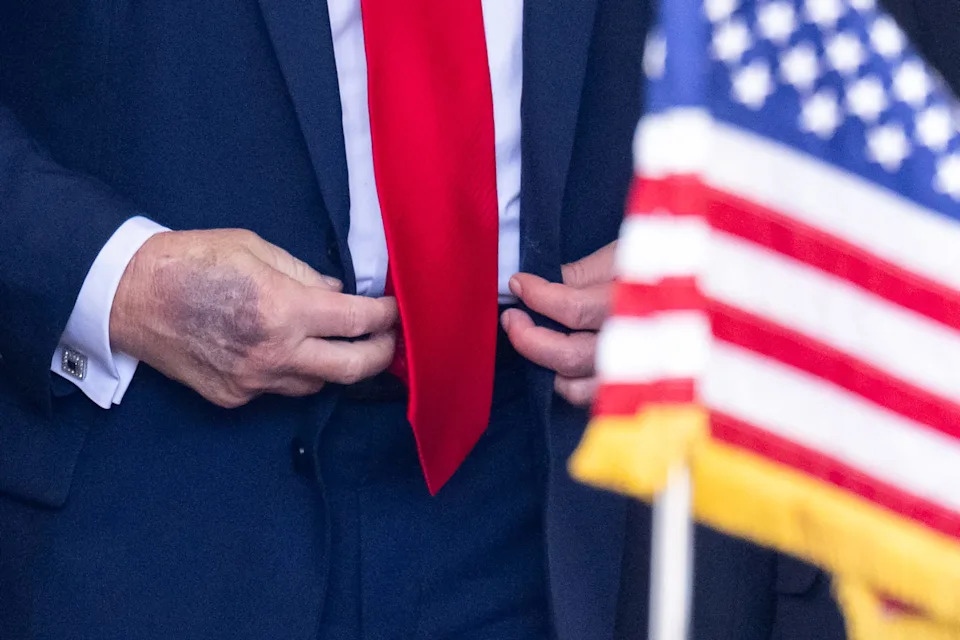
A view of President Donald Trump's hand as he greets South Korean President Lee Jae Myung at the West Wing entrance of the White House on Aug. 25, 2025.(Saul Loeb / AFP via Getty Images)
The interview included other personal details: Mr. Trump briefly tried compression socks for swollen ankles but stopped because he disliked them, and he said he regretted having advanced imaging because it invited scrutiny. When photos circulated that some observers interpreted as the president appearing to doze at events, he said the photos simply captured him "blinking." Independent observers have suggested the images show something more than ordinary blinking.
"In retrospect, it's too bad I took it because it gave them a little ammunition," Mr. Trump told The Wall Street Journal about his decision to have a cardiovascular and abdominal scan in October.
Context And Significance
These details matter because they touch on transparency, medical judgment, and public trust. The combination of inconsistent public statements about a medical scan, visible bruising, and a long-running personal practice of daily aspirin despite contrary medical advice has amplified public curiosity and concern about the president’s health.
The Journal also relayed an anecdote noting particularly fragile skin, describing an instance in which Pam Bondi reportedly nicked the president’s hand with a ring, causing bleeding. Whether or not these items indicate an underlying medical issue, the episode underscores how small, personal health choices and unclear communication can quickly become matters of public scrutiny for a sitting president.
Taken together, the Journal’s reporting and the president’s comments prompted more questions than answers about the health decisions and public messaging from the White House.
Help us improve.


