
Holiday spending through Sunday exceeded last year’s levels, but shoppers are changing where and how they buy. More consumers visited thrift and off‑price stores, pressuring traditional department and specialty retailers. Return rates fell about 2.5% from Nov. 1–Dec. 12, suggesting more research-driven purchases, though Adobe expects a large post‑Christmas spike in returns.
More Thrifting, Fewer Returns — Early Trends That Shaped This Holiday Shopping Season

Post-holiday shoppers pass a Christmas tree and festive display at Calef's Country Store, Friday, Dec. 26, 2025, in Barrington, N.H. (AP Photo/Charles Krupa)(ASSOCIATED PRESS)
The holiday shopping surge that built up to Christmas has passed, and as always another wave has begun: millions of shoppers are now chasing post-holiday bargains and lining up to return gifts that didn’t fit or missed the mark. Data from Visa’s Consulting & Analytics division and Mastercard SpendingPulse show overall holiday spending through Sunday surpassed last year’s totals, but changing economic concerns and higher prices are reshaping where and how people shop.
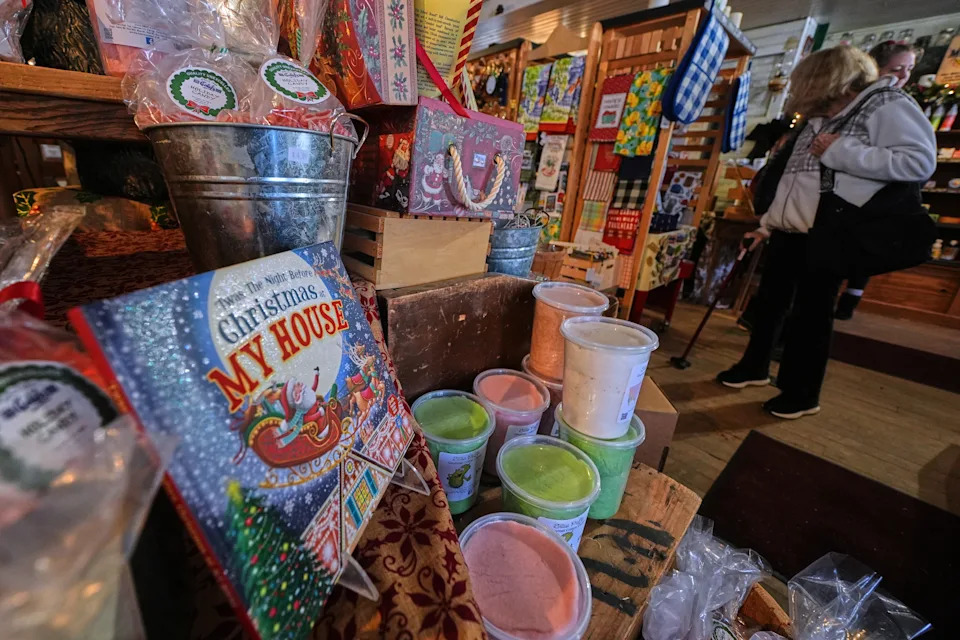
Post-holiday shoppers pass a seasonal candy and Christmas display at Calef's Country Store, Friday, Dec. 26, 2025, in Barrington, N.H. (AP Photo/Charles Krupa)(ASSOCIATED PRESS)
A Weaker Run For Traditional Gift Giving
Consumers are still buying gifts, but a growing share of that spending is shifting away from traditional department and specialty stores and toward thrift and off-price retailers, according to location-data firm Placer.ai. Clothing and electronics—categories that usually dominate holiday sales—saw seasonal bumps but struggled to grow versus prior years, in part because both rely heavily on imports and are exposed to tariff-driven price increases.

FILE - Becca Mendoza and Tammi Hines look at products as shoppers browse through Kohl's department store for Black Friday deals, Friday, Nov. 28, 2025, in Woodstock, Ga. (AP Photo/Megan Varner, File)(ASSOCIATED PRESS)
Placer.ai found department-store foot traffic doubled in the week before Christmas compared with an average shopping week this year, yet that same pre-Christmas week was down 13.2% compared with last year’s run-up. Specialty clothing sellers saw a 61% seasonal increase versus the rest of the year but still trailed last year’s pre-Christmas traffic by about 9%.
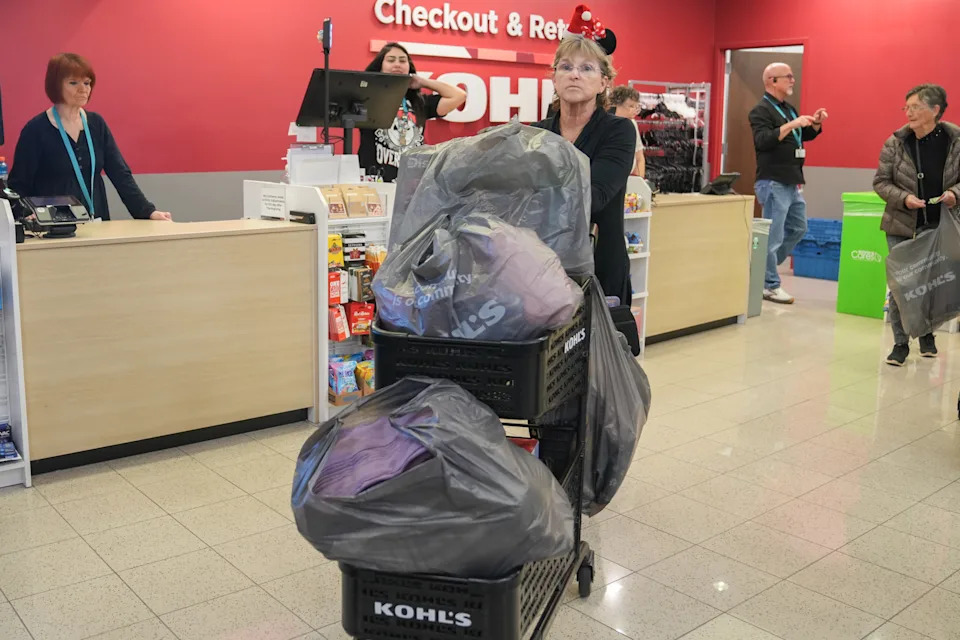
FILE - A shopper loads a cart full at Kohl's department store for Black Friday deals, Friday, Nov. 28, 2025, in Woodstock, Ga. (AP Photo/Megan Varner, File)(ASSOCIATED PRESS)
Thrift And Off-Price Stores Gain Momentum
Off-price chains such as TJ Maxx experienced strong seasonal spikes in traffic (an 85.1% bump in the week before Christmas) and a modest week-over-week gain in the same period. Thrift stores were particularly notable: traffic rose nearly 11% in the week before Christmas year-over-year.
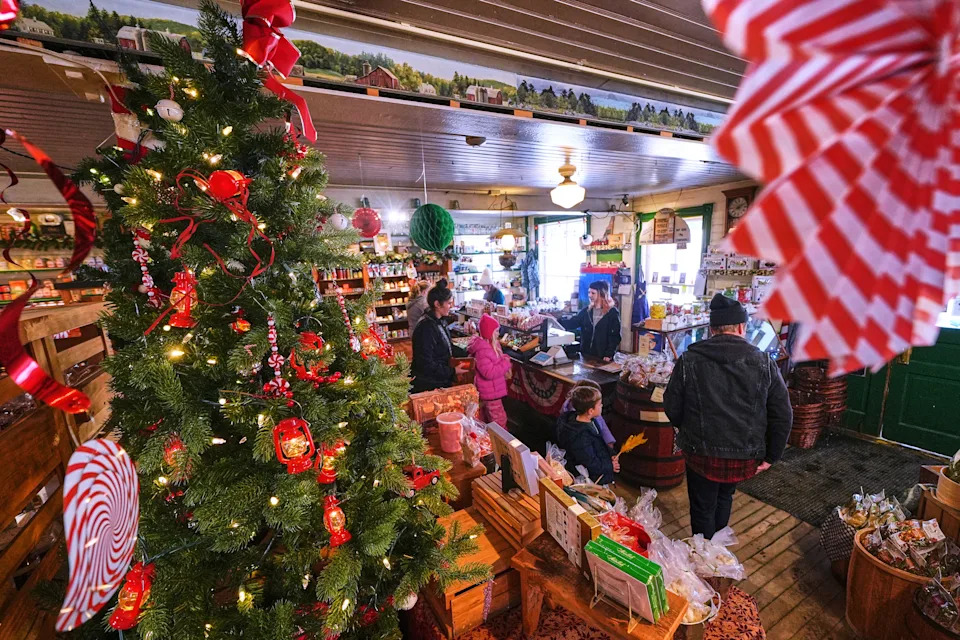
Post-holiday shoppers pass a Christmas tree at Calef's Country Store, Friday, Dec. 26, 2025, in Barrington, N.H. (AP Photo/Charles Krupa)(ASSOCIATED PRESS)
Placer.ai reports that visits to thrift stores were at least 10% higher in the second half of 2024 versus the prior year. Thrift shopping also saw a rare holiday uptick: during the recent Black Friday weekend, thrift-store sales grew about 5.5%, and November comparisons showed thrift traffic up 12.7% while traditional apparel-store traffic slipped more than 3%.
Demographics are shifting too. Combined Placer.ai and STI:PopStats data indicate the average household income of thrift shoppers rose slightly to about $75,000 in October–November—evidence that secondhand shopping is broadening beyond lower-income cohorts. Savers Value Village reported U.S. sales up 10.5% in the three months ended Sept. 27, and executives said momentum continued into October.
“Whether hunting for a designer deal or uncovering a one-of-a-kind vintage piece, consumers increasingly favored discovery-driven experiences over the standardized assortments of traditional retail,” said Shira Petrack, head of content at Placer.ai.
Returns Are Down — For Now
Adobe Analytics found return rates for the first six weeks of the holiday season were down compared with the same period a year earlier, suggesting shoppers researched purchases more and stuck more closely to shopping lists. From Nov. 1 to Dec. 12, returns fell about 2.5% year-over-year, while online sales grew 6% to $187.3 billion during that period.
Adobe’s analysts caution that returns typically spike after Christmas: the firm expects returns between Dec. 26 and Dec. 31 to rise roughly 25%–35% compared with Nov. 1–Dec. 12 levels, and to remain elevated through the first two weeks of January (up about 8%–15%). Adobe also noted that one in eight returns in the 2024 holiday season occurred between Dec. 26 and Dec. 31, a pattern likely to repeat.
“Many consumers are being very specific with how they spend their budget,” said Vivek Pandya, lead analyst at Adobe Digital Insights. “We’re seeing more conscientious, research-driven purchases.”
What this means: Overall spending held up compared with last year, but shoppers are hunting bargains and embracing secondhand options more than before. Retailers that rely on traditional holiday traffic face greater competition from discount and thrift channels, while returns — though down so far — are expected to surge in the post-Christmas window.


