
Prosecutors say Brian Walshe planned and killed his wife Ana on January 1, 2023, then dismembered her and discarded her remains. Key evidence includes a bloodied, cut rug recovered from a dumpster, a fragment of Ana's necklace, and internet searches about disposing of a body. The defense admits Walshe disposed of the body and lied to police but argues he found Ana dead and reacted rather than planned a killing. The jury must decide whether the killing was premeditated (first-degree) or not (second-degree), a choice that determines whether Walshe would face life without parole or parole eligibility after 15–25 years.
Why Brian Walshe Could Be Convicted Of A Lesser Homicide Charge — What Jurors Must Decide

Brian Walshe enters the courtroom clutching papers and a rosary at Norfolk County Superior Court in Dedham, Massachusetts, on December 1. - Greg Derr/The Patriot Ledger/AP
Prosecutors allege that Brian Walshe planned to kill his wife, Ana Walshe, on January 1, 2023, then dismembered her and discarded her remains in dumpsters near the Cohasset, Massachusetts, area where the couple lived. Walshe is charged with first-degree murder, the most serious homicide offense in Massachusetts, which requires proof that the killing was deliberate and premeditated.
Evidence Presented
During eight days of testimony, the commonwealth presented circumstantial and digital evidence that it says supports an inference of a violent death at the family home. Investigators recovered a living-room rug that had been cut, bagged, and discarded in a dumpster at an apartment complex where Walshe's mother lived; the rug was saturated with Ana's blood and contained a fragment of her necklace. Prosecutors say Walshe placed trash bags with Ana's remains and other incriminating items in multiple dumpsters across towns in an attempt to conceal the crime.

Ana Walshe is seen in an undated photo. A portion of this image has been blurred by CNN to protect a minor's identity. - Courtesy Peter Kirby
Digital records introduced at trial show searches on Walshe's devices beginning in the early morning hours of January 1, 2023, including queries about how to dispose of a body and how to clean up blood. Investigators also found searches for a man identified as William Fastow and for commercial properties Ana managed in the days before she was reported missing.
Defense Argument
Walshe's defense concedes that he disposed of Ana's body and misled police, matters to which he pleaded guilty before jury selection. But the defense maintains that he did not kill Ana: they say he found her inexplicably dead in bed on New Year's Day, panicked, and then hid the body because he feared no one would believe his account. Walshe ultimately declined to testify, and the defense rested without presenting additional evidence.

Defense attorney Larry Tipton cross examines state medical examiner Dr. Richard Atkinson at Norfolk County Superior Court on December 8. - Greg Derr/AP
Defense attorneys argued that the digital searches and the disposal of the body reflect reaction and panic rather than prior planning or deliberation. Prosecutors countered that the pattern of conduct, motive and digital activity supports an inference of premeditation.
How The Jury Must Decide
Under Massachusetts law, when jurors consider a murder charge they are also asked to decide the degree of the offense even if the indictment names only first-degree murder. A first-degree murder conviction requires the jury to find deliberate premeditation. If jurors are not persuaded beyond a reasonable doubt that the killing was premeditated, they may convict on the lesser charge of second-degree murder, which does not require proof of planning.
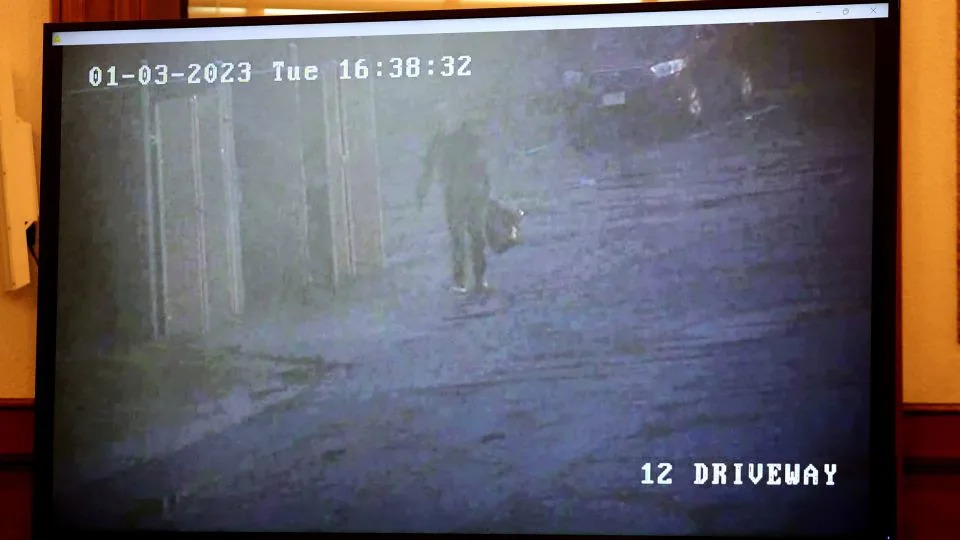
A video allegedly showing Brian Walshe depositing a garbage bag into a dumpster at an apartment complex where his mother lived is shown during his trial for the killing of his wife, Ana, on December 4. - Matt Stone/Pool/The Boston Herald/AP
Potential Sentences
First-degree murder in Massachusetts carries a mandatory sentence of life in prison without the possibility of parole. A conviction for second-degree murder allows parole eligibility: the judge may impose a mandatory minimum term of 15 to 25 years, after which the defendant could become eligible for parole. Separate convictions for misleading police and for improper conveyance (the disposal of a body) carry additional prison exposure and could be ordered to run consecutively or concurrently with a murder sentence.
Why A Lesser Conviction Is Plausible
Defense strategists said their decision to admit certain acts — disposing of the body and lying to investigators — may blunt the prosecution's strongest evidence for first-degree murder and make a second-degree verdict more likely as a compromise for jurors who are uncertain about premeditation. Prosecutors maintain that motive, the physical evidence, and the timing of internet searches together point to planned, deliberate action.
The jury of 12 began deliberations following closing arguments, and its determination of whether the evidence proves premeditation beyond a reasonable doubt will decide whether Walshe faces life without parole or a term that allows for parole eligibility.


