
Kentucky state Rep. Sarah Stalker told a legislative committee she sometimes feels guilty about being White while defending DEI programs in public schools. She characterized Whiteness as a "point of privilege" and argued that removing DEI would deny students opportunities to reflect on racial advantage and see diverse histories in classroom materials. Her remarks drew sharp online criticism — including from Elon Musk — as lawmakers weigh a bill to curb DEI in K–12 schools.
Kentucky Lawmaker Says She 'Doesn't Feel Good About Being White,' Prompting National Backlash

Rep. Sarah Stalker defended DEI in Kentucky's public schools during a committee hearing on Tuesday.
Kentucky state Rep. Sarah Stalker drew widespread attention after telling an interim education committee that she sometimes feels guilty about being White while defending diversity, equity and inclusion (DEI) efforts in public schools.
Stalker made the remarks Tuesday during a meeting of the Kentucky General Assembly's Interim Joint Committee on Education. She was responding to Republican state Sen. Lindsey Tichenor, who presented a draft bill intended to limit or end DEI programs in K–12 schools across the state.
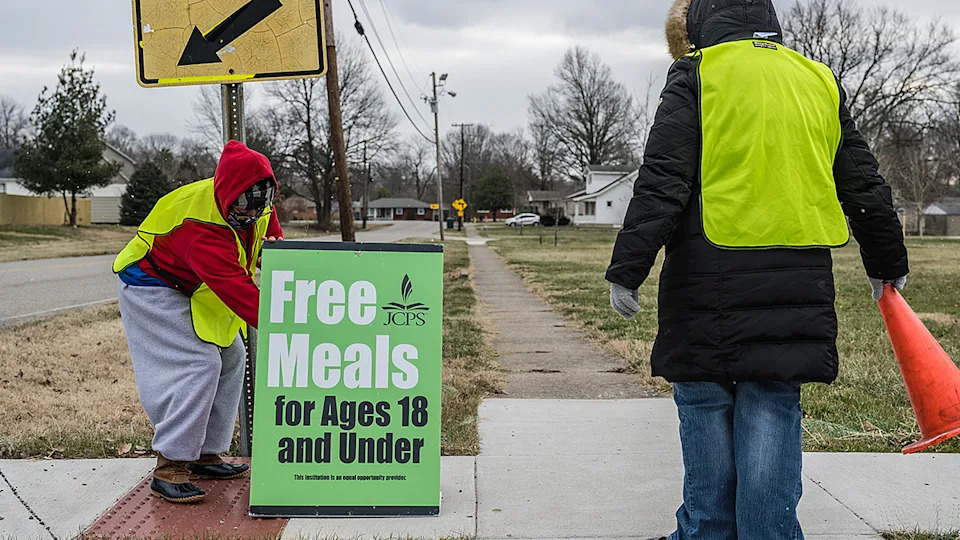
A Jefferson County Public Schools nutritional assistant displays a sign indicating free meals to-go at Crums Lane Elementary School in Louisville, Kentucky, on Jan. 21, 2022.
"I'm going to be honest. I don't feel good about being White every day, for a lot of reasons," Stalker said. "If I was a White man, I would be functioning from a point of even greater privilege."
What She Said And Why
Stalker described Whiteness as a "point of privilege" that provides advantages many of her colleagues, neighbors and students do not experience. She argued that removing DEI programming would deny students — including White students — the opportunity to reflect on how race affects life chances and to engage in constructive classroom conversations about history, culture and identity.
"DEI efforts are not about making people feel bad about being White," she said. "They are about recognizing the historical privilege that White people have always had in this country — and how that legacy still shapes outcomes today." Stalker pointed to Jefferson County Public Schools — the state's largest district — noting it serves families speaking more than 145 languages and that 63% of students qualify for free or reduced-price lunches as evidence of why inclusive curricula matter.

Protesters in Michigan rally against President Donald Trump’s anti-DEI policies.
Response And Political Context
Stalker's comments prompted strong online backlash, including a terse comment from Elon Musk on X calling her "an evil woman," a post that quickly attracted widespread attention. Responses on social media ranged from support for Stalker's acknowledgement of racial privilege to condemnation and calls for her resignation.
Sen. Lindsey Tichenor, sponsor of the proposed anti-DEI bill, said the legislation would be narrowly tailored and would not prohibit instruction about the historical oppression of particular groups, according to reporting from the Kentucky Lantern. Tichenor criticized Jefferson and Fayette counties for resisting previous federal directives to end DEI initiatives and argued that some DEI-funded programs have not demonstrably improved minority students' academic outcomes.
"DEI reinforces division rather than unity, and encourages students, teachers and staff to see each other through the lens of identity and creating groupthink instead of creating independent thinkers," Tichenor said.
Stalker did not immediately respond to a request for additional comment. The exchange highlights growing national debate over the role of DEI in public education and how schools should address race, history and representation in classrooms.


