
Nicolas Sarkozy has published a 213-page memoir recounting his 20-day detention at Paris’s La Santé following a conviction for criminal conspiracy over alleged Libyan financing of his 2007 campaign. The book mixes a day-by-day prison diary with flashbacks, describing harsh conditions (a famously hard mattress, blocked windows and jeers at night) alongside VIP-wing comforts and frequent family visits. Sarkozy insists on his innocence, criticizes the press investigation behind his conviction, compares his ordeal to the Dreyfus affair and reflects on faith and personal renewal.
The Hardest Bed He Ever Felt: Sarkozy’s 213-Page Memoir of 20 Days in La Santé
12:13 AM, 12/11/2025

Nicolas Sarkozy arriving at a book signing event on Wednesday. - Cyril Pecquenard/SIPA/AP
Twenty days behind bars became a 213-page memoir. In Diary of a Prisoner, former French president Nicolas Sarkozy chronicles his detention at Paris’s La Santé Prison, describing the physical discomfort, the psychological strain and the unusual public attention that accompanied his incarceration after a September conviction for criminal conspiracy tied to alleged Libyan financing of his 2007 campaign.
A Daily Record of Confinement
Sarkozy says he averaged more than ten pages for each 24-hour period he spent in custody. The book, released one month after his release on November 10 pending appeal, blends a day-by-day account of prison life with flashbacks to events between his sentencing and his arrival at La Santé on October 21.
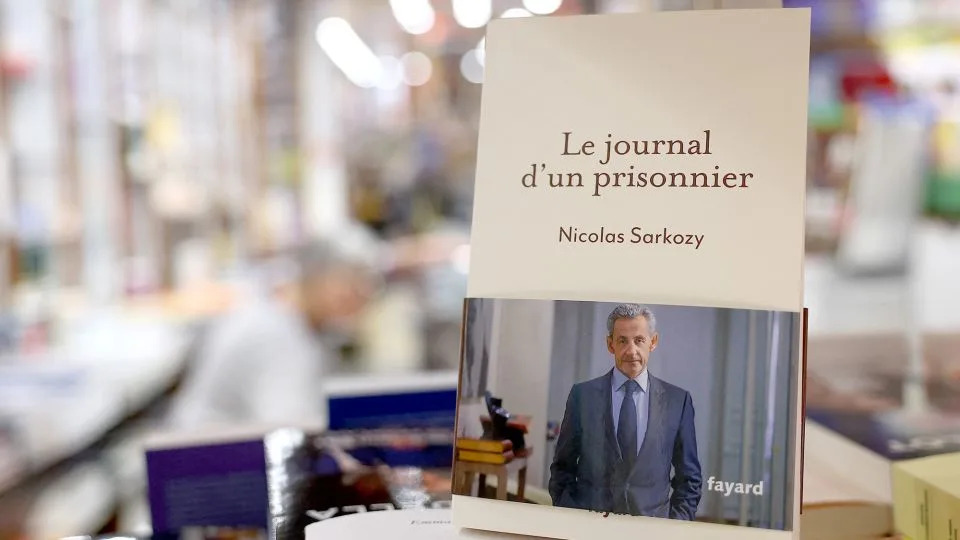
A copy of "Diary of a Prisoner." - Gonzalo Fuentes/Reuters
Harsh Details, VIP Contrasts
From inside his cell, the view was blocked by plastic panels that made it impossible to see the sky or judge the weather. Nights were punctuated by jeers from other inmates echoing through the complex; on one night an inmate set fire to a neighboring cell and woke him. He recalls the mattress as the hardest he had ever slept on — "tougher even than anything I experienced during military service" — and that the bed was often unmade.
Still, as an occupant of La Santé’s so-called VIP wing (an 18-cell section), he had some comforts: a private TV, a shower, a small fridge and a cooking hob. He stresses the contrast between his relative separation and the more severe isolation experienced by other inmates in the same wing: "No one sees them. No one meets them," he writes.
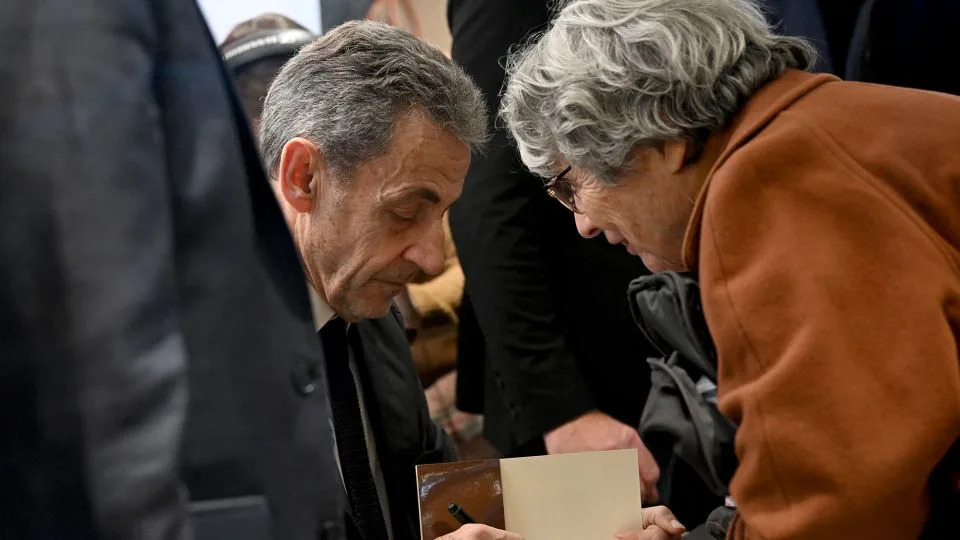
Sarkozy signs a copy of his book "Diary of a Prisoner" for a reader on the day of its release at the Lamartine bookshop in Paris on Wednesday. - Bertrand Guay/AFP/Getty Images
Official Offers, Visits And Support
The memoir details official overtures following his conviction. Sarkozy recounts being received at the presidential palace, where he says President Emmanuel Macron urged him to accept relocation to another facility and offered placement in what he describes as an "apartment for the families of inmates," an offer Sarkozy says he declined.
He also describes in-prison visits, including one from former colleague and then-justice minister Gérald Darmanin — a meeting that sparked public criticism. Messages and calls of support reportedly came from world leaders and diplomats. Sarkozy says the US businessman Charles Kushner, father of Jared Kushner, requested to meet him while he was in custody; Sarkozy notes Kushner senior previously served time and was later pardoned by President Donald Trump.

The former French president and his wife Carla Bruni-Sarkozy leave their home on October 21 in Paris as Sarkozy heads to prison. - Thibault Camus/AP
Family, Fans And Fan Mail
Sarkozy stresses that he had frequent face-to-face family contact — at least every other day — and recounts surprising public support: applause in restaurants, crowds lining streets as his convoy entered La Santé and football fans cheering him on. He says prison staff were overwhelmed by fan mail, listing deliveries that included 20 Bibles, 30 identical copies of an award-winning novel, and hundreds of letters each day — "more than I ever received as president," he writes.
Image, Faith And Comparison
One of the memoir’s purposes is image rehabilitation. Once a symbol of tough-on-crime rhetoric — saying in 2012 that courts must punish "high-ranking thugs" especially harshly — Sarkozy now adopts a more reflective tone, insisting on his innocence and criticizing the journalistic investigation that contributed to his conviction. The book opens with a warning: "this is not a novel."
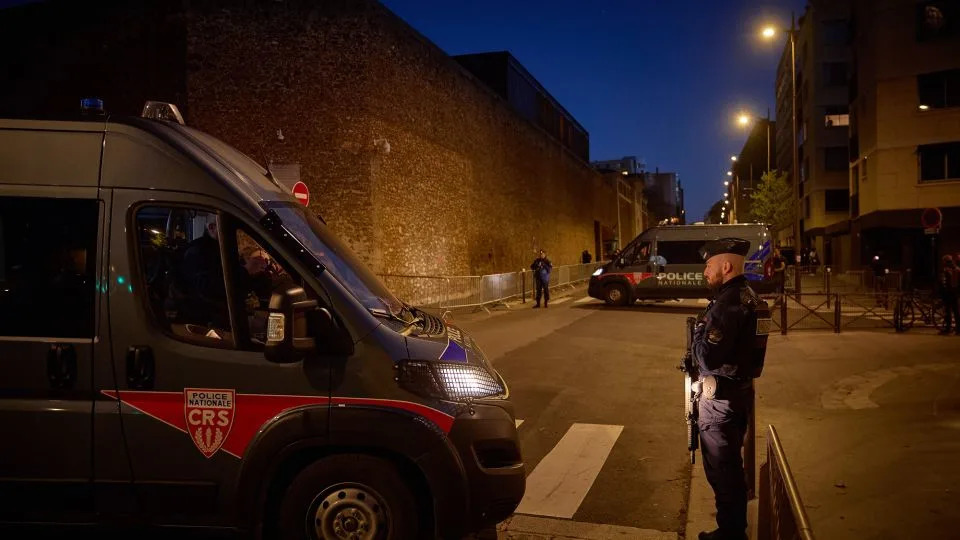
Police secure the exterior of La Santé Prison ahead of the arrival of Nicolas Sarkozy on October 21, 2025 in Paris, France. - Kiran Ridley/Getty Images
He also writes about spiritual consolation: Sunday visits from the prison chaplain, a biography of Jesus Christ he carried into his cell, and two volumes of The Count of Monte Cristo — a pointed literary companion for a man writing from confinement. In an extraordinary comparison, Sarkozy likens his fate to that of Alfred Dreyfus, the late-19th-century La Santé prisoner whose wrongful conviction became a national scandal.
Reflection And Reality
The memoir closes on a personal note. Moved by some of the staff’s care and pained by separation from family, he reflects on loss and renewal: "In La Santé, I restarted my life," he writes. Yet empathy for other inmates is sparse, and he consistently positions himself as distinct — both physically in the VIP wing and politically as an innocent man undergoing the "unthinkable."
"I had entered (prison) as a head of state. I left with the same rank,"
The reporting accompanying the original account notes a sobering counterpoint: he entered as a convict and left with the same public stature. Additional reporting for the memoir’s coverage was provided by Philippe Cordier.
Similar Articles

‘Diary of a Prisoner’: Sarkozy Describes ‘Greyness and Solitude’ of La Santé Stay
Nicolas Sarkozy , 70, recounts a three-week stint at La Santé prison marked by "greyness" and solitude in excerpts from his f...

Sarkozy Says He Turned Down Macron’s Offer Of A Safer Prison — Chronicles 20 Days At La Santé
Nicolas Sarkozy says he refused President Emmanuel Macron's offer to relocate him to a safer detention facility, telling Macr...

Sarkozy's Last Appeal: French Top Court Reviews 2012 Campaign Finance Case
France's Court of Cassation heard a final appeal in the case accusing former president Nicolas Sarkozy of benefiting from ill...

Macron Sparks Outcry With Proposal For Voluntary 'Serious Media' Certification
French President Emmanuel Macron proposed a voluntary, journalist-led label to mark "serious" news outlets, aiming to help au...

Algeria Pardons Writer Boualem Sansal; Germany to Arrange Medical Transfer
Algeria has granted a presidential pardon to 81-year-old novelist Boualem Sansal after Germany requested his release and offe...

Diplomatic Breakthrough: Algeria Pardons Novelist Boualem Sansal, Flown to Germany for Medical Care
Boualem Sansal, 81, has been pardoned by Algerian President Abdelmadjid Tebboune and flown to Germany for medical treatment a...

France Postpones Controversial Pension Reform Until 2027, Giving Premier a Breather
French lawmakers approved a social security budget, granting Prime Minister Sébastien Lecornu a short-term political reprieve...

French Mayor Jailed Over Secret Sex‑Tape 'Honey Trap' Used to Blackmail Rival
Gaël Perdriau, mayor of Saint‑Étienne, was sentenced to four years in prison after being found guilty of orchestrating a cove...

Pandas, Ping-Pong and Diplomacy: Macron Ends China Visit With Softer Finale in Chengdu
Emmanuel Macron ended his fourth state visit to China with a relaxed finale in Chengdu, meeting the Chinese presidential coup...

Tunisia Frees Prominent Lawyer Sonia Dahmani After 18 Months — Rights Groups Decry Crackdown
Sonia Dahmani, a prominent Tunisian lawyer and media commentator, was released from Manouba prison after serving roughly 18 m...

Tunisian Opposition Co‑Founder Jawhar Ben Mbarek Hospitalised After 17‑Day Hunger Strike, Family Says
Jawhar Ben Mbarek, co‑founder of Tunisia's National Salvation Front, was hospitalised with severe dehydration after 17 days o...

Bolsonaro Seeks Home Detention, Citing Health Risks After Coup Conviction
Lawyers for former President Jair Bolsonaro have requested that Brazil's Supreme Court allow him to serve his 27-year, three-...

Brigitte Macron Sparks Outcry After Using Sexist Slur About Protesters
Brigitte Macron faced backlash after a video showed her using a sexist slur about protesters who interrupted comedian Ary Abi...

Bolsonaro Seeks House Arrest for 27-Year Sentence, Lawyers Cite Serious Health Risks
Bolsonaro's legal team has asked Brazil's Supreme Court to let the former president serve a 27-year sentence at home on medic...

Macron Warns U.S. Could 'Betray' Ukraine Over Territorial Concessions, Spiegel Transcript Shows
Der Spiegel published a transcript of a confidential call in which President Emmanuel Macron warned the U.S. might pressure U...