Anna’s Archive has launched an urgent appeal for volunteers to scan and upload printed books after reports that some AI firms are buying, digitizing and destroying original volumes. The archive links the trend to a 2024 Anthropic settlement and a court finding about fair use that critics say opened the door for large-scale scanning. Independent booksellers report suspicious bulk orders and deliveries to processing centers where spines are removed for high-speed scanning. Anna’s Archive warns this could concentrate knowledge on private servers and is urging a global volunteer effort.
“Race Against Time”: Anna’s Archive Urges Volunteers to Scan Books as AI Firms Buy and Destroy Physical Copies
Credit: Getty Images
Anna’s Archive, which describes itself as the world’s largest open library, has issued an urgent global appeal for volunteers to scan and upload printed books. The group warns that some AI firms are buying physical volumes, digitizing them and—in many reported cases—destroying the originals, a practice the archive says risks concentrating knowledge behind private servers.
What’s Behind the Surge
The archive traces the surge in bulk book purchases to a high-profile 2024 copyright settlement in which Anthropic agreed to pay $1.5 billion to resolve infringement claims. That settlement reportedly included a payment of $200 per title tied to a reported central collection of 7 million books. At the same time, a court finding that training AI on existing works can qualify as fair use has been interpreted by critics as enabling firms to buy, scan and remove printed copies from circulation.
Reports From Bookshops and Processing Facilities
Independent bookstores across Europe say they have received suspicious, relatively large orders shipped to local addresses—orders that contrast with the negotiated, coordinated purchases typical of legitimate institutional buyers. Some of these orders contain unlikely titles (for example: "Pass Your Driving Test, 2018 Edition"). Investigations suggest a portion of these volumes are routed to processing centers where workers reportedly cut spines and feed pages into high-speed industrial scanners.
Destructive Versus Non-Destructive Scanning
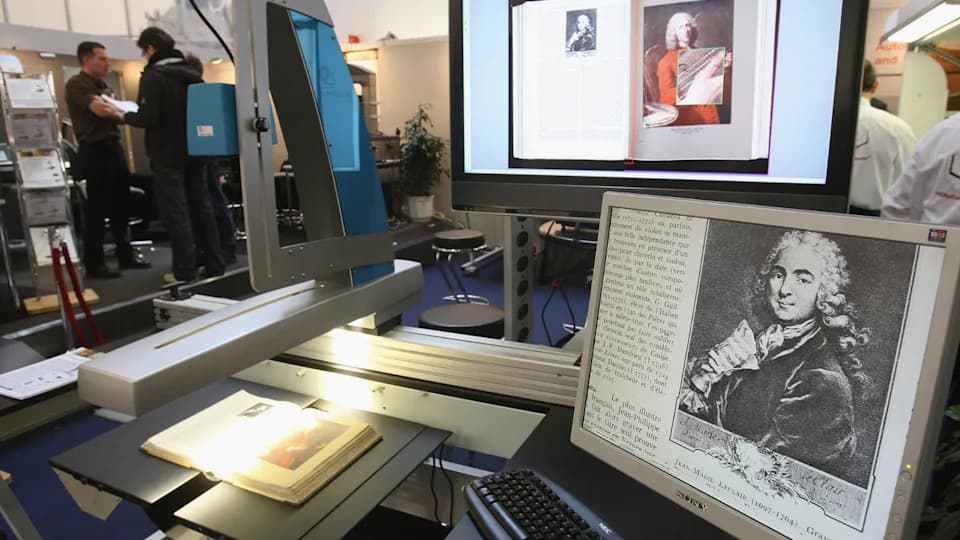
Removing a book’s spine to run pages through automated scanners is fast and inexpensive, but it permanently destroys the physical object. Non-destructive alternatives—such as V-shaped scanners that scan pages without forcing a book flat—preserve the original but are slower and costlier. Anna’s Archive warns that destroying originals can also block rival access to source material and reduce certain legal exposures for the scanner.
Why This Matters
The archive’s central concern is that if the only surviving copy of a work exists as a private company’s scanned file, access to that knowledge could become restricted or monetized. Even when an AI has been trained on a text, large language models generally do not reproduce copyrighted works verbatim, which means the content may be available only in processed form through a provider’s model. As the archive put it:
"Knowledge is permanently monopolized on private servers."
Anna’s Archive’s Call To Action
In response, Anna’s Archive is calling for grassroots preservation. "If every person scans a book, and there are 10 million volunteers worldwide, we can obtain 10 million pieces of invaluable wealth," the group says. It offers recognition—such as lifetime membership for small uploaders—and assistance to larger projects, including help with scanning fees and rewards, according to the archive.
"This is a race against time," the Anna’s Archive blog states. "Our ideal is to scan and upload all the world's publications before publishers completely block knowledge, and before AI companies scan and destroy all the world's books and papers."
What readers should keep in mind: the reports summarized here rely largely on statements from Anna’s Archive and investigations cited by the group; claims about specific companies’ practices and routes of shipment have been reported in media accounts and by booksellers but may not be independently verified in every detail. The broader debate—about fair use, copyright, AI training and cultural preservation—is ongoing and involves legal, ethical and technical questions.
Help us improve.