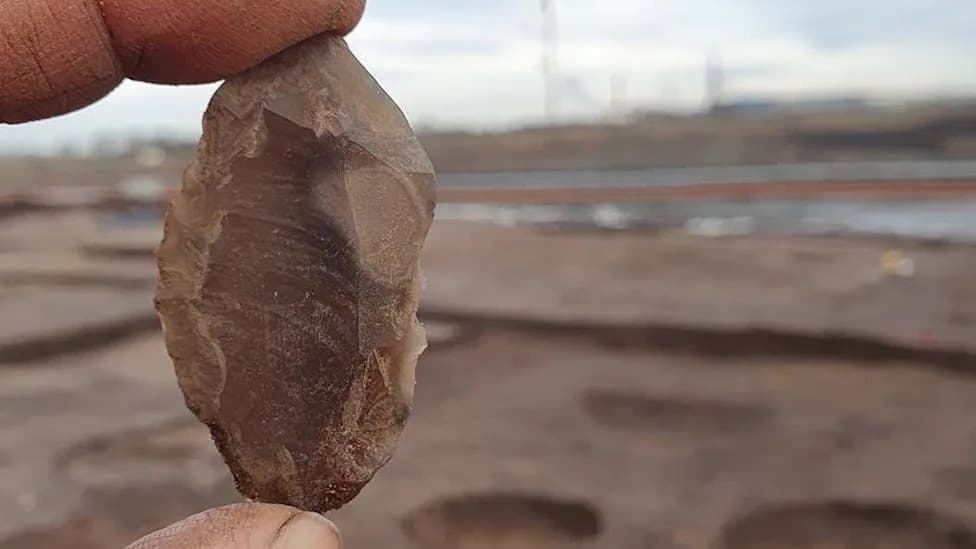
Archaeologists working ahead of Sizewell C have opened a 150-hectare excavation near Leiston, Suffolk, involving 200+ specialists across about 70 sites. The dig has uncovered over 1,000 Neolithic pits, a rare early Bronze Age hut, hundreds of medieval crop-drying ovens, a hoard of 321 11th-century silver coins and an Anglo-Saxon "princely" horse burial. Researchers say the unprecedented scale of the project — more than any single spectacular find — is reshaping understanding of prehistoric and medieval landscapes. Three free open days at the Sizewell Visitor Centre showcase the discoveries with artefacts, talks and VR experiences.
Sizewell C Excavation Is Rewriting Prehistory, Say Archaeologists
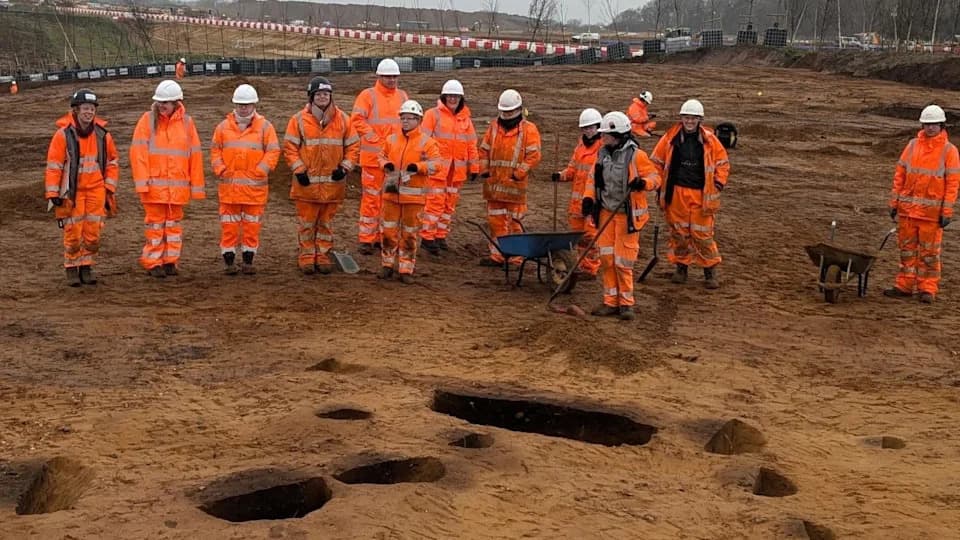
A huge number of pits have been unearthed by the archaeologists [Oxford Cotswold Archaeology]
Archaeologists say a vast, landscape-scale excavation ahead of the Sizewell C nuclear power project near Leiston, Suffolk, is transforming our understanding of both prehistory and the medieval period. The dig, spread across some 150 hectares (370 acres), has involved more than 200 specialists working on roughly 70 discrete sites and has produced a sequence of discoveries that reveal how people used and reshaped this landscape for millennia.
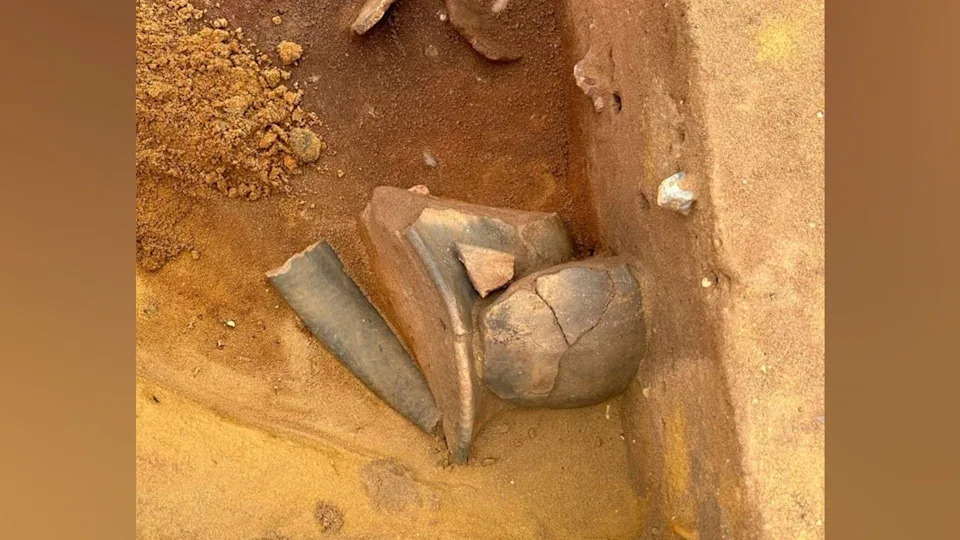
Broken pottery was found disposed of in some of the Neolithic pits [Oxford Cotswold Archaeology]
A Window Into Neolithic Life
To date, teams have excavated at least 1,000 Neolithic pits (c. 4000–2500 BC). Though individually modest, these pits — dug as temporary camps, refuse pits and hearth-associated features — provide rare, direct evidence of Suffolk's earliest farmers who likely migrated from continental Europe. Many pits contained broken pottery, flint tools and hearth debris. The concentration of Neolithic activity appears to span about 200 years (roughly 3700–3500 BC) before largely disappearing, possibly reflecting changes in farming practices or local soil exhaustion.
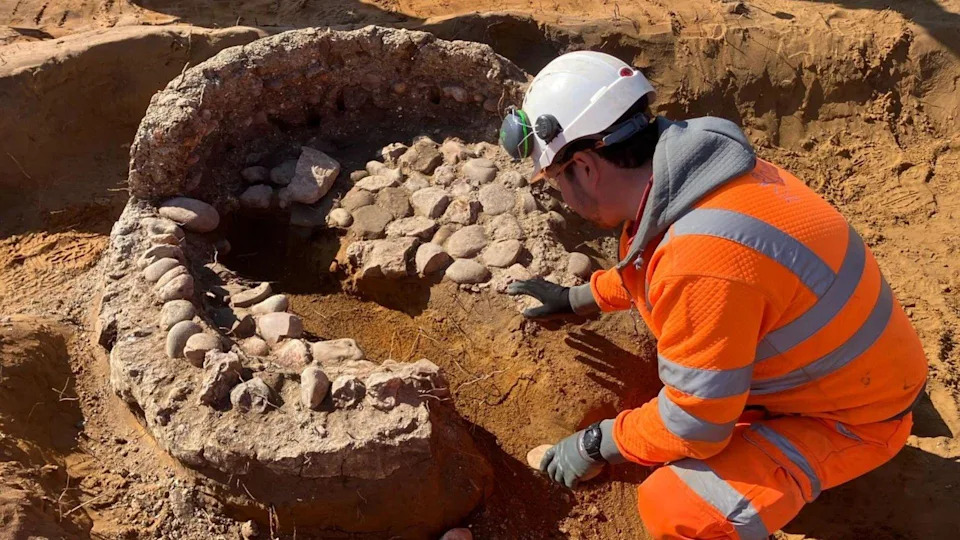
Many medieval ovens were found on what would have been Leiston Abbey's land [Oxford Cotswold Archaeology]
Rare Bronze Age Structure
Among the more unusual finds is an early Bronze Age hut (c. 2000 BC). Mortimer describes the structure as "rarer than hen's teeth." Its post-holes were later filled with burnt flints and pottery sherds, suggesting the hut burned down or was deliberately burned — a pattern echoed at comparable sites in Bradley Fen, north Cambridgeshire.
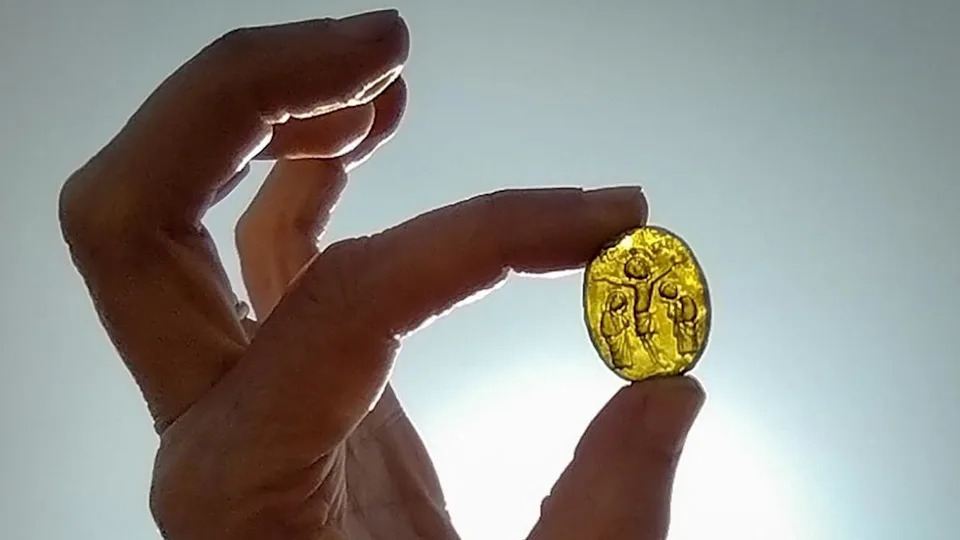
A medieval pilgrim badge may have been dropped by a visitor to the abbey, say archaeologists [Oxford Cotswold Archaeology]
Medieval Farmland and Industry
The scale of excavation has also allowed archaeologists to investigate medieval farmland associated with Leiston Abbey rather than focusing only on surviving monastic buildings. Hundreds of medieval ovens have been located across the abbey's former lands; the team believes many were crop-drying ovens used to process cash crops such as flax (for linen) and hemp (for rope), rather than ovens intended primarily for baking wheat.
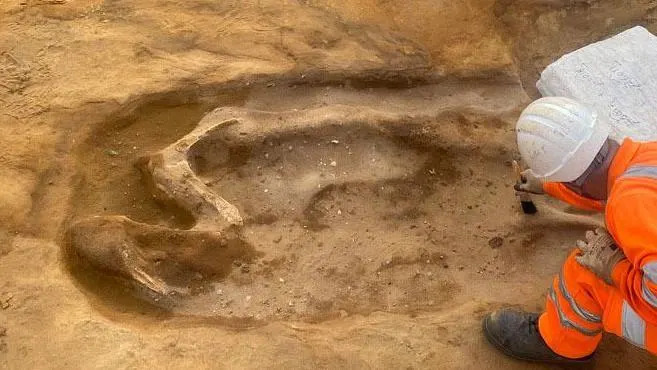
The discovery of a "princely" grave of a horse buried alongside two people has previously been announced [BBC/Rare TV]
Spectacular Finds, But Greater Value in Scale
Notable individual discoveries include an "extraordinary" hoard of 321 11th-century silver coins and an Anglo-Saxon cemetery containing a high-status horse burial described as "princely." Yet project lead Richard Mortimer stresses the real significance lies in the unprecedented scale and continuity of excavation: opening such a large, contiguous tract has revealed patterns and relationships rarely visible in isolated digs.
"I've been digging in East Anglia for 30 years — and 10 years elsewhere — and this is changing my view of everything I've ever done before in my life here," Mortimer said.
Public Engagement
Members of the public can learn more at three free open days running until Saturday at the Sizewell Visitor Centre. The events include artefacts on display, family activities, expert talks and virtual reality presentations (both headset tours and a projection dome). Many of the excavation team will be present to discuss the discoveries and their wider significance.
Why this matters: The Sizewell C excavation is rare not only for the quality of its individual finds but for the opportunity to study long-term human activity across a broad, contiguous landscape — offering new insights into how people lived, worked and exploited resources from the Neolithic through the medieval period.
Help us improve.