The Exodus programme's new report estimates that between 1968 and 1998 some 12,000–18,000 PUL residents relocated from Derry's Cityside to the Waterside, primarily driven by sustained violence and intimidation during the Troubles. Drawing on more than 110 interviews, Where Have All The Prods Gone? documents personal accounts of attacks, threats and community loss. Authors and community leaders say the departures reshaped neighbourhoods and continue to affect education, employment and social cohesion in the city today.
New Report: PUL 'Exodus' Reshaped Londonderry — 12,000–18,000 Relocated During the Troubles
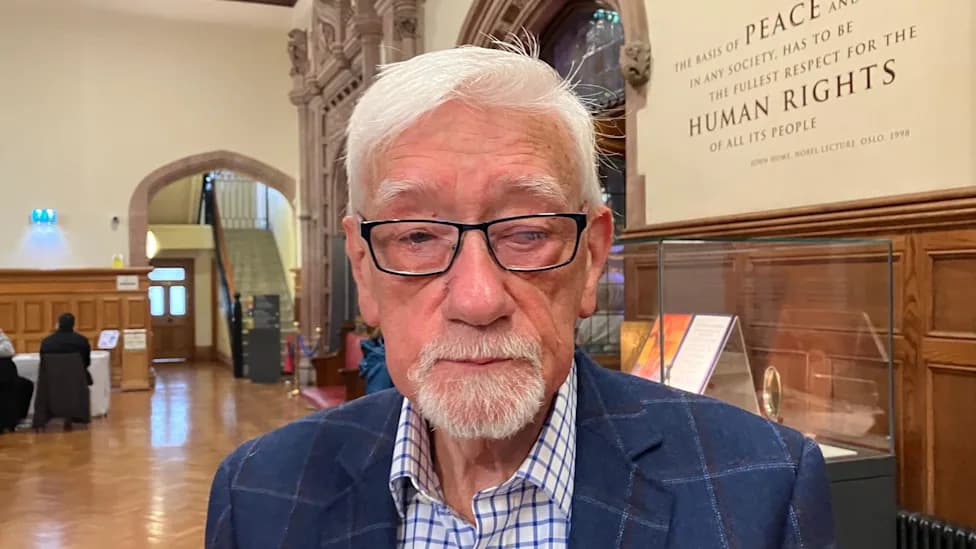
Report author Terry Wright says the movement of many families from the Protestant, Unionist and Loyalist (PUL) community in Londonderry has been 'a source of division in terms of understanding our past' [BBC]
A new study by the Exodus programme finds that an "exodus" of thousands from the Protestant, Unionist and Loyalist (PUL) community in parts of Londonderry (Derry) between the late 1960s and the 1990s had a lasting effect on the city's geography and social fabric.
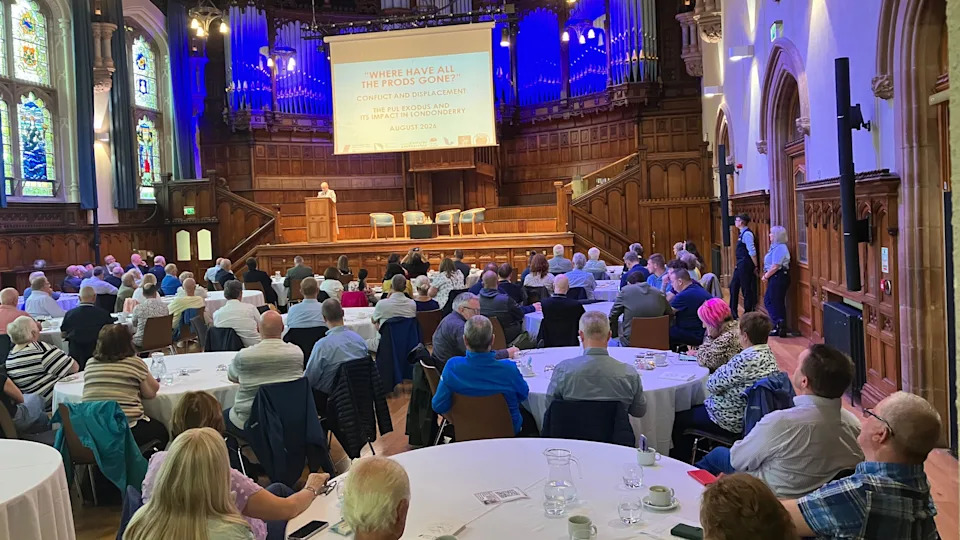
A number of people attended an event in Londonderry's Guildhall on Tuesday as part of a discussion on the research [BBC]
Key Findings
The report, titled "Where Have All The Prods Gone? Conflict and Displacement – The PUL Exodus and its Impact in Londonderry," estimates that between 1968 and 1998 some 12,000–18,000 people moved from the Cityside to the Waterside. Based on more than 110 interviews, the study concludes there was no single trigger for the movement, but that sustained violence and intimidation during the Troubles played a major role in many families' decisions to relocate.

Community worker Jeanette Warke says her family moved home to Newbuildings in 1972, recalling one incident when people arrived at their home with metal bars [BBC]
Voices From Those Who Left
The report draws on firsthand accounts from people across PUL and Catholic Nationalist Republican (CNR) communities. Fountain community worker Jeanette Warke described leaving Mountjoy Street for Newbuildings in 1972 after repeated intimidation, including an incident when people banged on her family’s door with iron bars. "It was scary. It was terrible," she said, adding that leaving meant losing a neighbourhood, schools and a church community.
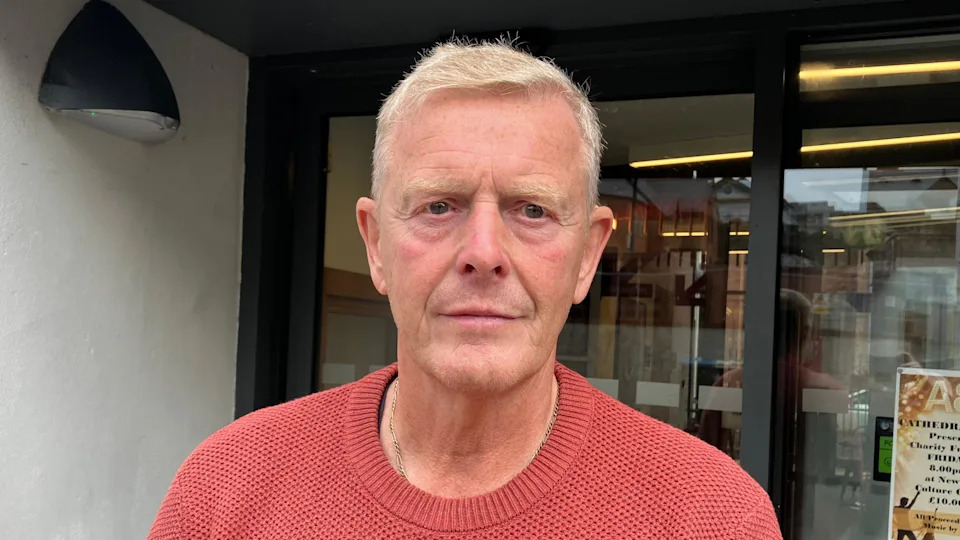
Hugh Smy says he was very angry after people attacked their home in Ewing Street with stones [BBC]
"It wasn't about leaving a building — it was about leaving a community." — Jeanette Warke
Hugh Smy, who was 12 when his family moved from Ewing Street to Strathfoyle in 1971, recalled repeated attacks on his home and being told police could no longer guarantee their safety. Smy also noted that many of his Catholic neighbours had been supportive despite the pressure to leave.
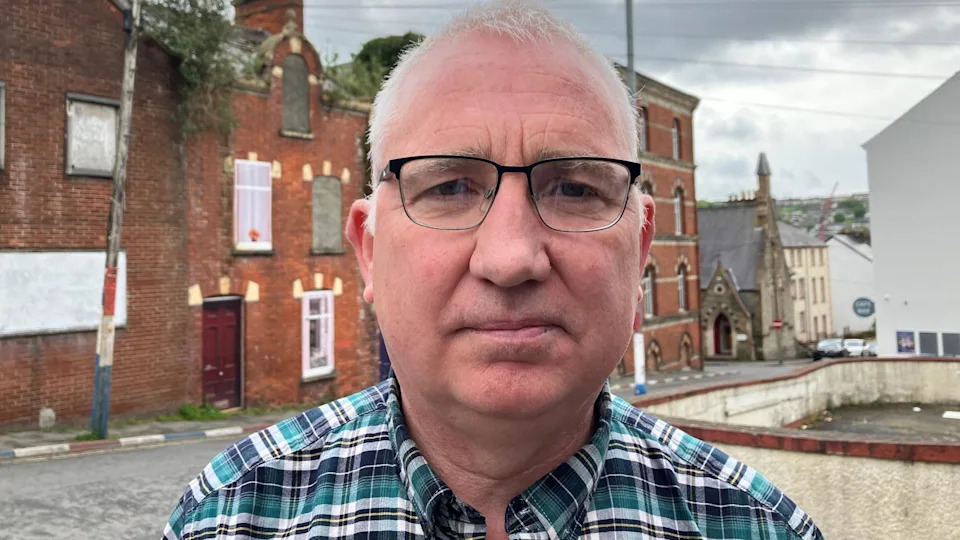
Community worker Brian Dougherty says Derry is "a divided city" that had spent a generation trying to rebuild social cohesion. [BBC]
Broader Impact and Perspectives
The report documents how displacement altered neighbourhood composition and had longer-term social consequences. Brian Dougherty, chief executive of the North West Cultural Partnership, said the exodus is "ingrained in the PUL psyche" and argued the phenomenon has not been adequately documented. He warned that geographic divisions continue to affect employment, education choices and social cohesion for younger generations.
Interviewees described a mixture of emotions: sadness at communities breaking up, anger at acts of intimidation, and frustration where displacement is still denied by some. The study highlights the complexity of reasons for moving — including targeted attacks, threats to safety, and housing pressures — while emphasising that violence and fear were central factors for many families.
Methodology
Researchers conducted more than 110 interviews with people who left PUL areas and those who remained, and triangulated testimony with historical records and community testimony. The report does not claim a precise count but offers an estimated range (12,000–18,000) to indicate the scale and sustained nature of the movement over three decades.
Conclusion
The Exodus report calls for recognition of these experiences as part of a balanced historical narrative of the city. Acknowledging displacement and its long-term social effects, the authors say, is essential to rebuilding trust and social cohesion in a city still shaped by the legacies of the Troubles.
Help us improve.