Nadia Murad, a 2018 Nobel Peace Prize laureate and former IS captive, told a UN event in Geneva that justice for Yazidi survivors is moving far too slowly, 12 years after IS atrocities in 2014. UN investigators concluded IS's actions against Yazidis in Sinjar constituted genocide, with thousands killed and many women and girls enslaved. Murad highlighted unresolved issues — missing relatives, unidentified remains, displacement and captives still unaccounted for — and urged stronger international action to speed prosecutions and restore rights to survivors.
Nadia Murad: Justice For Yazidis Is Moving 'Far Too Slowly' — 12 Years After IS Genocide
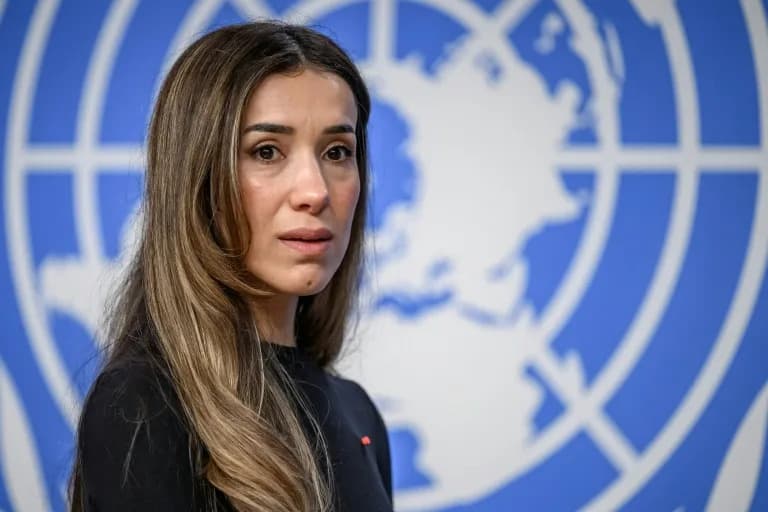
Iraqi Yazidi Nobel Peace Prize laureate Nadia Murad gave a press conference at the United Nations in Geneva (Fabrice COFFRINI)
Nobel Peace Prize laureate Nadia Murad warned in Geneva that efforts to secure justice for the Yazidi community remain painfully slow, 12 years after Islamic State (IS) militants launched a campaign the United Nations has described as genocide.
Background
In 2014 IS fighters swept across large parts of northern Syria and neighbouring Iraq, proclaiming a so-called caliphate. In August of that year IS captured roughly a third of Iraq, including the Yazidis' ancestral homeland in the Sinjar Mountains. The Kurdish-speaking Yazidis, who follow a pre-Islamic faith, were branded heretics by IS.
IS murdered thousands of Yazidi men in Sinjar province and transported thousands of women and girls into Syria, where many were sold in market-like settings and held as sexual slaves. United Nations investigators concluded these acts met the legal definition of genocide.
Calls For Justice
Speaking at a France-organised event at the United Nations office in Geneva to mark the 2014 atrocities, Murad — a former captive and 2018 Nobel Peace Prize winner — urged stronger international action to hold perpetrators accountable.
"For 12 years we have been repeating the same issues: of the missing women and children; of the remains to be identified; of the Yazidis to be able to go back home, and for justice to be delivered for survivors," Murad said. "Progress has been made, but it's very slow. And for many families, it's torture, because they still wait every day in tents, many in captivity."
Murad highlighted multiple ongoing crises facing the community: family members still held captive, unidentified remains of the dead, long-term displacement in camps, and slow-moving prosecutions of alleged perpetrators.
Survivors' Voices
Former captive Khawa Ali emphasised the injustice of seeing some alleged IS members return to Europe while survivors continue to live in fear. She welcomed a conviction in Belgium last year of a man who held her captive and urged continued international trials and prosecutions.
Murad and other survivors called for expedited investigations, better support for identification and repatriation of remains, increased protection for displaced Yazidis, and coordinated international tribunals or domestic prosecutions to deliver accountability and deter future atrocities.
Why it matters: Fast, transparent justice and accountability are essential not only for victims' closure and dignity but also as a prevention measure against future mass atrocities.
Help us improve.