The House approved its NDAA with Section 219 intact, a provision that would create a Pentagon executive agent to promote co-development and co-production between U.S. and Israeli defense industries. Supporters say a single official will improve oversight and coordination, while critics and outside experts warn the change could weaken congressional scrutiny and give Israel more leverage. The Senate's parallel provision, Section 1217, faces pushback, and lawmakers may negotiate stronger transparency and reporting requirements if a compromise is reached.
House Retains Controversial NDAA Provision to Expand U.S.–Israel Defense Co‑Production
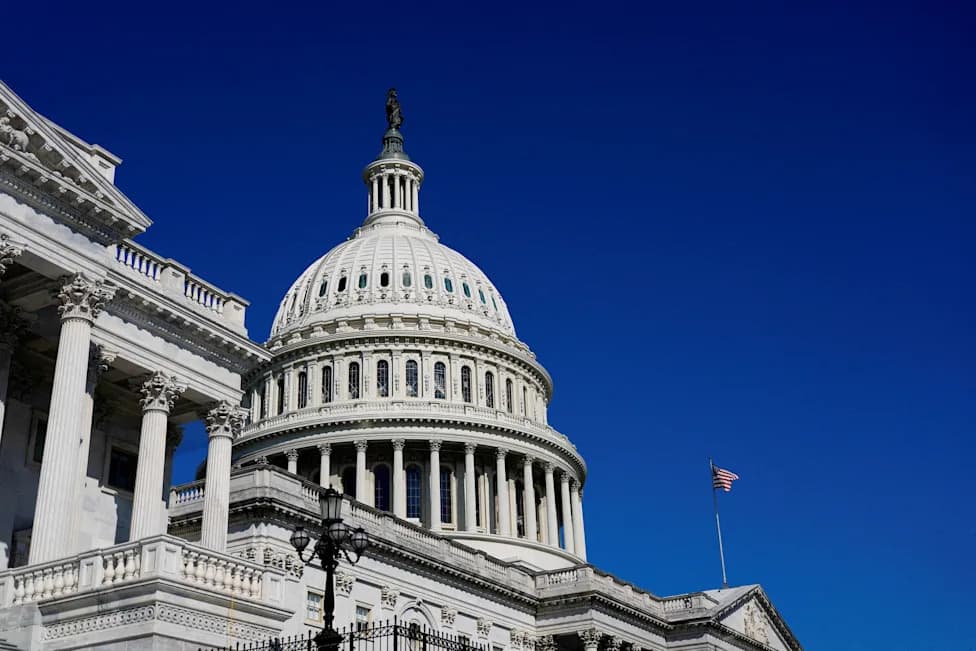
A view of the dome of the U.S. Capitol building on Capitol Hill in Washington, D.C. U.S., September 19, 2025. (Kent Nishimura/Reuters)
The House of Representatives approved its version of the National Defense Authorization Act (NDAA) last week while keeping a contested provision — Section 219 — that would encourage deeper co-development and co-production between the U.S. and Israeli defense industrial bases. The move comes amid shifting U.S. public opinion on military aid to Israel and renewed scrutiny of how such partnerships are governed.
What Section 219 Would Do
Section 219 would formally create an executive agent role inside the Department of Defense charged with identifying, coordinating and advocating for joint development and co-production projects with Israel. Proponents say the position would centralize responsibility and streamline coordination for bilateral projects that already exist in limited form, such as some defensive systems.
Supporters' Argument
Supporters, including House Armed Services Committee Chair Rep. Mike Rogers (R-Ala.), argue that designating a single official will improve oversight and accountability by clarifying who is responsible for managing these cooperative programs. They contend that better coordination could speed development of useful capabilities and reduce bureaucratic friction.
Critics' Concerns
Opponents voiced concerns in committee and on the House floor. Rep. Ro Khanna (D-Calif.) unsuccessfully sought an amendment to remove the provision, and Rep. Thomas Massie (R-Ky.) has also opposed it. Policy experts warn the change could weaken congressional oversight compared with traditional foreign military aid mechanisms.
"There are all these ways in which co-production's more ill-defined nature means that it creates opportunities for the executive branch to navigate the regulatory environment more easily," said Elias Yousif, fellow and acting director of the Conventional Defense Program at the Stimson Center.
John Ramming Chappell, an adviser on legal and policy issues at the Center for Civilians in Conflict's U.S. program, questioned how the U.S. would benefit. "Expanding cooperative projects with Israel gives Israel more leverage over the United States and makes it even more difficult to promote accountability in the relationship as U.S. and Israeli priorities diverge," he said. Chappell added that past cooperative projects have often lacked meaningful oversight and could expose the United States to potential national security risks.
Senate Outlook And Next Steps
The Senate's version of the NDAA includes a similar provision labeled Section 1217 and has faced stiffer resistance. Several Democratic senators have said they will withhold support for the NDAA until the provision receives more debate on the Senate floor. Negotiators from both chambers are likely to seek a compromise, and the final language could differ from either chamber's current proposal.
Paths To Stronger Oversight
Experts and some lawmakers say negotiators still have leverage to strengthen transparency and accountability if the provision survives conference. Recommended safeguards include tightening definitions of what constitutes assistance, expanding reporting requirements, and closing regulatory gaps that could be used to circumvent congressional scrutiny.
As the NDAA moves toward possible conference negotiations, the debate over Section 219 highlights broader questions about balancing rapid defense innovation and international cooperation with clear congressional oversight and national-security safeguards.
Help us improve.