Weeks-old Gen Z movement Cockroach Janta Party (CJP) forced Education Minister Dharmendra Pradhan to resign after mass protests in New Delhi over leaked medical and dental entrance exams. The demonstrations — amplified on social media and attended by tens of thousands at Jantar Mantar — represent a rare political retreat for Prime Minister Narendra Modi's BJP. Analysts say the protest is notable because it centers on administrative failure rather than ideology, and it may energize broader youth mobilization ahead of the 2029 general election.
Weeks-Old Gen Z Movement Forces Modi Government To Back Down — What Comes Next?
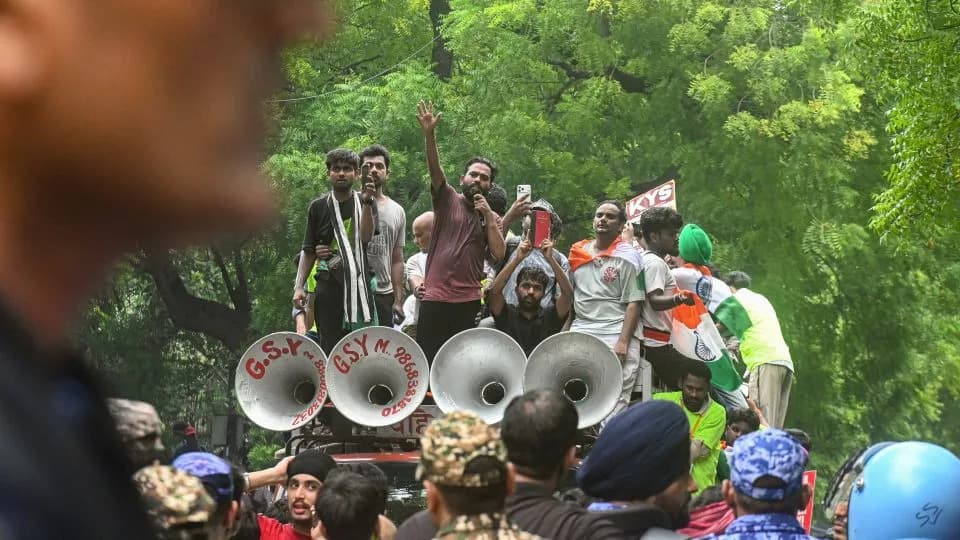
Abhijeet Dipke, founder of the Cockroach Janta Party, speaks during a rally in New Delhi, India, on July 20, 2026. - Kabir JhangianiNurPhoto/Getty Images
For more than a decade, Prime Minister Narendra Modi has projected political invulnerability, leading a government that has reshaped public discourse and narrowed avenues for dissent in the world's largest democracy. Last weekend, however, a weeks-old, online-fueled Gen Z movement delivered an uncommon setback: it compelled the government to accept accountability and prompted the resignation of Education Minister Dharmendra Pradhan.
How A Satirical Movement Became A Street Force
The protest coalesced around a satirical collective calling itself the Cockroach Janta Party (CJP), which began as an online outlet for anger and dark humor over a nationwide leak of medical and dental university entrance exam papers. When the government acknowledged in May that the papers had been compromised and ordered millions of students to re-sit exams, simmering frustration erupted into large-scale demonstrations in New Delhi.
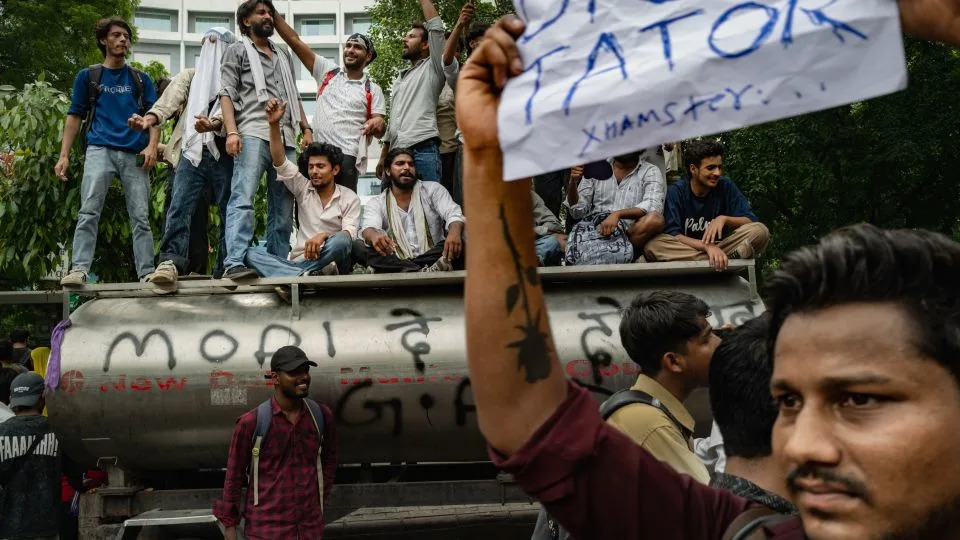
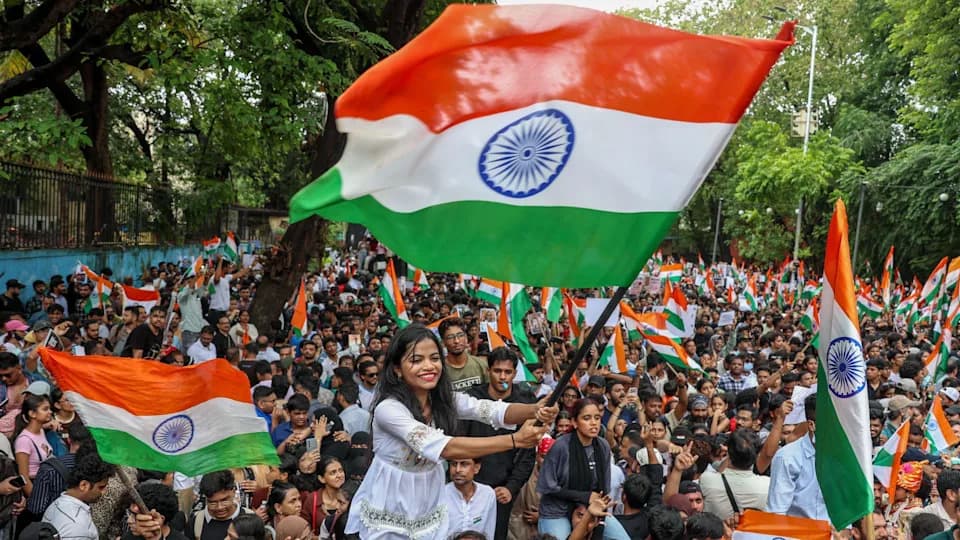
Supporters of India's Cockroach Janta Party (CJP) celebrate following the resignation of Education Minister Dharmendra Pradhan, after days of protests demanding he step down over the alleged NEET examination paper leak scandal in New Delhi, India, on July 25, 2026. - Elke Scholiers/Getty Images
Tens of thousands — primarily middle- and lower-middle-class youth and their families — gathered at Jantar Mantar for days, demanding accountability. Their main target was Education Minister Dharmendra Pradhan, whose resignation on Saturday was greeted with elation at the protest camp and widely interpreted as a rare political retreat for Mr Modi's Bharatiya Janata Party (BJP).
Social Media, Satire And A New Mode Of Mobilization
Unlike many earlier movements that relied on mainstream broadcast coverage, the CJP used social media as its primary amplifier. Protesters livestreamed marches, posted Instagram reels and memes, and created a constant flow of user-generated coverage that quickly drew wider attention. Mainstream TV largely ignored early protests, but by the time traditional outlets began reporting extensively, the movement had already captured the public imagination.
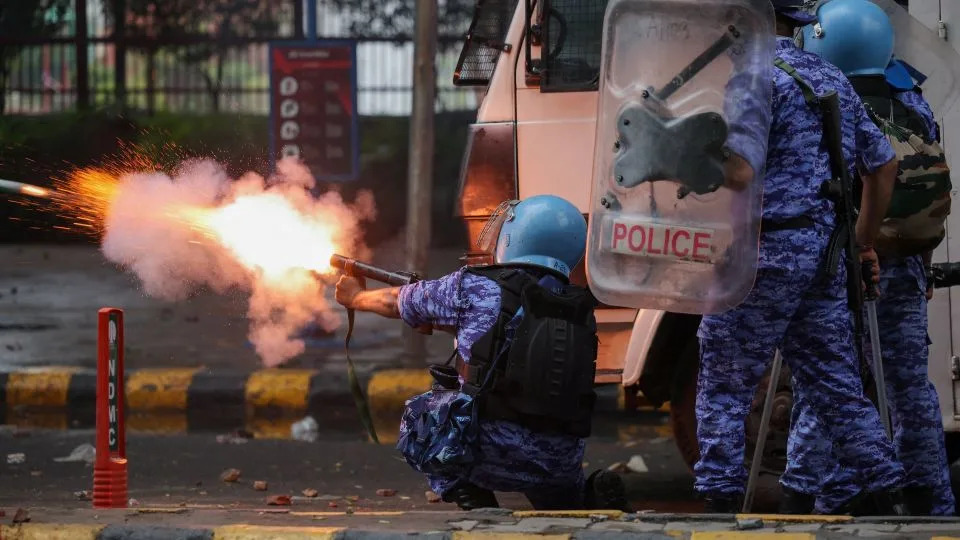
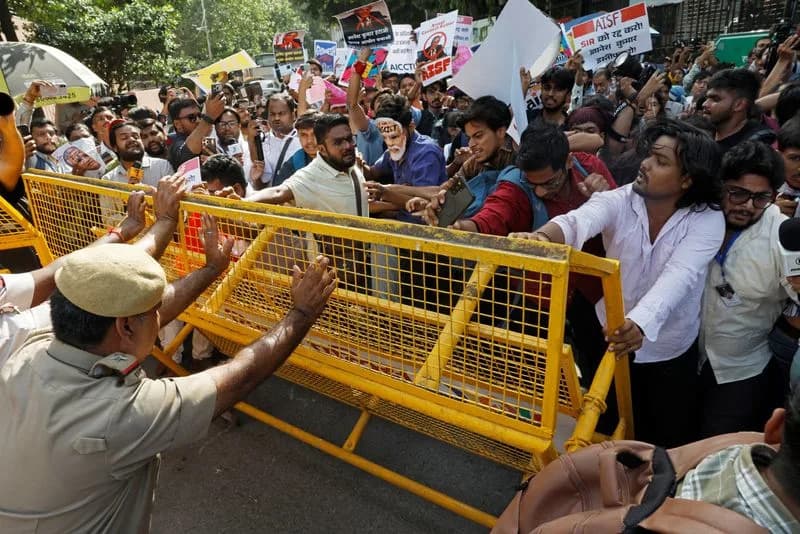
A member of the Rapid Action Force (RAF) fires a tear gas canister towards protesters as supporters of India's Cockroach Janta Party demonstrate on the opening day of the Indian parliament's monsoon session, demanding the resignation of Education Minister Dharmendra Pradhan over exam paper leaks, in New Delhi, India, on July 20, 2026. - Anushree Fadnavis/Reuters
"A week ago you couldn't really give any feedback to the government," said 22-year-old software engineer Akshit Tyagi from the protest site. "Now everyone has come out… there is a validation which is spreading, and people are realizing that they can actually demand things from the government."
Why Analysts See This As Different
Political analysts say this mobilization differs from past protests because it centers on an administrative failure rather than ideological disagreement. Rahul Verma of the Centre for Policy Research described the CJP movement as a direct response to institutional breakdown — a grievance that is harder for authorities to reframe through counter-narratives.
India's demographic realities add fuel to the discontent: the country has one of the world's youngest populations, with more than 360 million people aged 15–29. Yet a recent report found nearly 40% of graduates aged 25 and under were unemployed, leaving many young people feeling disconnected from the country's broader economic gains.
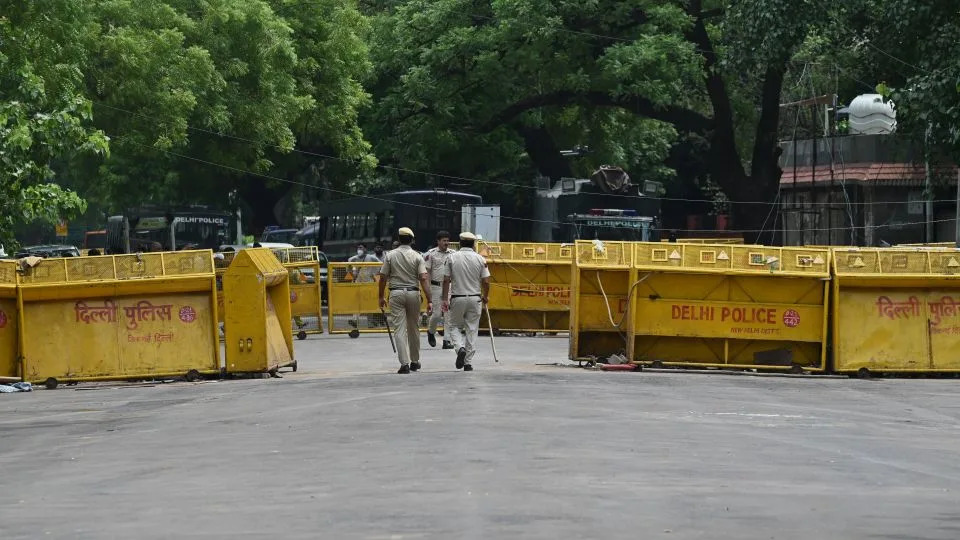
Protest site at Jantar Mantar deserted look after CJP withdrew its ongoing dissent movement in New Delhi, India, on July 26, 2026. - Vipin Kumar/Hindustan Times/Getty Images
Escalation, Response And Concessions
The protest intensified on July 20 when police used tear gas and batons to disperse a march toward parliament, and some demonstrators began calling for the removal of Mr Modi himself. Officials initially dismissed the movement; Mr Pradhan had characterized the CJP dismissively in media interviews. Instead of being deterred, the protesters pressed on, and the pressure culminated in Mr Pradhan's resignation and government assurances to address other demands, including compensation for families of students who died by suicide in the exam leak's aftermath.
Protest leaders subsequently announced a pause in demonstrations after authorities agreed to address key demands, and the main encampment at Jantar Mantar was cleared.
What This Means Politically
The CJP's success is a warning sign for the BJP: the party's core support includes the young, aspirational middle classes who formed a large part of the protests. Although Mr Modi and the BJP remain broadly popular and retain a formidable electoral machine that recently posted strong state-level results, their reduced parliamentary majority since 2024 makes discontent among key voter blocs more consequential.
Whether the CJP can convert a momentary victory into sustained political influence remains uncertain. Its founder, Abhijeet Dipke, promised the group was not finished: "This is not the end. We will meet again soon." The next general election is not due until 2029, leaving time for both the movement and the government to adjust strategies.
Bottom Line
The CJP demonstrated that digitally native, satirical, youth-led activism can translate into real-world pressure — and rare political concessions — in contemporary India. Its longer-term impact will hinge on whether it broadens its agenda beyond a single administrative crisis and sustains engagement among a restless generation seeking opportunity and accountability.
Help us improve.