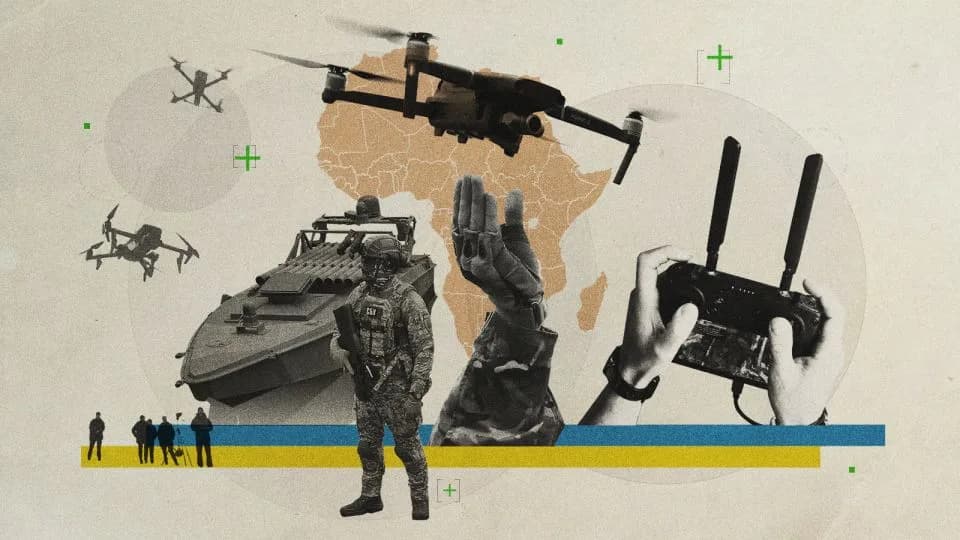
Ukrainian resistance operatives have used CIA-style "catfishing"—creating fake online personas—to elicit photos and location details from Russian soldiers that helped guide Ukrainian drone strikes. One reported case involved a fabricated "housewife" persona who obtained a barracks photo showing a map; Ukrainian forces subsequently struck the revealed coordinates. Operatives share printed tradecraft manuals, and many say witnessing alleged Russian war crimes, including sexual violence across a wide age range, fuels their efforts.
Inside Ukraine’s 'Catfish' Ops: Romance Scams Help Pinpoint Russian Troops for Drone Strikes
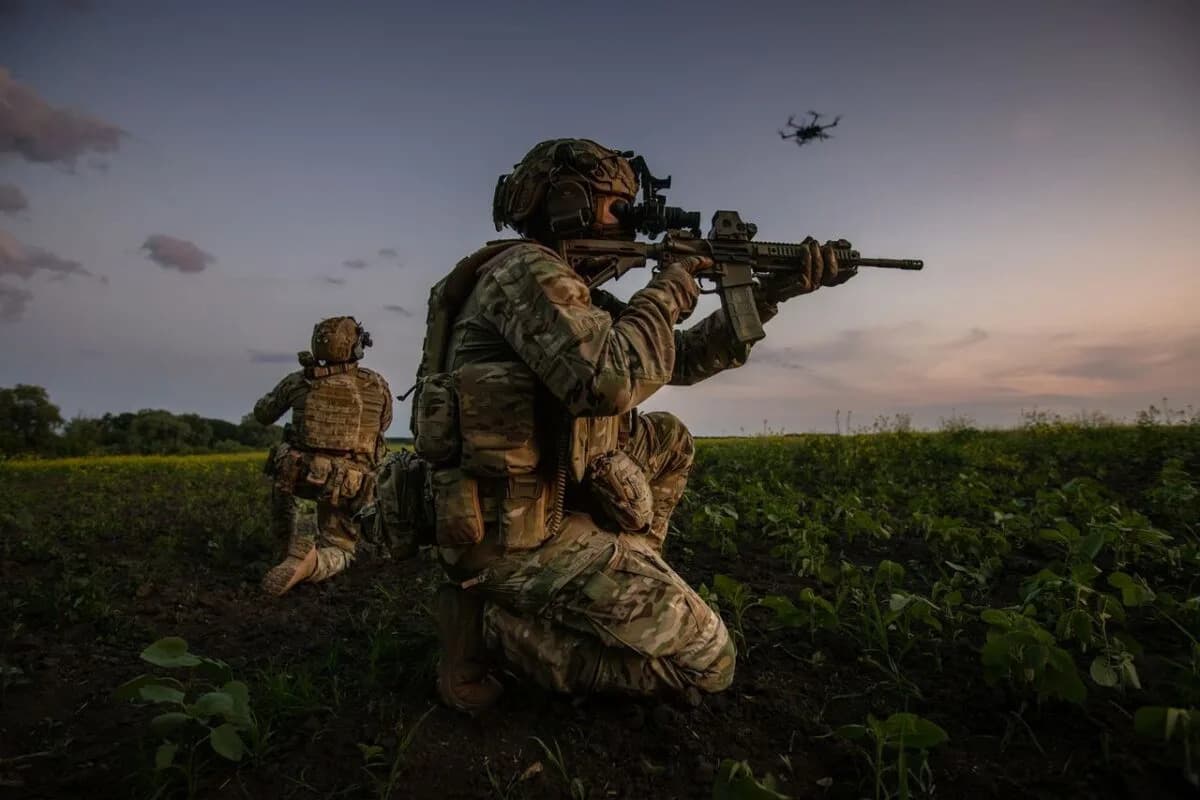
Ukrainian soldiers and drone
Ukrainian resistance operatives have adapted CIA-style "catfishing" tactics—creating convincing false online personas—to coax Russian soldiers into revealing location details that can guide Ukrainian drone strikes, according to a report by Ken Harbaugh in The Atlantic.
Since Russia launched its full-scale invasion in 2022, Ukraine's drone campaign has become more sophisticated and has struck strategic targets deep inside Russian territory, including reported damage to oil refineries in Moscow. These advances reflect not only improved hardware and tactics but also creative human intelligence gathered by irregular networks.
How The Deception Works
Harbaugh recounts a detailed example in which a fabricated persona posed as a lonely 35-year-old housewife and struck up a WhatsApp correspondence with a Chechen commander known as Achmad, who was stationed in the occupied south. Over weeks of messages the fake profile built rapport and asked routine questions about life at the front.
When the commander sent a photo from inside his barracks, the wall behind him included a map of the compound revealing the unit's position. The persona was actually a middle-aged Ukrainian officer named Serhiy working for Ukraine's military-intelligence directorate, and the coordinates from the image were later struck by a Ukrainian drone.
Tradecraft, Limitations and Motivation
Harbaugh notes that many of these operatives receive limited formal training and that digital communications can be vulnerable to Russian interception. To cope, resistance networks often distribute printed tradecraft manuals; one widely shared guide is a Soviet-era handbook describing Cold War-era CIA catfishing methods.
Those involved say they are driven not only by tactical necessity but also by outrage at reported Russian war crimes. Interviewees described witnessing civilian killings and sexual violence; one medical professional recounted treating sexual-assault victims ranging in age from 4 to 75 and said her facility has had to develop advanced reconstructive techniques because of the severity of injuries.
Implications And Ethics
These operations highlight the growing role of nontraditional intelligence methods in modern conflict, blending online deception, human intelligence and drone strikes. The tactics raise legal and ethical questions about deception in wartime, civilian risk, and the potential for escalation if such methods are exposed or misused.
Reporting Note: The account and details described here are drawn from Ken Harbaugh’s article in The Atlantic and are reported as the journalist documented them. Some elements are anecdotal and come from interviews with participants and witnesses.
Help us improve.