Study: Researchers at the University of Bonn found that common kitchen sponges shed microplastics during normal dishwashing, releasing an estimated 0.68–4.21 g per person each year. Scaled nationally, one sponge type could produce about 355 tonnes (≈391 tons) annually in Germany. While wastewater treatment captures much of this material, several tonnes could still enter waterways. The life-cycle assessment showed 85%–97% of the environmental impact of hand-washing stems from water use, so reducing water consumption and choosing lower-plastic sponges are the most effective actions.
Kitchen Sponges Shed Microplastics With Every Load, Study Finds — What You Can Do
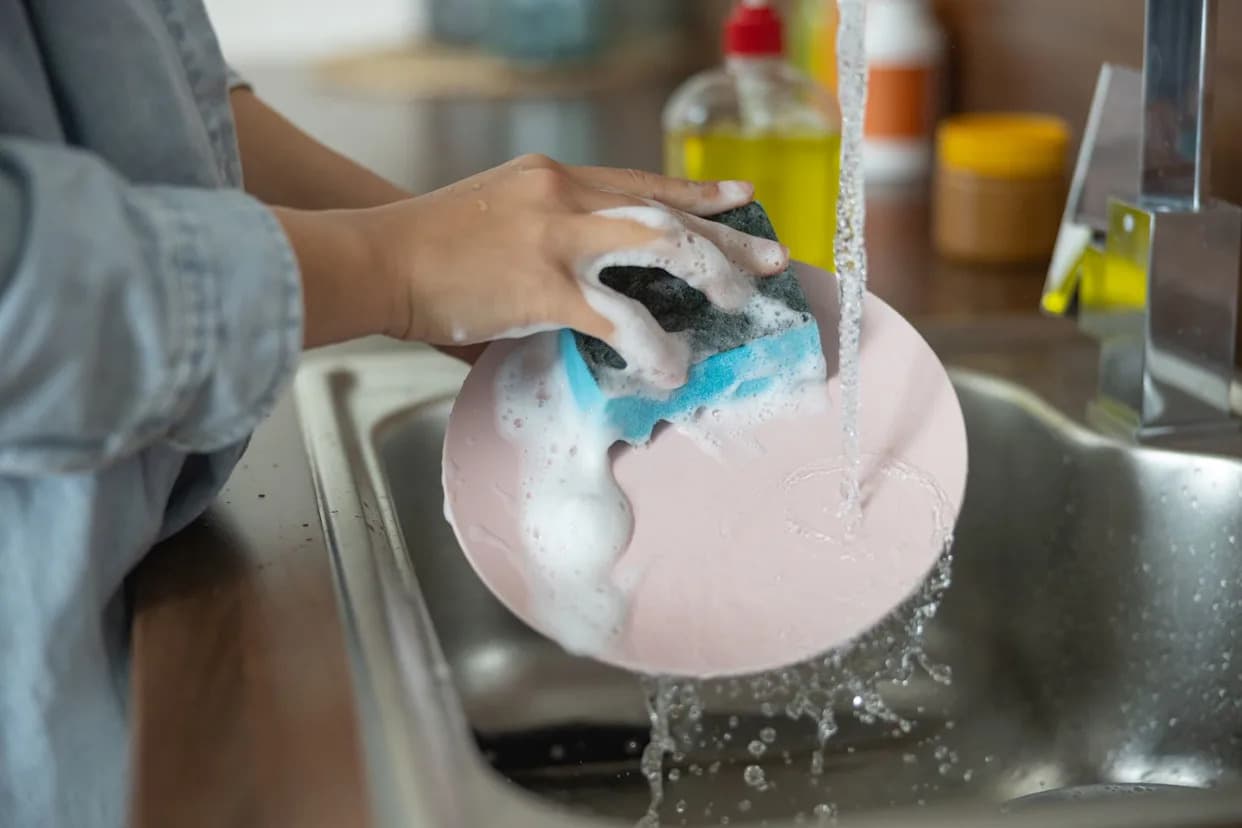
Photo Credit: iStock
That ordinary sponge by your sink may be doing more than wiping away food: a University of Bonn study shows common kitchen sponges release microscopic plastic particles into wastewater as they wear down during normal dishwashing.
How the Study Was Done
The researchers combined controlled laboratory tests with a citizen-science programme. Households across Germany and North America used one of three sponge types during their regular dishwashing routines and logged their usage. In the lab, the team used an automated device called "SpongeBot" to reproduce repeated mechanical stress under standard conditions. By weighing sponges before and after use, the researchers estimated how much material was lost and extrapolated annual emissions.
Main Findings
Every sponge tested lost material over time, releasing fine plastic fragments into wastewater. The study estimates per-person annual microplastic emissions of roughly 0.68 g to 4.21 g, depending on sponge type. While those amounts are small for an individual, they scale up across populations: if every German household used one particular sponge type, the authors estimate about 355 tonnes (≈391 tons) of microplastics could be shed each year.
Wastewater treatment plants can capture a large share of these particles, but the researchers warn that several tonnes may still escape treatment annually and enter rivers, lakes, oceans and soils, where microplastics can persist and accumulate in ecosystems.
Environmental Context
A life-cycle assessment within the study found that between 85% and 97% of the total environmental impact from hand-washing dishes was due to water consumption rather than the microplastic particles themselves. In other words, how people wash dishes (especially how much water they use) has a larger environmental effect than sponge choice alone.
Practical Takeaways
- Use Less Water: Reducing water use while hand-washing dishes will have the biggest environmental benefit.
- Choose Lower-Plastic Sponges: Sponges made with less plastic tended to shed fewer microplastics in the study.
- Extend Sponge Life: Keep sponges in use while they remain functional to reduce replacements and conserve resources.
- Dispose Responsibly: Follow local guidance for disposing worn cleaning items to limit plastic leakage into the environment.
Everyday household items can contribute to pollution, but small changes in washing habits and product choice can reduce both microplastic release and overall environmental burden.
Help us improve.