El Niño is the warm phase of the ENSO cycle and can reshape weather across the globe. Models now indicate a likely transition to El Niño by mid-2026, with a possibility it strengthens late in 2026 or into 2027. Historical strong events (1957–58, 1982–83, 1997–98) caused floods, droughts and unusual seasonal patterns worldwide. A very strong El Niño would temporarily raise global temperatures by a few tenths of a degree and increase flood and drought risks in specific regions.
A Very Strong El Niño May Be Coming — What That Means for Weather and Climate
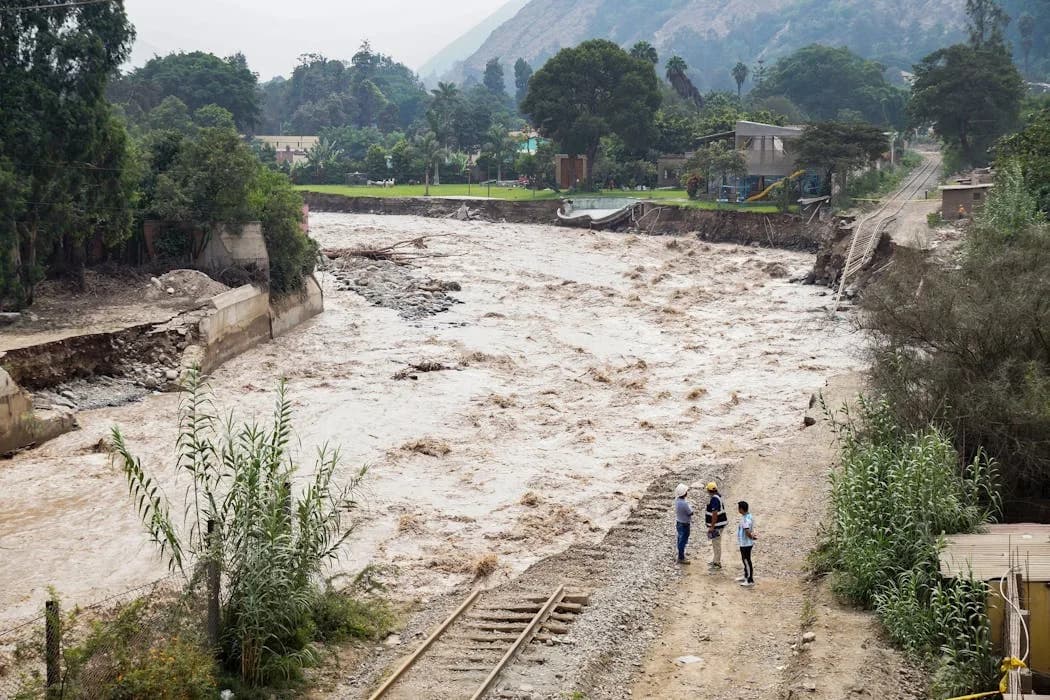
Homes and train tracks were destroyed when heavy rains caused a river to burst its banks in Chaclacayo, near Lima in Peru, on March 19, 2017.Joseph Moreno M/Shutterstock
Forecast models now point to a likely shift into an El Niño phase of the ENSO cycle by mid-2026, with a chance the event intensifies late in the year or into 2027. El Niño is more than a local ocean warming off Peru; it is a global ocean-atmosphere phenomenon that can alter weather patterns, amplify temperature anomalies, and raise risks for floods, droughts and other extremes around the world.
What Is El Niño and Why Does It Matter?
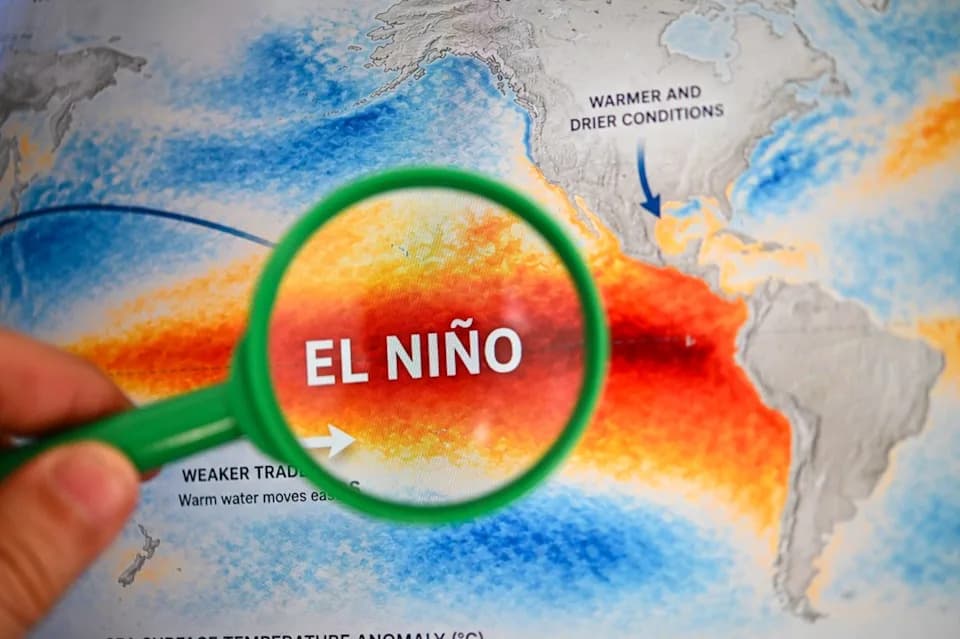
El Niño is the warm phase of the El Niño–Southern Oscillation (ENSO). Normally, the Humboldt Current and coastal upwelling keep waters off Ecuador, Peru and northern Chile cool and rich in nutrients. During El Niño, equatorial Pacific waters warm and shift eastward, replacing cold coastal waters. That local change can ripple through the atmosphere and oceans — a coupling first clarified in the 1960s by meteorologist Jacob Bjerknes — and produce far-reaching effects.
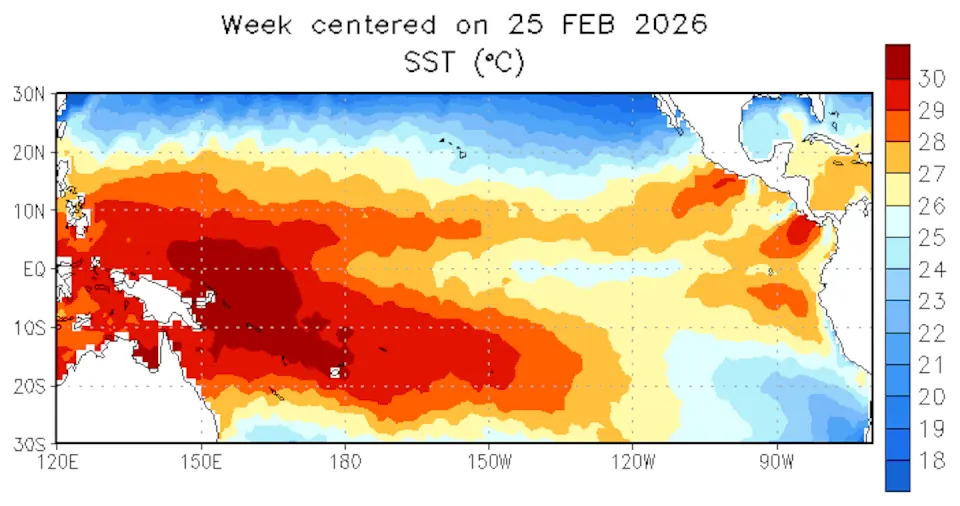
Sea surface temperature variation in the tropical Pacific Ocean between February and May 2026.NOAA
Historical Perspective
The phenomenon was first noticed by 19th-century Peruvian fishermen, who called the warm current "El Nino" because it often arrived near Christmas. In the 1920s, Gilbert Walker identified a related atmospheric pattern, the Southern Oscillation, showing that pressure changes in the eastern Pacific and the western Pacific/Indonesian region are linked — an idea now called a teleconnection. Combining the oceanic and atmospheric pieces gave us ENSO.
Notable strong El Ninos include 1957-58, 1982-83 and 1997-98, which produced widespread floods, droughts and unusual seasonal patterns across many continents.
Typical Impacts
El Niño tends to bring warmer global average temperatures (often a temporary bump of a few tenths of a degree), disrupted rainfall patterns, and shifts in storm tracks. Regionally, strong El Ninos are associated with:
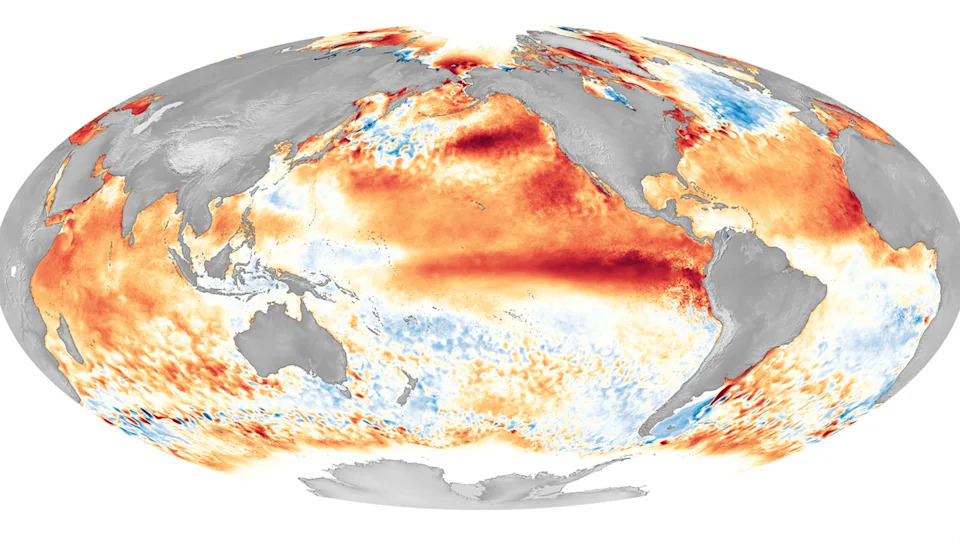
Sea surface temperature map, with above average temperatures shown in red and below average in blue. The ‘tongue’ that stretches out to the west of South America is characteristic of El Niño associated heating. This NOAA map from 2016 shows one of the strongest El Niños ever recorded.NOAA
- Heavier rainfall and flood risk in parts of the Andean countries, the Argentinian coast near Mar del Plata, East Africa, and some areas of the southern United States.
- Severe drought in Southeast Asia, parts of Australia, and northeastern Brazil.
- Milder winters in some mid-latitude regions, as observed during major events in the past.
The Mediterranean typically feels ENSO influences weakly because of its geography, but a very strong El Niño can still nudge local temperatures higher and slightly increase the odds of extreme rainfall.
How Strong Could It Be?
Forecasters have used the term "super-El Niño" informally to describe exceptionally intense events. If forecasts are borne out, a very strong El Niño could emerge late in 2026 or in 2027, amplifying the short-term rise in global temperatures and increasing the probability of extreme regional weather. However, intensity and precise regional outcomes remain uncertain: ENSO interacts with other climate drivers and with long-term global warming, which can modify impacts.
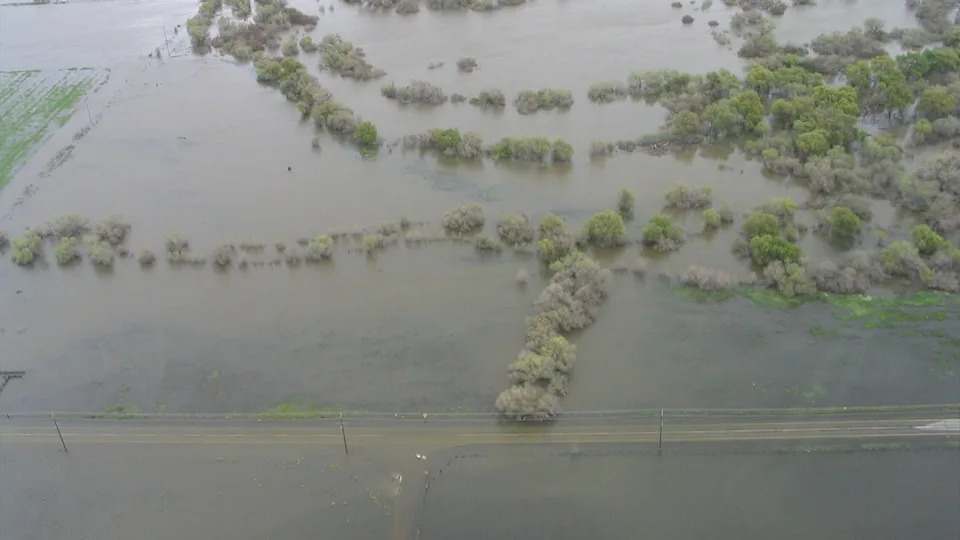
El Niño can cause severe droughts in some parts of the planet and torrential rain in others.NOAA
What This Means For Preparedness
Because El Niño influences rainfall, temperature and storm patterns across many regions, early warning and preparedness can reduce harm. Governments, water managers, agricultural sectors and emergency services should monitor updated seasonal forecasts, review drought and flood plans, and communicate risks to vulnerable communities.
What began as a local curiosity for Peruvian fishers is now understood to be a powerful global climate interaction. If a strong El Niño does develop, its effects will be felt far from the tropical Pacific, underscoring the need for timely preparedness and international cooperation.
Originally published in The Conversation; text adapted and edited for clarity.
Help us improve.