An emerging framework to end the U.S.-Iran war — reportedly involving a reopening of the Strait of Hormuz and partial easing of a U.S. blockade — could relieve near-term energy and economic pressures but risks deepening partisan divisions. Critics on both the right and left worry that unfreezing assets or a compressed 60-day timetable for nuclear talks would validate Iran’s wartime leverage without securing strong verification. Renewed fighting remains dangerous and could provoke harsher Iranian retaliation; economic relief from reopening the strait would likely be gradual.
Why a Potential Trump Iran Deal Could Be Nearly As Divisive As His Decision To Go To War
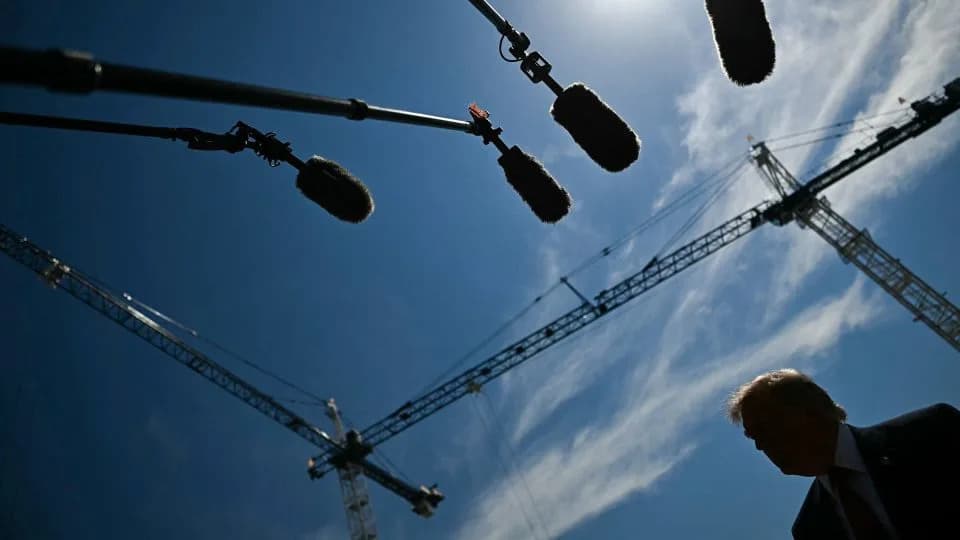
US President Donald Trump speaks to the press near the construction site of his proposed ballroom at the White House in Washington, DC, on May 19. - Kent Nishimura/AFP/Getty Images
The best chance to end a war that began with limited consultation of Congress and the public may be an imperfect peace — one that resolves immediate pressures but leaves major issues unresolved and deepens political divisions in Washington.
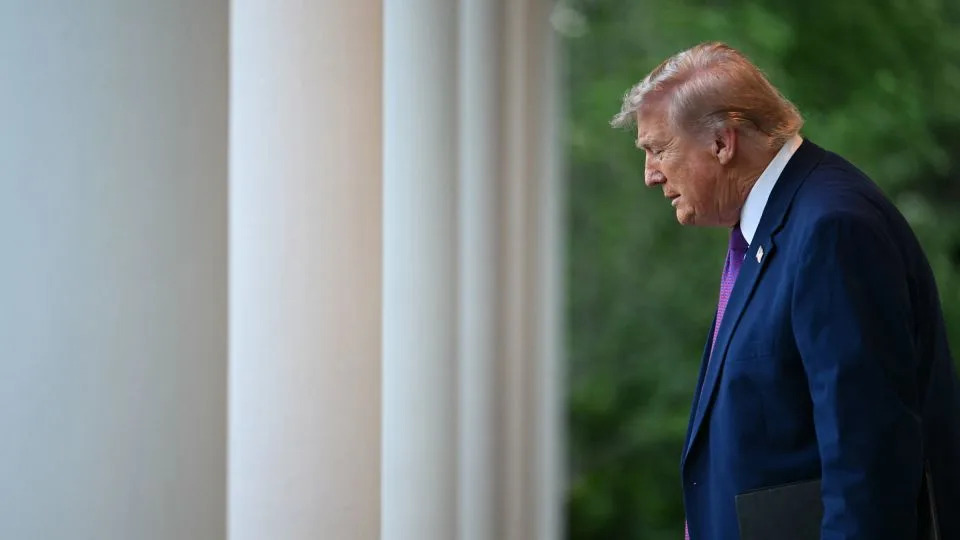
President Donald Trump walks to the Rose Garden at the White House on May 11. - Kent Nishimura/AFP/Getty Images
President Donald Trump has repeatedly said an agreement to halt the conflict he launched against Iran is imminent. Past predictions proved premature or mistaken, so his latest suggestion of a near-term framework has again been met with skepticism from both conservative hawks and Democrats.
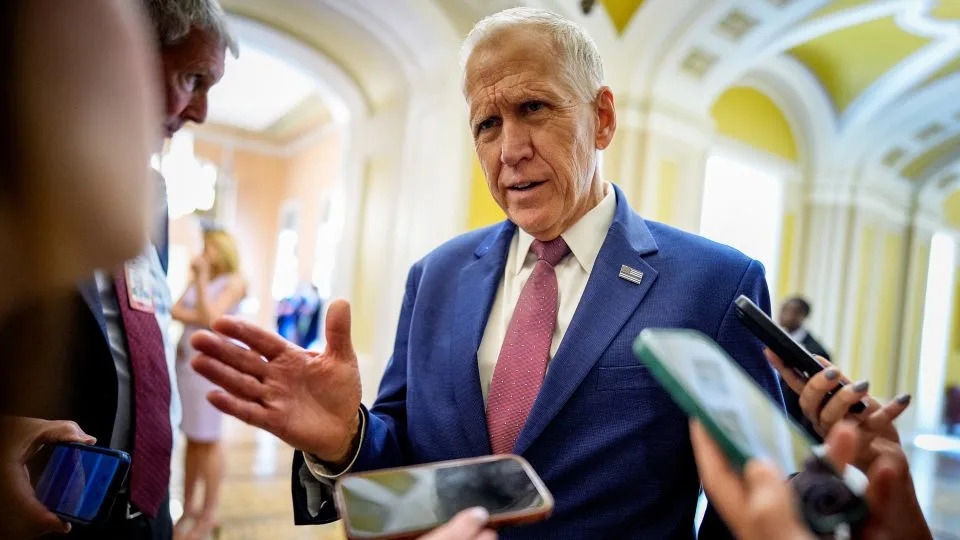
Sen. Thom Tillis speaks to reporters at the Capitol on April 15. - Andrew Harnik/Getty Images
What’s Reportedly On The Table
Diplomatic reporting indicates negotiators may be close to a deal that would reopen the Strait of Hormuz and relax parts of the U.S. blockade on Iranian ships and ports. In exchange, Tehran would offer limited assurances about its nuclear ambitions and pause hostile operations — with roughly 60 days proposed to resolve remaining nuclear questions, including Iran’s uranium stockpile.
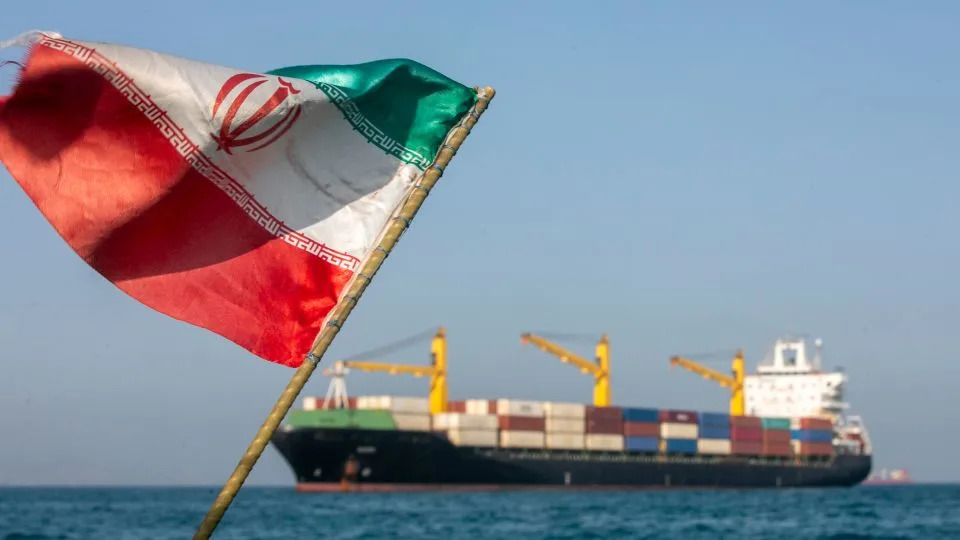
An Iranian flag flutters in the wind as ships remain anchored on May 16 in the Strait of Hormuz near Larak Island, Iran. - Majid Saeedi/Getty Images
Political Stakes In Washington
The terms under discussion present acute political risks for Mr. Trump. Many Republicans view any concession as validating the leverage Iran gained during the war. Some Democrats, who opposed the war from the outset, worry the deal would fail to secure lasting limits on Iran’s nuclear program. Both parties have voiced the possibility that a perceived compromise could be portrayed as a capitulation.
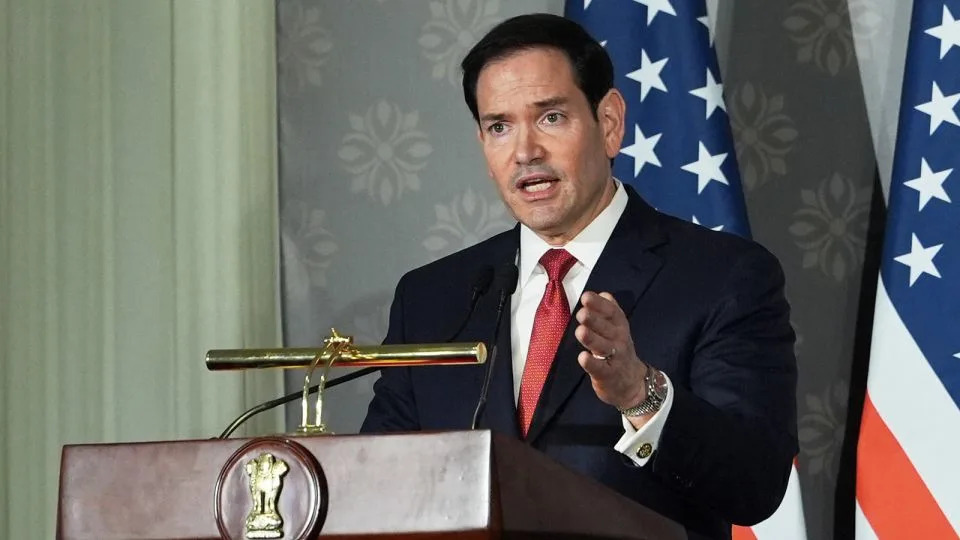
US Secretary of State Marco Rubio addresses a joint press conference in New Delhi on May 24. - Julia Demaree Nikhinson/AFP/Pool/Getty Images
Sen. Thom Tillis asked how the administration could accept Iran retaining nuclear material after assurances that U.S. strikes had degraded Tehran’s capabilities. Sen. Cory Booker and others warned that sequencing the deal — reopening the strait first, tackling nuclear issues later — would not address the war’s core stated objective.
Security and Military Risks
Intelligence reporting cited by U.S. media suggests Tehran has restarted some drone production and is rebuilding military capabilities degraded by strikes. That raises the prospect that renewed fighting could invite more intense Iranian retaliation against Gulf states, infrastructure and U.S. forces. Attempting to reopen the strait by force would be dangerous and time-consuming.
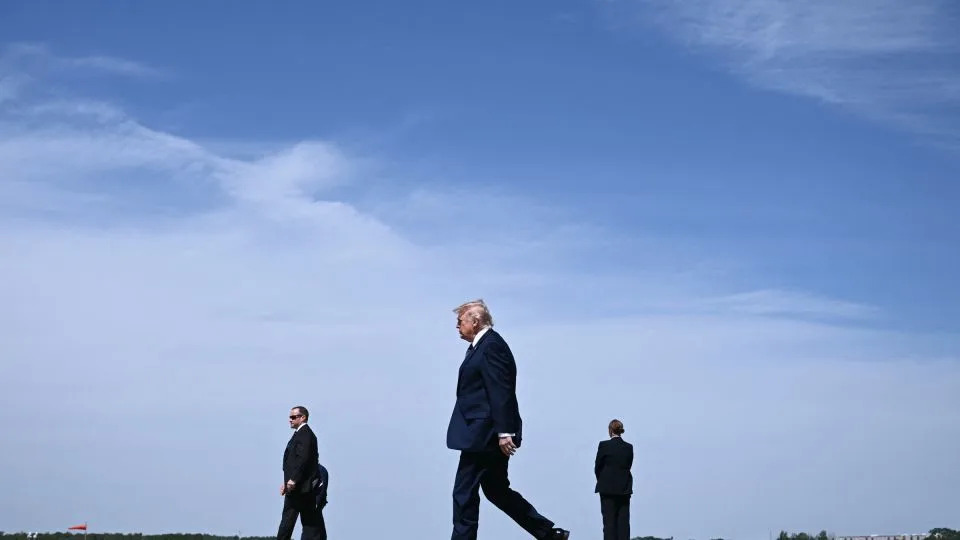
President Donald Trump walks as he arrives at Morristown Airport in New Jersey on May 22. - Brendan Smialowski/AFP/Getty Images
Economic Implications
Reopening the strait could ease global energy strains, but analysts warn recovery will not be immediate. Tankers stranded in the Gulf, damaged infrastructure and market uncertainty mean oil prices may remain elevated; JPMorgan analysts, for example, project oil could average about $97 a barrel for the rest of the year.
Key Questions Ahead
- Would the deal be more robust and verifiable than the 2015 agreement negotiated under President Obama?
- Does unfreezing Iranian assets or relaxing the blockade cede leverage Tehran won during the war?
- Is a roughly 60-day timetable sufficient to resolve complex nuclear verification and stockpile issues?
Mr. Trump faces a narrow political path: further escalation risks heavier human and economic costs, while an imperfect settlement may be politically costly at home. How the administration frames any agreement, and whether it secures meaningful verification and limits on Tehran’s nuclear options, will determine whether the outcome is seen as prudent diplomacy or a politically damaging compromise.
Updated: This article was updated with additional information.
Help us improve.