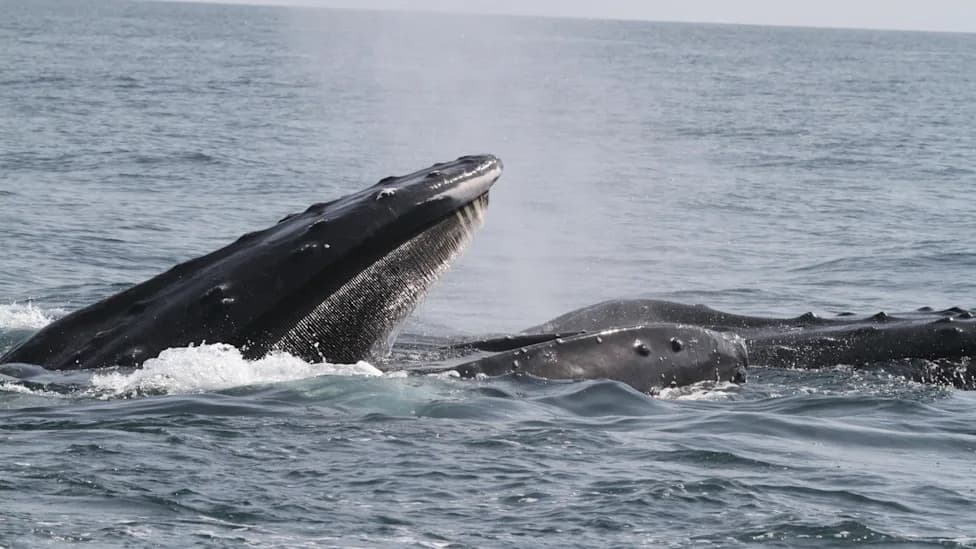
Researchers found that mitochondrial eDNA collected from seawater can estimate genetic diversity in dolphin populations — not just presence. In 2021 they sampled 126 two-liter surface seawater samples from 15 dolphin schools near Santa Catalina Island and identified 836 mitochondrial variants, many matching visually identified species. The results suggest eDNA could become a low-impact, cost-effective tool to monitor population health and habitat use, though further work is needed to address methodological limits.
Seawater eDNA Reveals Dolphin Genetic Health — A Noninvasive Way To Monitor Populations
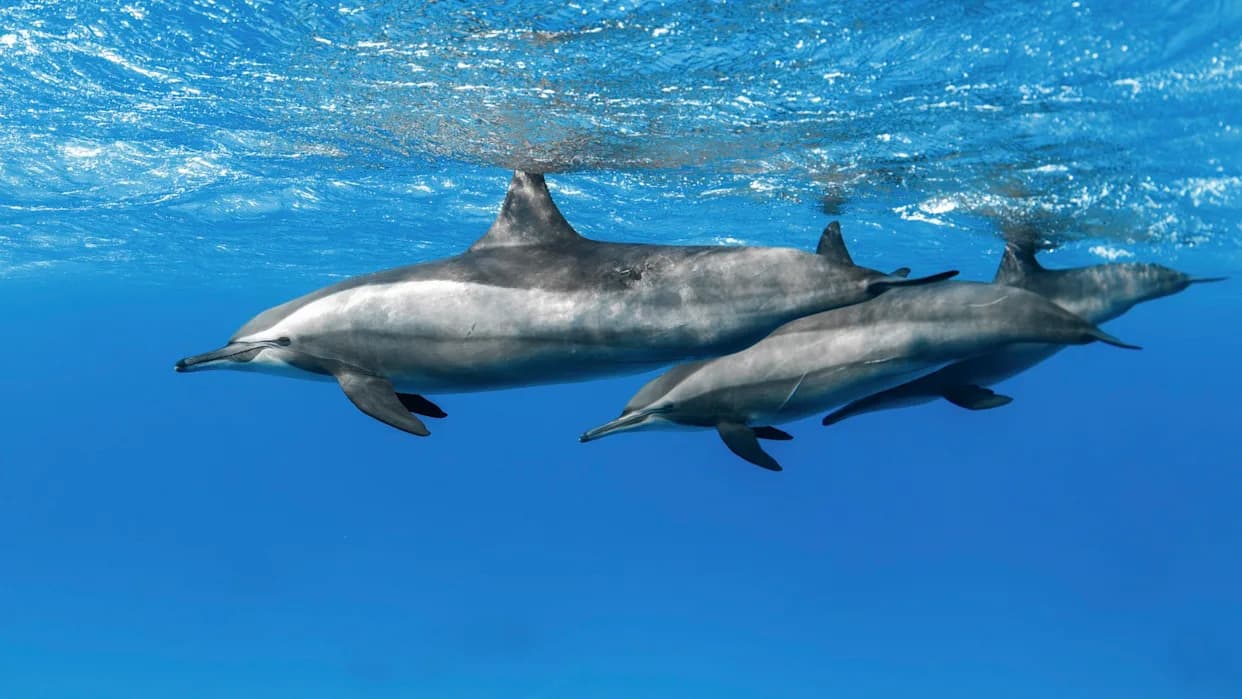
Photo Credit: iStock
Scientists have shown that a simple seawater sample can do more than confirm the presence of dolphins — it can also reveal their genetic diversity, a key indicator of population health. A study published in Frontiers in Marine Science tested whether mitochondrial environmental DNA (eDNA) in surface water can be used to estimate deeper biodiversity metrics that typically require direct sampling of animals.
What the Researchers Did
In 2021, researchers followed 15 dolphin schools near Santa Catalina Island, off Southern California. From small boats they collected 126 two-liter surface water samples when they encountered one of the region’s four most common dolphin species: long- and short-beaked common dolphins, bottlenose dolphins, and Risso’s dolphins. The team sequenced mitochondrial DNA from the water samples and compared the results to public genetic reference databases.
Key Findings
The researchers detected 836 distinct mitochondrial sequence variants across the 126 samples. A substantial portion of those sequences were cetacean-derived, and nearly one-third of cetacean sequences matched the species observers had visually identified in the corresponding schools. Among the groups studied, long-beaked common dolphins showed the highest genetic diversity in the survey area, followed by short-beaked common dolphins; bottlenose and Risso’s dolphins appeared less diverse near Santa Catalina.
Why This Matters
Genetic diversity is a primary measure of a population’s resilience. Populations with greater genetic variation are generally better able to adapt to disease, pollution, climate change, and other stresses. If eDNA sampling can reliably estimate genetic diversity, conservationists could monitor marine mammal population health more frequently, across larger areas, and with far less disturbance than traditional capture or biopsy-based methods.
Limitations And Next Steps
While promising, eDNA-based estimates have limitations. Mitochondrial markers reflect maternal lineages and provide a partial view of total genetic diversity. Accuracy depends on the completeness of reference databases and on environmental factors that affect DNA persistence and dispersal in seawater. The authors recommend expanding sampling across seasons and regions, improving reference libraries, and integrating eDNA with visual and acoustic surveys to refine abundance and population-size estimates.
“Here we show that repeated eDNA sampling can be used to estimate the genetic diversity of dolphins that occur in large schools and have very large populations,” said corresponding author Dr. Frederick Archer of NOAA’s Southwest Fisheries Science Center. He added that establishing eDNA monitoring programs now could provide vital information on habitat use and help assess how environmental changes and human impacts affect species distributions.
Overall, the study demonstrates a low-impact, cost-effective tool that could improve how researchers track marine mammal health and habitat use — and help conservation teams act earlier to protect vulnerable populations.
Help us improve.