NASA's Psyche spacecraft will pass about 2,800 miles (4,500 km) from Mars on May 15 to receive a gravity assist that refines its path toward the metal-rich asteroid 16 Psyche, due in 2029. The maneuver conserves xenon propellant and adjusts the probe's current speed of roughly 12,333 mph (19,848 kph). Teams performed a 12-hour trajectory correction on Feb. 23 and have been using Psyche's multispectral imager to take thousands of Mars observations to calibrate instruments and practice science operations. The flyby may also reveal a faint dust torus from Phobos and Deimos and help the team search for tiny Martian satellites.
NASA's Psyche Probe to Pass Within 2,800 Miles of Mars on May 15 — What the Flyby Will Achieve
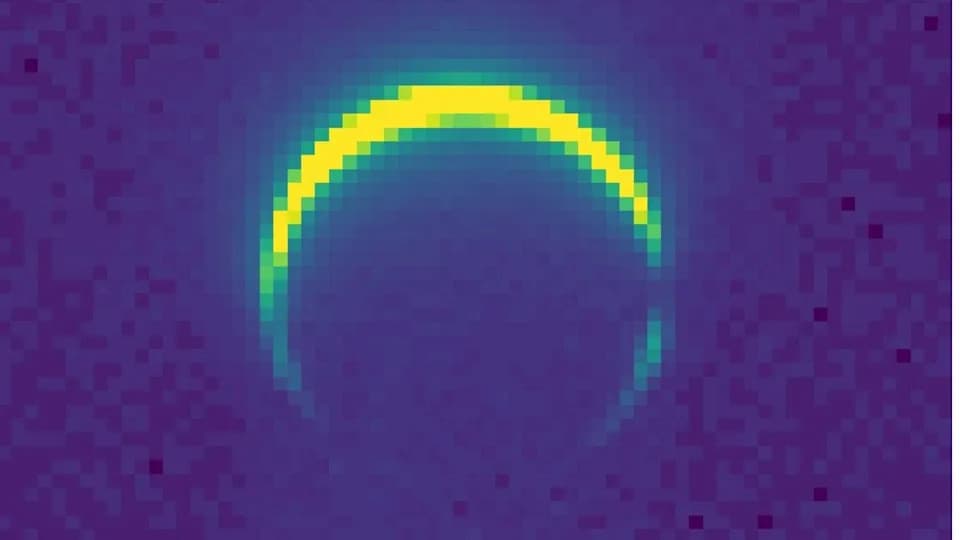
Mars as seen by NASA's Psyche asteroid probe on May 3, 2026. | Credit: NASA/JPL-Caltech/ASU
NASA's Psyche spacecraft is scheduled to fly past Mars on Friday, May 15, coming within roughly 2,800 miles (4,500 kilometers) of the Red Planet as it continues its journey to the metal-rich asteroid 16 Psyche in the main asteroid belt.
Why the Flyby Matters
The close pass will use Mars' gravity to give Psyche a velocity boost — conserving the spacecraft's xenon propellant and refining its trajectory toward the 173-mile-wide (280 km) asteroid 16 Psyche, which the mission is due to reach in 2029. Psyche is currently traveling at about 12,333 mph (19,848 kph), and the gravity assist will help adjust course without expending large amounts of fuel.
Preparing and Testing En Route
Mission teams prepared for the encounter with a 12-hour trajectory correction maneuver on Feb. 23, firing the spacecraft's thrusters to raise speed and sharpen the Mars approach. The flyby is also a valuable opportunity to exercise and calibrate Psyche's science payload before arrival at the asteroid.
Psyche's multispectral imager has been taking thousands of observations of Mars in recent weeks to validate imaging strategies and instrument performance. Engineers will also operate the mission's other science instruments during the encounter to check thermal performance, pointing accuracy, and data return procedures.
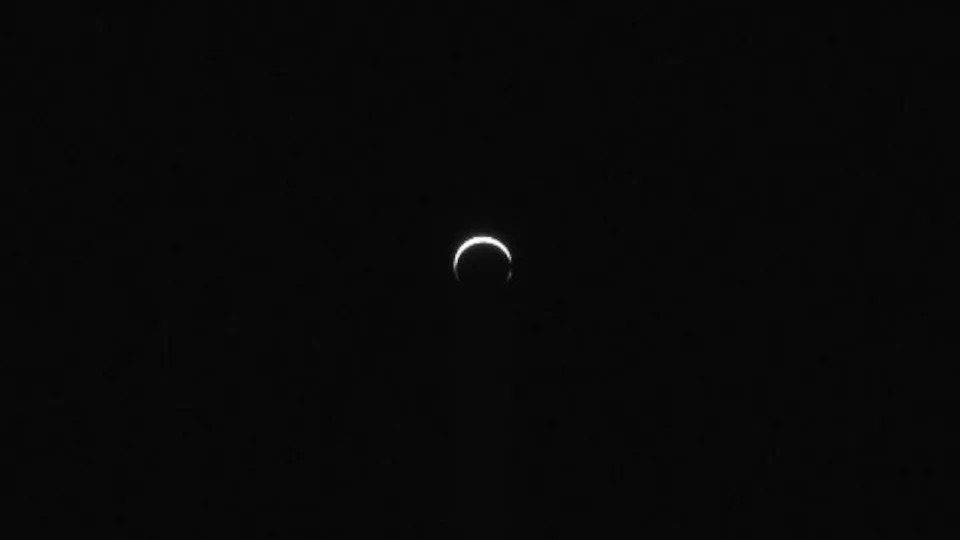
This image of Mars was captured by NASA’s Psyche mission on May 3, 2026, about 3 million miles (4.8 million km) from the planet as the spacecraft approaches for a gravity assist on May 15. | Credit: NASA/JPL-Caltech/ASU
Science Opportunities During the Pass
Scientists hope Psyche may detect a faint dusty torus around Mars produced when micrometeorite impacts on Phobos and Deimos loft dust into space. If the Sun, Psyche, and Mars align favorably during the flyby, that dust could scatter sunlight and become visible to the spacecraft's cameras.
The team will also search for tiny satellites or debris around Mars — practice that will help when Psyche searches for moonlets around its namesake asteroid after arrival. Successful in-flight calibration and instrument tests would be an important milestone before the mission reaches 16 Psyche in 2029.
"We are now exactly on target for the flyby, and we’ve programmed the flight computer with everything that the spacecraft will do throughout May,"
said Sarah Bairstow, Psyche mission planning lead at NASA's Jet Propulsion Laboratory.
"If all our instruments are powered up, and we can do important testing and calibration of the science instruments, that would be the icing on the cake,"
said Lindy Elkins‑Tanton, principal investigator for Psyche at the University of California, Berkeley.
Bottom line: The May 15 Mars flyby is both a practical trajectory maneuver and a rare chance to exercise Psyche's instruments on a large, well-known target before the spacecraft reaches an unusual, metal-rich world in the main asteroid belt.
Help us improve.