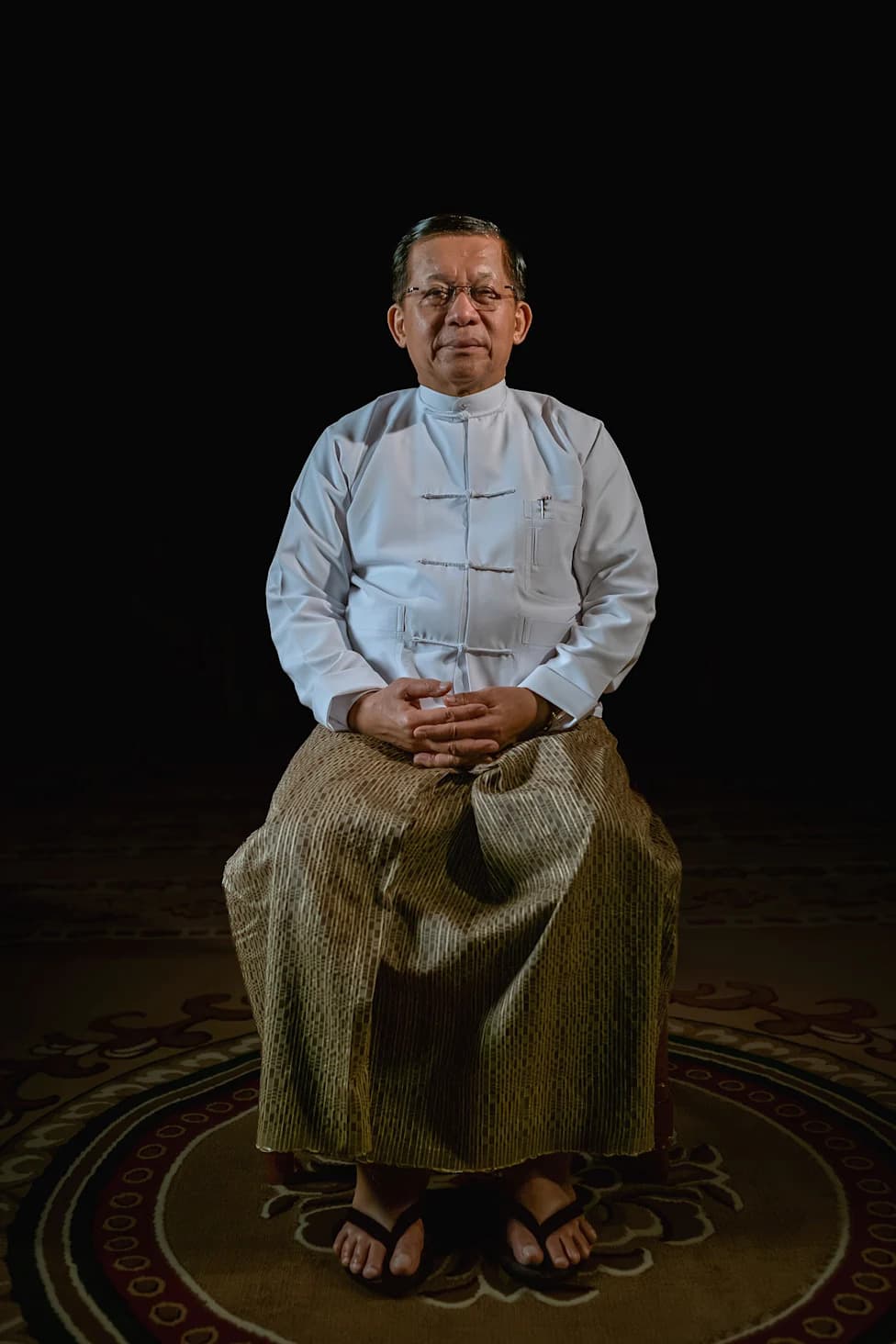
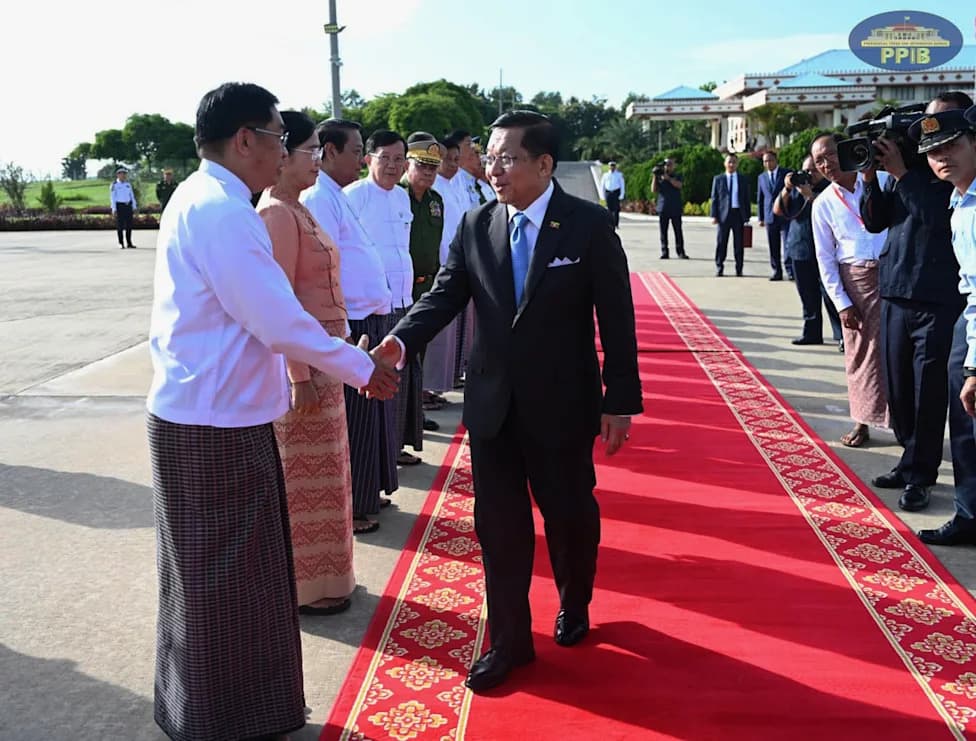
Myanmar says a minority of ASEAN members are imposing "discriminatory measures" that continue to exclude its post-coup leadership after last week's summit upheld the junta's blacklist. The military staged a tightly controlled election last month that installed Min Aung Hlaing as civilian president, five years after the 2021 coup that toppled Aung San Suu Kyi. ASEAN is increasingly divided: some neighbours have offered guarded support, while Malaysia, Indonesia and Singapore favour a firmer stance amid continuing human rights and peace-process concerns.
Myanmar Accuses ASEAN Of "Discriminatory Measures" After Summit Keeps Junta Blacklisted
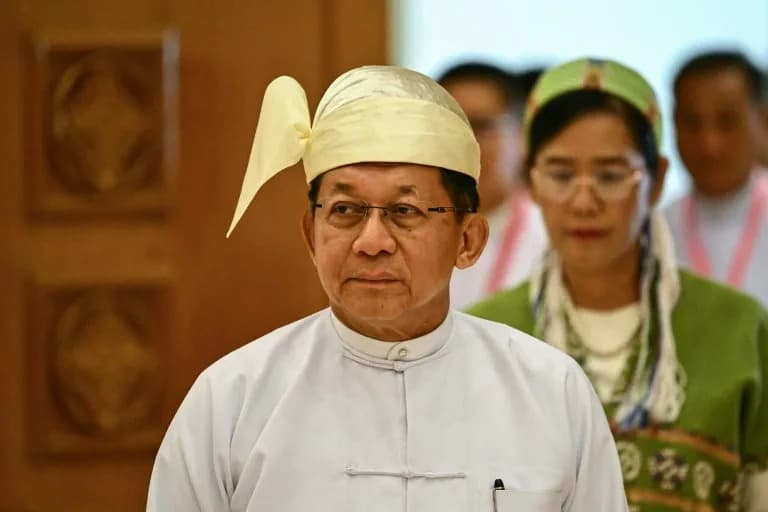
Myanmar's junta staged a tightly restricted election that resulted in coup-leading military chief Min Aung Hlaing taking over as civilian president in April. (Sai Aung MAIN)(Sai Aung MAIN/AFP/AFP)
Myanmar on Monday lodged a formal protest, saying a minority of ASEAN members are applying "discriminatory measures" that continue to exclude its post-coup leadership from regional meetings after last week’s summit upheld the junta's blacklist.
The 10-member Association of Southeast Asian Nations has effectively kept Myanmar out of key summits since the military ousted the elected government of Aung San Suu Kyi in February 2021 and detained the Nobel laureate, an upheaval that triggered widespread unrest and a protracted civil conflict.
After five years of military rule, the junta organised a tightly controlled election that barred Suu Kyi’s party. Last month the coup leader and military chief, Min Aung Hlaing, was installed as a civilian president following that vote — a move widely criticised by democracy monitors for suppressing dissent and excluding opposition-held areas.
At the recent ASEAN summit in the Philippines, host President Ferdinand Marcos Jr. said there had been "no progress in Myanmar," reflecting growing frustration among members over stalled efforts to implement a regional peace plan aimed at ending the country’s violence.
Myanmar’s foreign ministry responded: "Positive developments taking place in Myanmar have been well recognized by the majority of ASEAN Member States. However, it is observed that a few Member States continue to maintain restrictions, discriminatory measures, and the exclusion of the Myanmar Government from equal representation."
Regional reactions remain mixed. Neighbouring Thailand publicly congratulated Min Aung Hlaing and pledged cooperation to stabilise shared border areas. By contrast, Malaysia’s foreign minister said Myanmar was not ready to resume full participation because "atrocities towards their own citizens are still occurring." Indonesia and Singapore are widely believed to support a tougher stance alongside Malaysia.
Myanmar’s statement also warned that "non-constructive engagement with the new government of Myanmar" would "disregard the genuine will of the Myanmar people," and accused unnamed states of "interfering in Myanmar’s internal affairs through criticism and pressure."
International accountability efforts continue: a court in East Timor has opened a case against Min Aung Hlaing over alleged war crimes and crimes against humanity, and rights groups in Indonesia have filed complaints accusing the junta of atrocities, including allegations related to the Rohingya minority.
The dispute highlights ASEAN’s deepening dilemma: balancing its long-standing principle of non-interference and consensus-based diplomacy against mounting calls to respond to human rights abuses and to press for a workable plan to bring peace and stability to Myanmar.
Help us improve.