The Pentagon announced on May 2 that it will withdraw 5,000 U.S. troops from Germany following a public dispute between President Donald Trump and Chancellor Friedrich Merz over the war in Iran. The move is the clearest signal yet of a planned U.S. reduction in Europe after months of complaints about burden‑sharing. As of December 2025, roughly 68,000 active‑duty personnel were permanently assigned across 31 U.S. bases in Europe, with major concentrations in Germany, Italy and the UK.
Pentagon Orders Withdrawal Of 5,000 Troops From Germany — Snapshot Of U.S. Forces In Europe
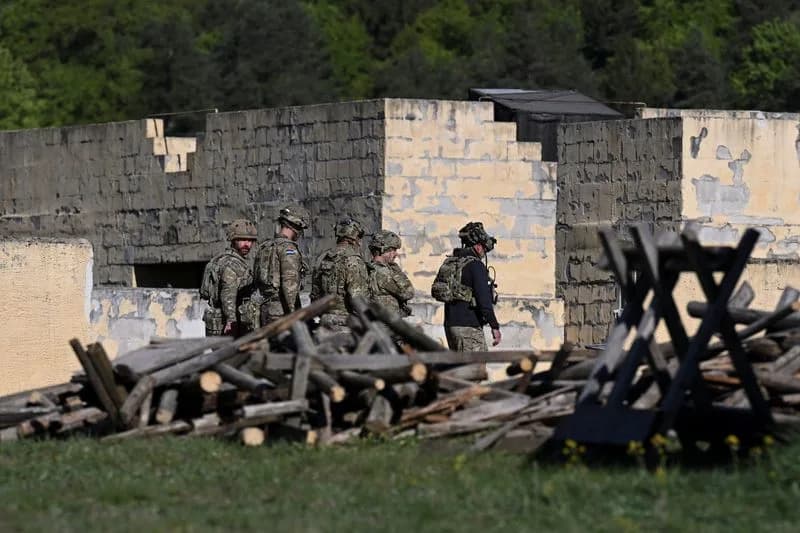
Soldiers operate during the U.S. Army Combined Resolve exercise at the U.S. Army's southern Germany training facilities in Hohenfels, Germany, April 30, 2026. REUTERS/Angelika Warmuth
May 2 (Reuters) - The Pentagon said on Friday that the United States will withdraw 5,000 troops from its NATO ally Germany, a move announced after a public dispute between U.S. President Donald Trump and German Chancellor Friedrich Merz over the war in Iran. The decision is the clearest sign to date that Washington plans to scale back its military footprint in Europe amid repeated U.S. complaints about burden‑sharing on issues tied to Iran and regional security.
How Many U.S. Troops Are There In Europe?
According to the U.S. Defense Manpower Data Center (DMDC), roughly 68,000 active‑duty U.S. personnel were permanently assigned to overseas bases in Europe as of December 2025. This figure excludes rotational forces that deploy temporarily for exercises and operational missions.
Where Are U.S. Forces Located And How Are They Organized?
U.S. European Command (USEUCOM) directs U.S. military operations across Europe and coordinates with NATO allies. USEUCOM comprises six component commands representing the Army, Navy, Air Force, Marine Corps, Special Operations Forces and the recently established Space Force. Many of these component headquarters are based in Germany and Italy, focusing on crisis response and security cooperation across Europe and parts of Africa.
Main Bases And Country Presence
U.S. forces are stationed in more than a dozen European countries, with the largest concentrations in Germany, Italy and the United Kingdom. Key locations and reported personnel (DMDC unless otherwise noted) include:
- Germany — The largest U.S. installation in Europe is Ramstein Air Base, occupied by U.S. forces since 1952. U.S. Army Garrison Bavaria (Grafenwoehr) serves as a major training hub. DMDC reported 36,436 active service members in Germany as of December 2025, spread across five garrisons.
- Italy — U.S. Army, Navy and Air Force units have been based in Italy since World War II. DMDC data show 12,662 personnel across bases in Vicenza, Aviano, Naples and Sicily at the end of 2025.
- United Kingdom — The UK hosted 10,156 U.S. service members as of December 2025, concentrated on three bases and largely composed of Air Force personnel.
- Spain — Spain hosts Navy and Air Force facilities near the Strait of Gibraltar, with 3,814 permanently assigned personnel reported in December 2025.
- Poland — Poland has 369 permanently assigned U.S. service members and hosts about 10,000 additional rotational personnel funded through the European Deterrence Initiative, with access to multiple bases for temporary U.S. use.
- Romania — Romania hosts rotational forces alongside 153 permanently assigned U.S. personnel; U.S. access includes Mihail Kogalniceanu Air Base, Campia Turzii and the Deveselu site.
- Hungary — Hungary supports rotational deployments and exercises and reported 77 permanently assigned U.S. personnel at Kecskemet and Papa Air Base as of December 2025.
A Congressional report cited by Reuters notes the U.S. military operates from 31 permanent bases in Europe and has access to an additional 19 military sites (access recorded as of March 2024).
What The Withdrawal Might Mean
The announced reduction of 5,000 troops from Germany is the most specific U.S. move so far to reduce forces on the continent. Officials framed the decision within broader U.S. pressure on European partners to assume a greater share of regional security responsibilities. The change could prompt consultations with NATO allies about force posture, logistics and rotational deployments, but detailed timelines and the final disposition of affected units were not provided in the Pentagon statement.
Sources: U.S. Defense Manpower Data Center (DMDC), Congressional reports and Reuters reporting.
(Reporting by Mathias de Rozario and Mateusz Rabiega in Gdansk; Editing by Gareth Jones, Peter Graff and Keith Weir)
Help us improve.