Physicists argue that fundamental physical and biological limits make interstellar visits—and routine contact—extremely unlikely. Five core barriers—vast distances, the light-speed limit, the exponential fuel costs of propulsion, biological hazards, and mismatched timing—combine to isolate civilizations. Speculative fixes like warp drives or wormholes face severe theoretical obstacles. While sobering, these same laws make the universe stable and life possible.
Why Alien Civilizations Probably Haven’t—and Likely Never Will—Visit Earth, Physicists Say
Distance, light speed, biology, and time may explain why alien civilizations never meet. (CREDIT: Wikimedia / CC BY-SA 4.0)
“There is a silence in the night sky that has bothered me for as long as I can remember.” That observation, often linked to Richard Feynman, captures a pervasive puzzle: the universe looks full of stars, yet we see no visitors. Physicists argue that this silence is not merely a mystery but the natural outcome of hard physical and biological limits.

Richard Feynman: There is a silence in the night sky that has bothered me for as long as I can remember. (CREDIT: The Tower Psicologia)
Five Barriers That Make Contact Extremely Unlikely
At the center of the argument are five fundamental obstacles: distance, the speed of light, propulsion limits, biology, and timing. Taken together, these form steep barriers that would prevent most civilizations from meeting each other.
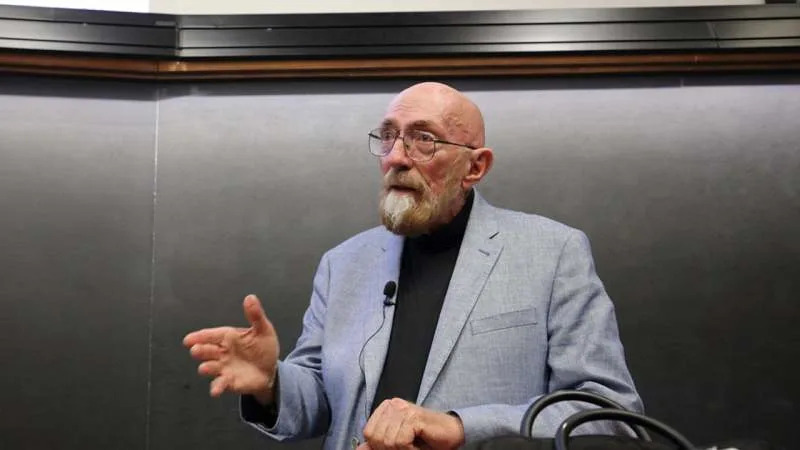
Kip Thorne said: The speed of light is the ultimate speed limit built into the fabric of space and time. (CREDIT: Wikimedia / CC BY-SA 4.0)
1. Scale and Distance
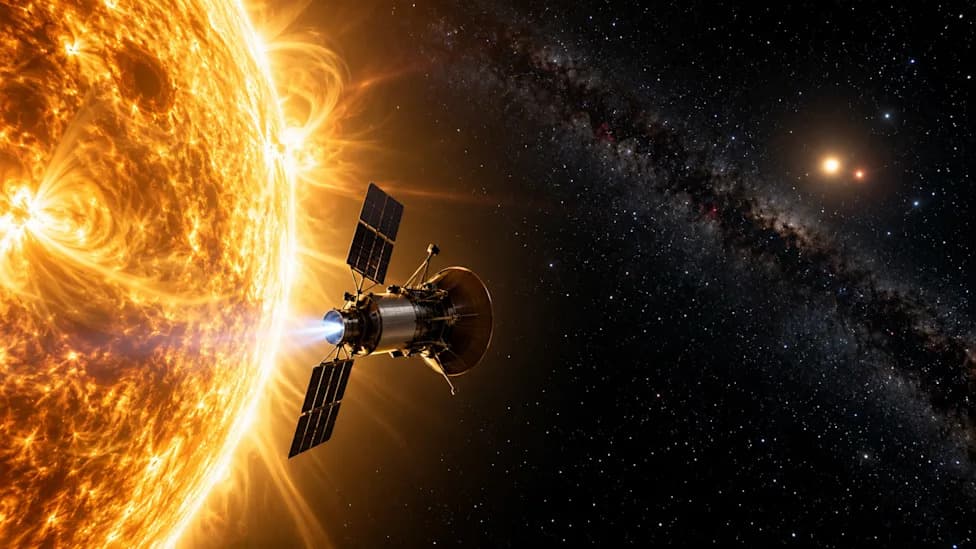
Carl Sagan warned that "the size and age of the Cosmos are beyond ordinary human understanding." Earth is roughly 12,742 km across; the Sun sits some 150 million km away and light takes about eight minutes to cross that gap. The nearest star, Proxima Centauri, lies 4.24 light years from Earth. At the Parker Solar Probe’s record speeds (about 692,000 km/h), a trip to Proxima would take on the order of 6,600 years—if a craft had launched when the Great Pyramids were finished, it would be arriving now. The Milky Way spans roughly 100,000 light years; crossing it with foreseeable technology would take hundreds of millions of years, far longer than many biological or cultural continuities.
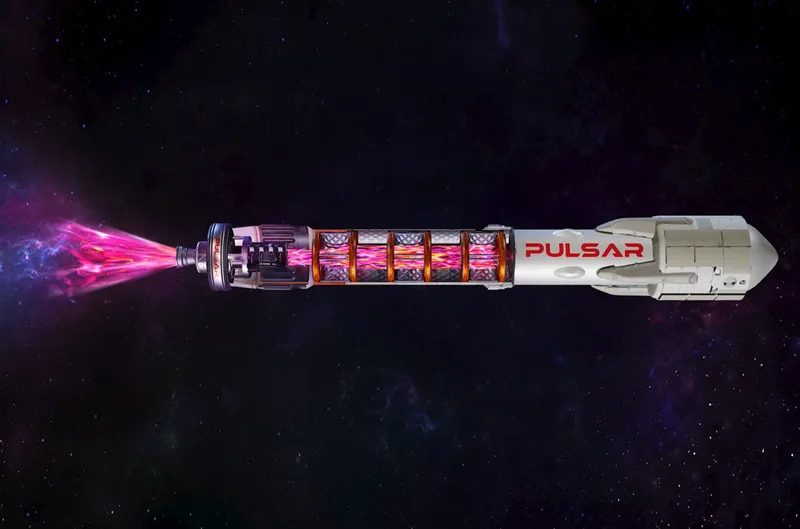
Fusion systems would still produce ships dominated by fuel mass. (CREDIT: Pulsar Fusion)
2. The Light-Speed Wall
"The speed of light is not an engineering limit. It is a structural limit of reality," Feynman said. Relativity makes the limit absolute: pushing mass to light speed would demand infinite energy. Trying to reach a large fraction of light speed produces steeply diminishing returns as relativistic effects consume added energy. This is not a problem that better engineering alone can evade—the equations of relativity apply everywhere.

The Alcubierre Warp Drive Model. The blue area below the plane represents contracted space while red and raised area represent expanded space. (CREDIT: CREDIT: CC BY-SA 4.0)
3. Propulsion and the Rocket Equation
Konstantin Tsiolkovsky’s rocket equation shows fuel requirements grow exponentially: fuel needs fuel, and so on. Feynman called it "an exponential curse." Chemical rockets would require impossibly large masses for interstellar crewed missions; Freeman Dyson concluded chemical fuels are hopeless for true interstellar travel. Advanced concepts—fusion, antimatter—reduce but do not erase the burden, and producing usable antimatter would demand extraordinary energy investments. These calculations change the question from "Can you build it?" to "Would any civilization rationally spend such resources for such marginal gain?"
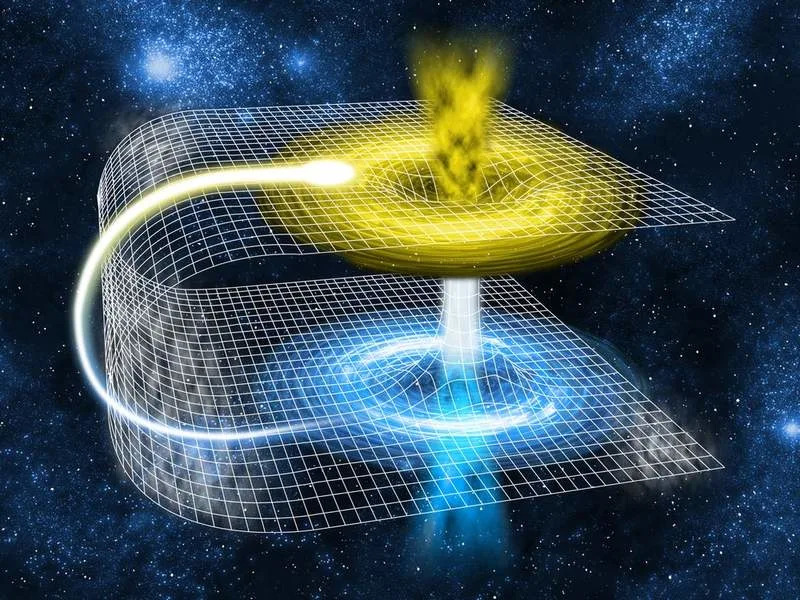
A model of ‘folded’ space-time illustrates how a wormhole bridge might form with at least two mouths that are connected to a single throat or tube. (CREDIT: edobric / Shutterstock)
4. Biology and Long-Term Survival
Life evolved under Earth’s gravity, atmosphere and magnetic shielding. Outside that environment, cosmic radiation damages DNA, microgravity causes bone and muscle loss and cardiovascular changes, and long-duration habitation amplifies psychological and social risks. Proposed solutions—shielding, cryonics, generation ships—each carry severe technical and biological downsides, and adding shielding re-invokes the rocket-equation penalties. As Feynman put it, "Biology is the software of Earth. It does not run on the hardware of space."

Boeing crew flight test astronauts Suni Williams and Butch Wilmore, center, pose with Expedition 71 flight engineers Mike Barratt, left, and Tracy Dyson, both NASA astronauts. (CREDIT: NASA)
5. Timing and the Searchlight Problem
Detectability requires overlap. Humans have been broadcasting radio for roughly a century—creating a detectable sphere about 100 light years across, a tiny patch in a galaxy roughly 100,000 light years wide. Civilizations may arise, flare briefly and vanish without ever coinciding with one another. Jill Tarter of SETI compared it to dipping a glass into the ocean and not catching a fish: absence of evidence is not evidence of absence.
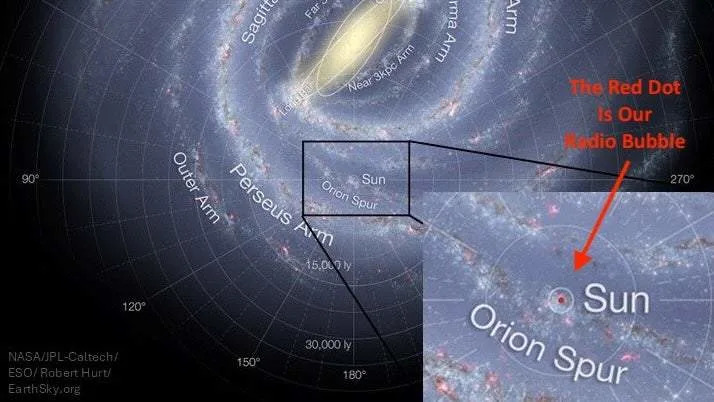
Humanity has emitted radio signals for roughly a century, creating a bubble about 100 light years wide. (CREDIT: NASA / JPL-Caltech / ESO / Robert Hurt)
Speculative Workarounds Stall Against Physics
Science fiction often invokes warp drives or wormholes. Miguel Alcubierre’s warp-bubble idea is mathematically consistent in general relativity but requires enormous quantities of negative energy—estimates once exceeded the energy in the observable universe, and even revised numbers remain unattainable. Wormholes face analogous problems: natural ones pinch off too quickly, and keeping them open would need exotic matter with properties we have no experimental reason to expect.
"Extraordinary claims require extraordinary evidence," Feynman warned—an injunction that applies to blurry videos and sensational UFO reports as much as to speculative interstellar technologies.
A Sobering but Familiar Upside
These limits may sound bleak, but they also make the universe coherent. The speed of light preserves causality. Stable atoms and predictable physics allow chemistry and life. Silence, in this framing, is not emptiness but structure: constraints that both limit contact and permit a stable, habitable cosmos. As Carl Sagan put it, we are literally "made of star-stuff." Civilizations may rarely meet, but they share a common origin in the stars.
Source: Adapted and improved from "Alien civilizations have not visited Earth and never will, physicist claims," originally published in The Brighter Side of News.
Help us improve.