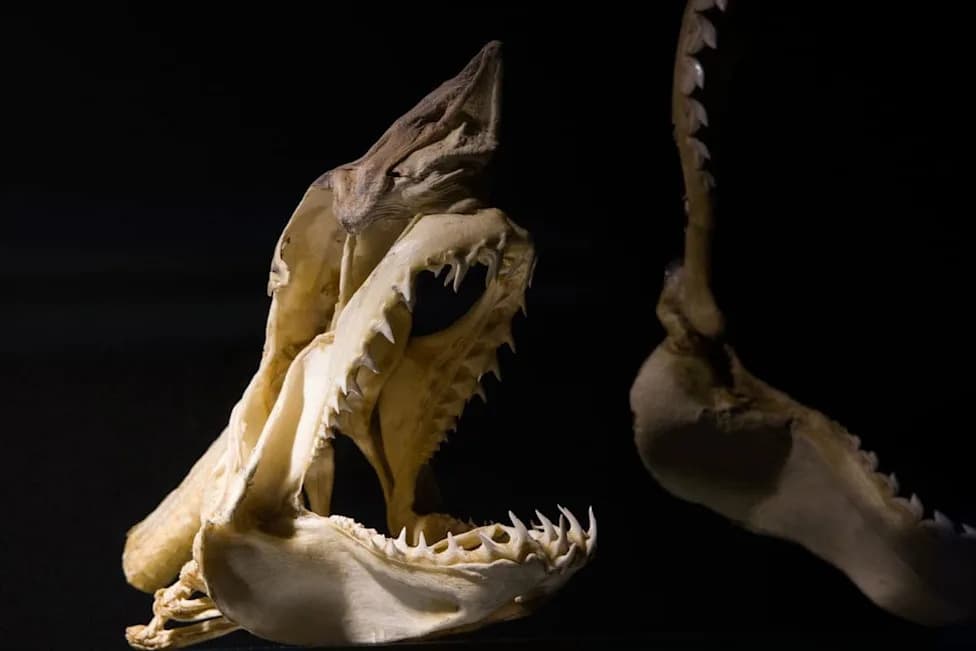
Researchers used high-resolution grinding tomography and an AI model to identify fossilized octopus jaw elements from Cretaceous seafloor sediments in Japan and Vancouver Island dating to about 100–72 million years ago. The jaws belong to extinct finned octopuses (Cirrata) and indicate some individuals may have approached nearly 20 meters in length. Heavy jaw wear—up to 10% tip abrasion—suggests forceful crushing of large or armored prey, implying these invertebrates could have been apex marine predators alongside vertebrates in the Late Cretaceous.
Gigantic Cretaceous Octopus: Fossil Jaws Reveal Nearly 20m Apex Predators That Lived With Dinosaurs
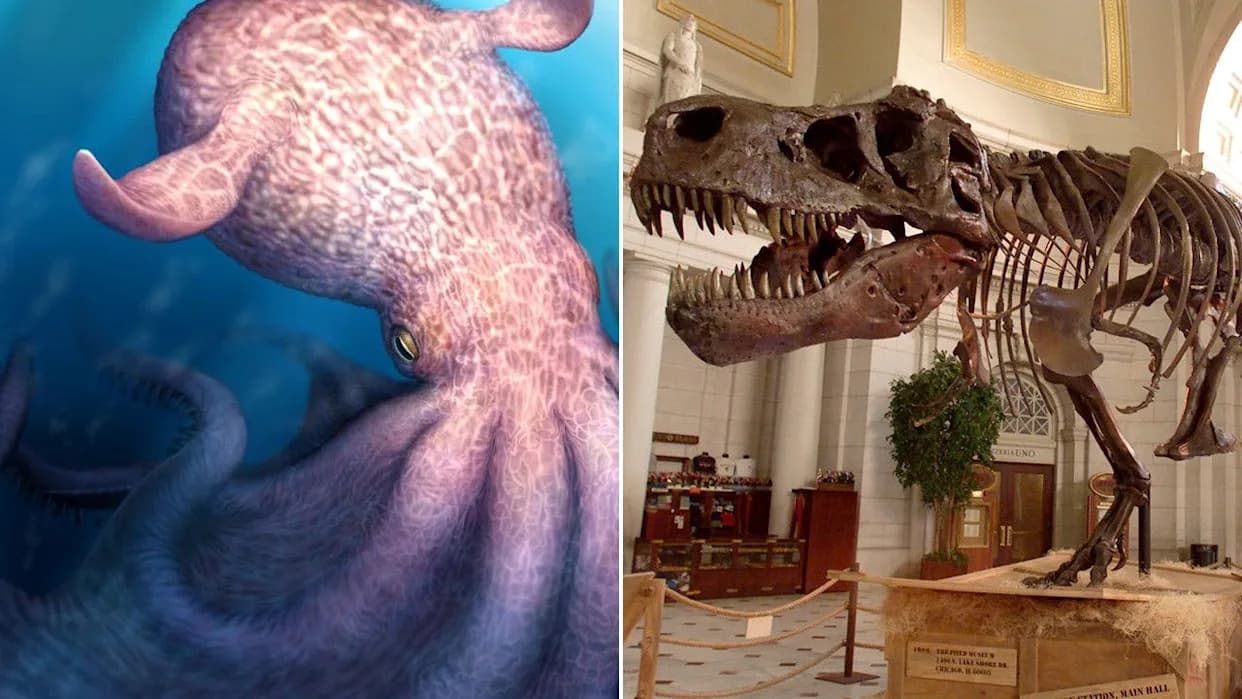
'Gigantic' ancient octopus used jaws to crush prey and hunted alongside the dinosaurs 100M years ago: study
New analysis of minute fossil jaw elements recovered from Cretaceous seafloor sediments in Japan and on Vancouver Island suggests that early finned octopuses were far larger and more predatory than previously believed. Researchers from Hokkaido University report in Science that jaw remains dating from about 100 to 72 million years ago belong to an extinct group of finned octopuses called Cirrata.
Key Findings
Because octopuses are soft-bodied, their remains rarely survive the fossil record; jaws are often the only durable elements preserved. The team applied high-resolution grinding tomography together with an artificial intelligence model to detect and reconstruct tiny jaw fossils embedded in rock samples. Jaw morphology and comparative scaling suggest some individuals may have reached nearly 20 meters in total length.
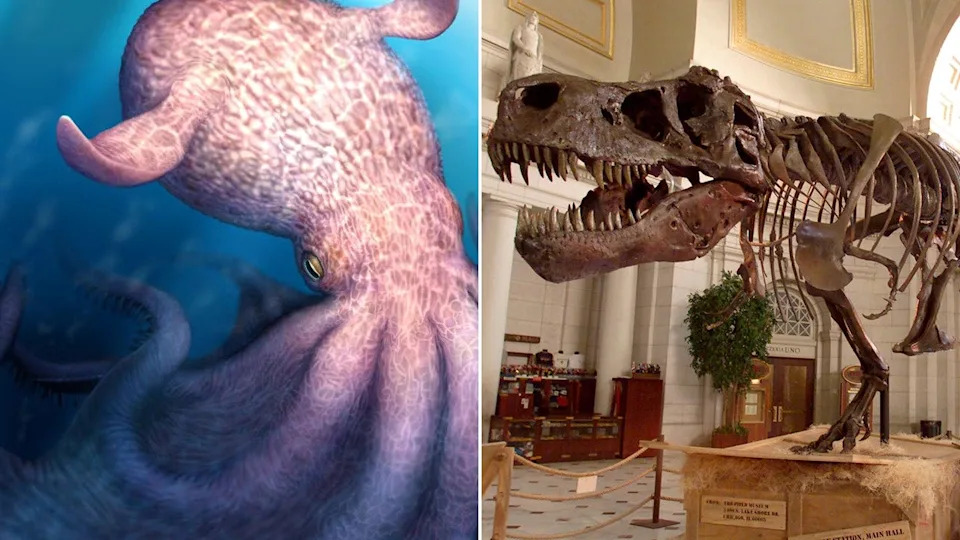
Octopuses’ earliest relatives that lived 100 million years ago may have been "gigantic" predators that hunted alongside the dinosaurs, according to new research.(Getty Images)
Marked jaw wear was documented across well-preserved specimens: chipping, scratching and cracking, with up to 10% of the jaw tip abraded in mature individuals. That degree of wear exceeds what is typical for modern cephalopods that crush hard-shelled prey, indicating repeated, forceful interactions with large or armored animals and an unexpectedly aggressive feeding strategy.
Our findings suggest that the earliest octopuses were gigantic predators that occupied the top of the marine food chain in the Cretaceous, said Professor Yasuhiro Iba of Hokkaido University.
Implications
The discovery challenges the traditional view that Late Cretaceous marine ecosystems were dominated exclusively by vertebrate apex predators. Instead, it provides direct evidence that invertebrates could evolve into giant, cognitively capable apex predators. The authors propose that powerful jaws combined with the loss of an external skeleton were key adaptations enabling cephalopods to become large, intelligent marine hunters.
Limitations and next steps: Estimated body sizes are inferred from jaw morphology and comparisons with living relatives. Additional fossil finds, further biomechanical analyses and broader sampling will be needed to refine body-size estimates, feeding mechanics and ecological roles.
Help us improve.