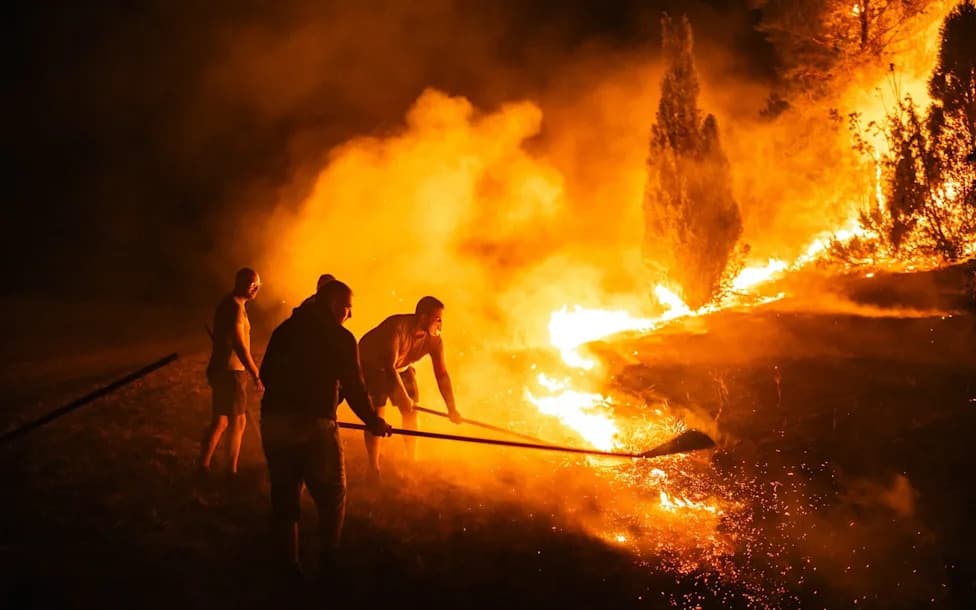
At Gesher Benot Yaʿaqov (GBY) in northern Israel, analysis of 266 charcoal fragments from a layer dated to about 780,000 years ago reveals diverse fuel use—dominated by ash and with olive second—and the earliest Levantine evidence for pomegranate. Charcoal clusters align with fish remains, supporting intentional cooking on hearths. The findings suggest that lakeshore resources, especially fuel availability, helped shape repeated occupation, domestic organization and long-term maintenance of fire at GBY.
Ancient Charcoal at Gesher Benot Yaʿaqov Reveals 780,000-Year-Old Fire Use and Settlement Choices
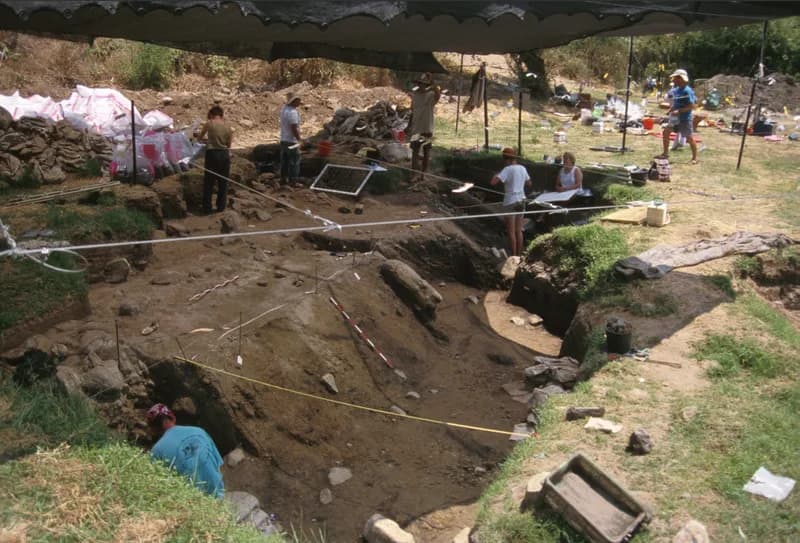
A general view of the excavation of Gesher Benot Ya‘aqov Acheulian site. (Note that the original occupation surfaces are tilted due to tectonics). (CREDIT: GBY Expedition)
The Gesher Benot Yaʿaqov (GBY) archaeological site on the former shores of Lake Hula in northern Israel preserves an exceptional record of repeated human activity dating to roughly 800,000 years ago. New analysis of an abundant charcoal assemblage from a well-preserved occupation layer offers fresh insight into how early humans made, maintained and organized life around fire.
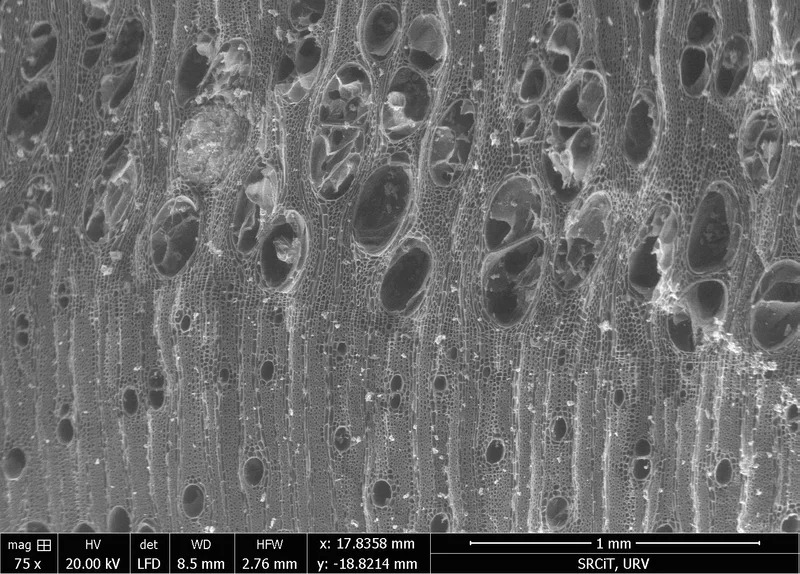
Traverse section of a charcoal fragment of ash observed under an ESEM microscope. (CREDIT: M. MoncusilPHES)
A Snapshot of Long-Term Occupation
Excavations led by Professor Naama Goren-Inbar of the Hebrew University of Jerusalem have revealed more than 20 distinct archaeological horizons at GBY, documenting repeated visits by hunter-gatherer groups across many generations. One particularly intact horizon—dated to about 780,000 years ago and roughly contemporary with a glacial interval in the northern Levant—contains tools, animal bones (including a straight-tusked elephant), plant remains and abundant charcoal that together appear to record a single episode of intensive activity: hunting, butchery, processing and cooking.

A schematic toy model. (CREDIT: Naama Goren)
Charcoal Analysis Sheds Light On Fuel Choice
For the current study researchers recovered and microscopically analysed 266 charcoal fragments from the 780,000-year layer to identify the original wood taxa. The results show a surprisingly diverse mix of fuel species: ash, willow, grapevine, oleander, olive, oak, pistachio, pomegranate and others. Ash accounted for over half of the classified fragments, with olive the second most common fuel source. Notably, the pomegranate fragments represent what the team regards as the earliest evidence of that species in the Levant.
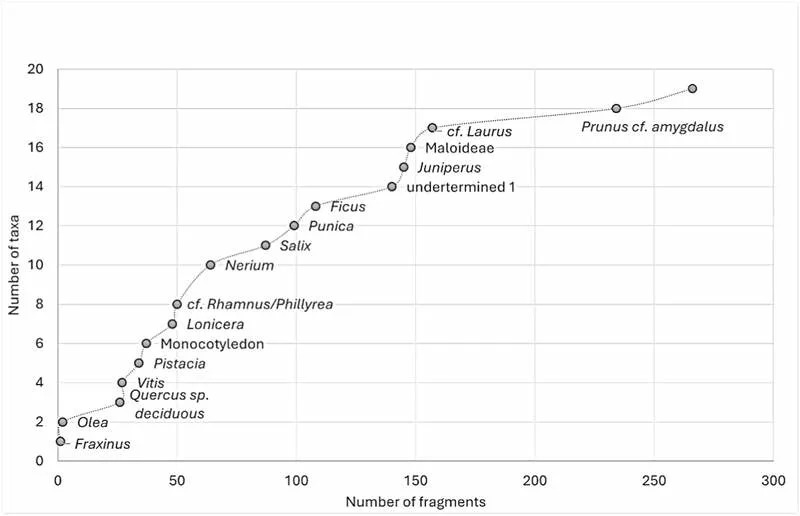
Charcoal accumulation curve resulting from the analyses of 266 fragments from GBY and the gradual appearance of new taxa. (CREDIT: Quaternary Science Reviews)
Why this matters: Charcoal preserves woody tissue, giving a different and valuable window on local vegetation than seeds or fruit alone. The variety of taxa indicates a richer lakeshore and riparian ecology than might be expected from a single shoreline setting.
Fire, Food and Social Space
Charcoal deposits at GBY occur in multiple clusters across the living surface rather than a single centralized hearth. One large cluster contained the greatest mix of plant types and large quantities of fish remains—particularly carp teeth—strengthening the interpretation that inhabitants routinely cooked fish on controlled fires. Earlier taphonomic work had already suggested intentional heating of carp bones; the charcoal evidence reinforces that view.
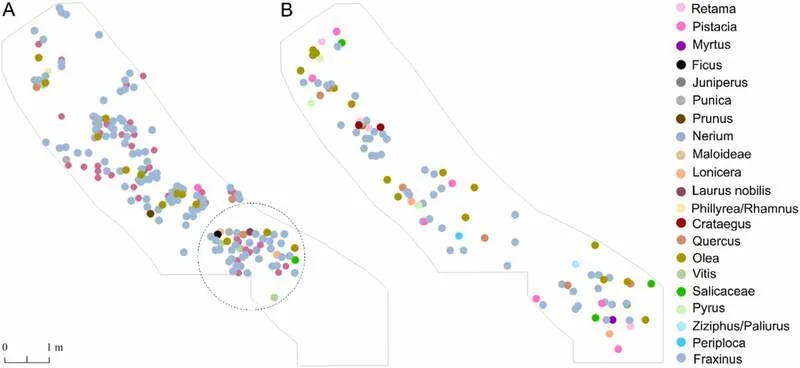
Spatial distribution of charcoal and wood in Layer II-6 Level 1 by taxa. A, charcoal (N = 190); B, wood (N = 112); circle marks the largest cluster with the highest taxonomic diversity; only specimens with a full spatial record are included. (CREDIT: Quaternary Science Reviews)
Hearth-associated areas at GBY are linked to diverse tasks: tool production, food preparation and the disposal of burned materials. The spatial organization around hearths implies that gathering and managing fuel was a routine activity and that social life may have been organized around cooking fires. Rather than selecting a single preferred timber, GBY occupants appear to have used locally available wood—including driftwood and deadwood—indicating a flexible and effective fuel-use strategy adapted to lakeshore resources.
Broader Implications
GBY’s position on a freshwater lake offered reliable access to fish, plants, fruits, game and raw materials for toolmaking and fuel—conditions that supported repeated occupation. Researchers classify such sites as “home bases,” where groups concentrated processing activities and reduced the energy costs of acquiring resources. The charcoal study highlights that access to fuel was as important as water, food and lithic raw materials in shaping settlement decisions and the organization of daily life.
The detailed results of this research are published online in Quaternary Science Reviews.
Help us improve.